


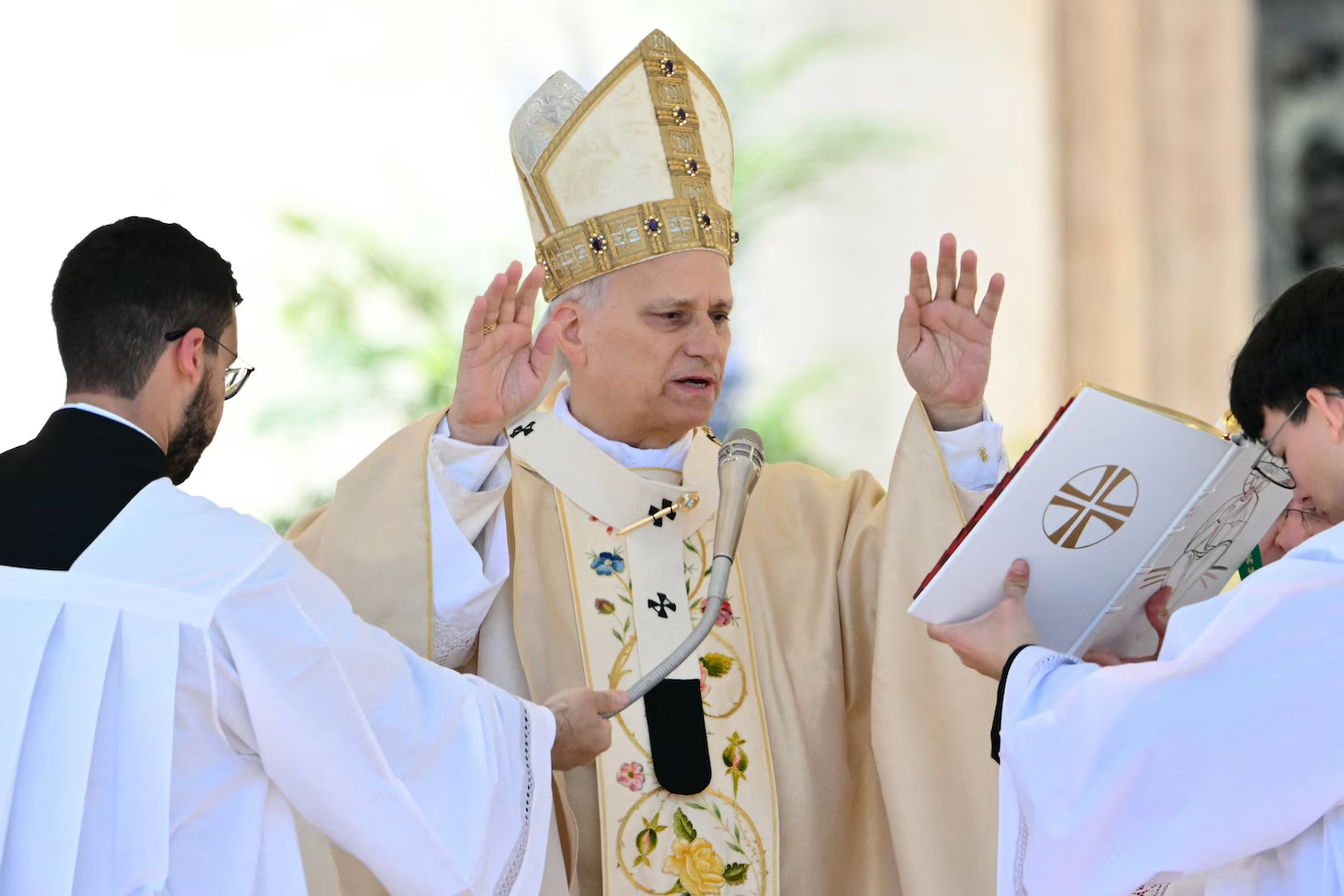

Pope Leo XIV Calls for Global Peace in First Easter Speech Amid Rising Conflict
ROME — In his first Easter Sunday address, Pope Leo XIV delivered a passionate plea for global peace, urging world leaders and armed groups to lay down their weapons and choose dialogue over violence. Speaking to thousands gathered in St. Peter’s Square and millions more watching worldwide, the pontiff’s message resonated against the backdrop of escalating conflicts in Ukraine, the Middle East, and parts of Africa.
“Let those who have weapons lay them down!” Pope Leo declared, his voice firm and resolute. “Let those who have the power to unleash wars choose peace!” The pope’s sermon echoed the core tenets of the Catholic Church’s teachings on nonviolence and reconciliation, while also addressing the urgent realities of contemporary global strife.
The pontiff emphasized that peace should not be imposed through force or domination but achieved through genuine dialogue and mutual understanding. “Not with the desire to dominate others, but to encounter them!” he said. “We are growing accustomed to violence, resigning ourselves to it, and becoming indifferent. Indifferent to the deaths of thousands of people.”
A Message for Troubled Times
Pope Leo XIV’s remarks come at a critical juncture in global affairs. The war in Ukraine continues to ravage Eastern Europe, with no end in sight. Tensions between Israel and Hamas have reignited violence in Gaza, while conflicts in Sudan, Haiti, and Myanmar have displaced millions and claimed countless lives. The pope’s call for peace underscores the growing humanitarian crises that have left communities fractured and desperate for resolution.
The Vatican has long served as a moral voice in international affairs, often mediating between warring factions and advocating for diplomacy. Pope Leo XIV’s Easter message reinforces this tradition, positioning the Catholic Church as a steadfast advocate for peace in an increasingly polarized world.
A New Pontiff’s Vision
Elected just six months ago, Pope Leo XIV has quickly established himself as a leader unafraid to confront pressing global issues. His predecessor, Pope Francis, was also a vocal critic of war and inequality, but Leo XIV’s approach appears to carry a sharper urgency, reflecting the escalating violence of recent years.
The pope’s Easter message was not limited to global leaders. He also called on individuals to reject indifference and actively work toward peace in their communities. “Peace begins in the hearts of men and women,” he said. “It grows when we choose compassion over hatred, understanding over division.”
Global Reactions
The pontiff’s words have sparked widespread reactions from political, religious, and humanitarian leaders. United Nations Secretary-General António Guterres praised the pope’s message, calling it “a timely reminder of the universal longing for peace and the urgent need for diplomatic solutions.” Meanwhile, grassroots organizations working in conflict zones have welcomed the pope’s emphasis on dialogue, noting that local peacebuilding efforts often struggle for recognition and support.
However, some critics argue that calls for peace, while morally compelling, often fail to address the complex geopolitical dynamics driving conflicts. “The pope’s message is noble, but peace requires more than words,” said one analyst. “It demands concrete actions from world powers and a willingness to compromise.”
The Role of the Church in Modern Conflict
The Catholic Church’s influence extends far beyond its 1.3 billion adherents. With diplomatic ties to nearly every nation and a vast network of humanitarian organizations, the Vatican is uniquely positioned to advocate for peace and provide aid to those affected by violence. In recent years, the Church has played a mediating role in conflicts such as the peace agreement between Colombia’s government and FARC rebels, demonstrating its potential as a catalyst for reconciliation.
Pope Leo XIV’s Easter message signals his intention to deepen the Church’s involvement in global peace efforts. Observers speculate that the Vatican may soon launch new initiatives to promote dialogue between conflicting parties or bolster support for refugees and displaced persons.
Why It Matters
The pope’s call for peace is more than a religious exhortation; it is a moral imperative in a world increasingly defined by division and violence. According to the United Nations, more than 100 million people are currently displaced due to conflict, the highest number ever recorded. Meanwhile, military spending by world powers continues to rise, diverting resources from critical needs such as healthcare, education, and poverty alleviation.
Pope Leo XIV’s message also highlights the human cost of war, urging the global community to reject apathy and indifference. “Every life lost to violence is a tragedy,” he said. “We cannot turn away.”
Future Implications
As conflicts persist and geopolitical tensions escalate, Pope Leo XIV’s Easter address serves as a rallying cry for peace. While the path to reconciliation remains fraught with challenges, the pontiff’s words remind the world of the urgent need for dialogue, compassion, and collective action.
In the coming months, the Vatican’s role in global peace efforts will be closely watched. Whether through diplomatic interventions, humanitarian aid, or moral advocacy, the Catholic Church under Pope Leo XIV is poised to play a pivotal role in shaping a more peaceful future.
For now, the pope’s Easter message stands as a testament to the enduring power of hope—and a challenge to all who have the ability to change the course of history. “Let us choose peace,” he said. “Let us choose life.”
