


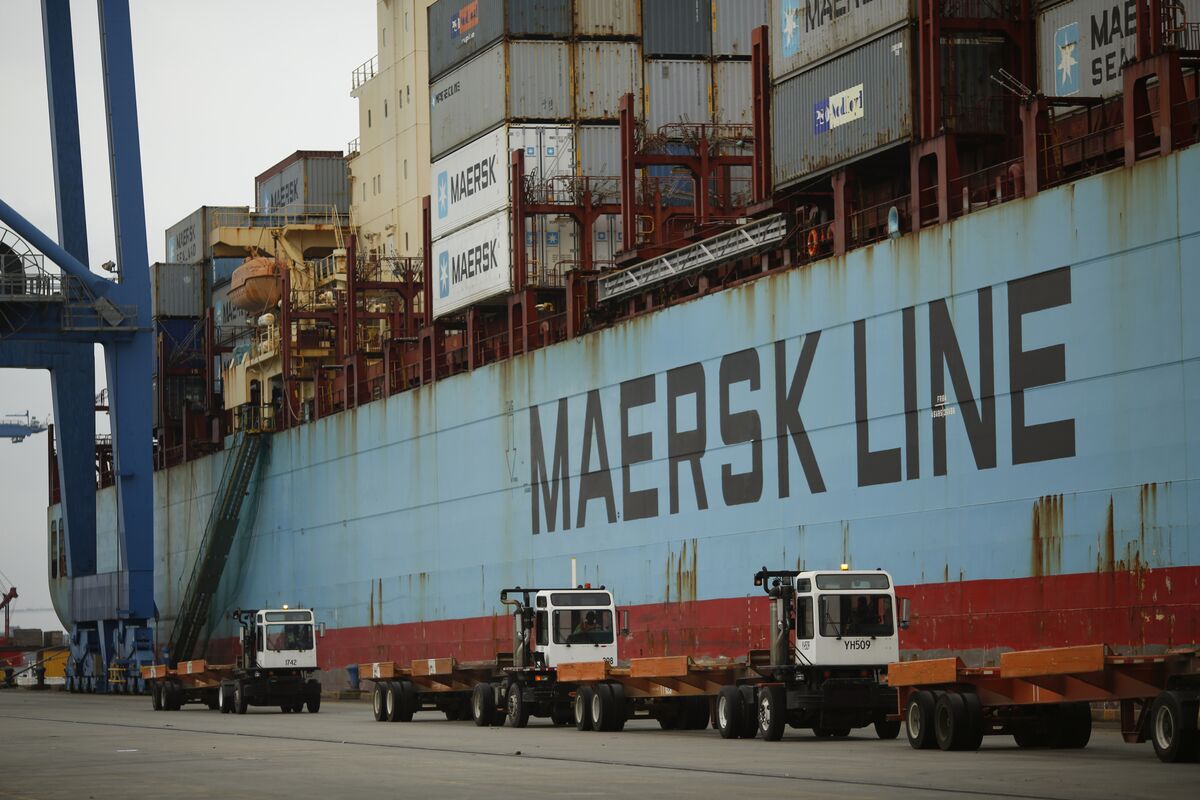

CK Hutchison Launches Arbitration Against Maersk Over Panama Ports Dispute
In a dramatic escalation of tensions in the global maritime industry, Hong Kong-based conglomerate CK Hutchison Holdings Ltd. has initiated arbitration proceedings against Danish shipping giant A.P. Moller-Maersk A/S over the forced takeover of two strategic ports in Panama. The move comes after Panama’s government intervened in a high-stakes dispute between the two companies, seizing control of the ports and igniting a legal battle that underscores the geopolitical complexities of global trade infrastructure.
The dispute revolves around the ports of Cristobal and Balboa, crucial gateways along the Panama Canal, one of the world’s most vital shipping routes. CK Hutchison, one of Asia’s largest infrastructure investors, had been managing the ports through its subsidiary, Panama Ports Company, under a long-term concession agreement. However, in late 2023, Panama’s government abruptly terminated the concession, citing alleged breaches of contractual obligations and concerns over operational efficiency. The ports were subsequently handed over to Maersk’s subsidiary, APM Terminals, a move that has now sparked a fierce legal confrontation between the two global giants.
Background to the Conflict
CK Hutchison’s involvement in Panama dates back to 1997, when it secured a 25-year concession to operate the ports of Cristobal and Balboa. Over the decades, the company invested heavily in modernizing the facilities, transforming them into key hubs for trans-Pacific and trans-Atlantic shipping. The ports handle millions of containers annually, servicing some of the world’s busiest trade routes and contributing significantly to Panama’s economy.
However, tensions began to simmer in recent years as Panama sought to reassert control over its strategic assets. The government accused CK Hutchison of failing to meet investment targets and maintaining subpar operational standards, allegations the company vehemently denies. In a controversial decision, Panama terminated the concession and awarded it to APM Terminals, a subsidiary of Maersk, which already operates numerous ports worldwide and is seen as a leader in port management.
The abrupt transition has raised eyebrows in the international business community, with some analysts suggesting geopolitical considerations may have influenced Panama’s decision. The Central American nation has been increasingly aligning itself with Western powers, particularly the United States, amid growing competition between China and the West for influence in the region. CK Hutchison, founded by billionaire Li Ka-shing, has historically faced scrutiny over its Chinese ties, although the company insists it operates independently of any government influence.
CK Hutchison’s Legal Gambit
In response to the takeover, CK Hutchison has lodged an arbitration claim with the International Chamber of Commerce (ICC), accusing Maersk of “unlawful interference” in its contractual rights. The company argues that Panama’s decision was made without proper due process and that Maersk’s involvement constitutes a breach of international business norms.
“We have consistently upheld our contractual obligations and invested billions in Panama’s infrastructure,” said a spokesperson for CK Hutchison. “The termination of our concession was unjustified, and we will vigorously defend our rights through all available legal channels.”
The arbitration proceedings are expected to be protracted and complex, involving multiple jurisdictions and legal frameworks. CK Hutchison is seeking compensation for the abrupt loss of its assets, which it estimates to be in the billions of dollars. The case also raises broader questions about the risks faced by foreign investors in politically volatile regions, particularly in sectors deemed strategically significant by host governments.
Maersk’s Position
Maersk, for its part, has denied any wrongdoing, asserting that it was awarded the concession through a transparent and competitive process. The company has pledged to continue investing in the ports and enhancing their operational capabilities to meet the growing demands of global trade.
“We respect the rule of law and the decisions of the Panamanian government,” said a Maersk executive in a recent statement. “Our focus is on ensuring the ports remain efficient and reliable for our customers and stakeholders.”
Despite Maersk’s assurances, the dispute has cast a shadow over its operations in Panama. Critics argue that the company’s involvement in the takeover could damage its reputation and lead to increased scrutiny from regulators and investors.
Broader Implications
The legal battle between CK Hutchison and Maersk highlights the intensifying competition for control over critical infrastructure in Latin America, a region that has become a focal point for global trade and geopolitical maneuvering. The Panama Canal, in particular, is a linchpin of international commerce, facilitating the movement of goods between the Atlantic and Pacific Oceans and generating billions in revenue annually.
The dispute also underscores the challenges faced by foreign investors in navigating the regulatory and political landscapes of host countries. As governments seek to maximize the economic benefits of infrastructure projects, companies like CK Hutchison and Maersk are increasingly caught in the crossfire of shifting priorities and power dynamics.
“This case is a stark reminder of the risks associated with investing in politically sensitive sectors,” said Dr. Emily Carter, a professor of international trade law at the University of London. “Companies must balance their commercial interests with the realities of geopolitical pressures and regulatory uncertainties.”
Looking Ahead
As the arbitration process unfolds, both CK Hutchison and Maersk are likely to face significant reputational and financial risks. The outcome of the case could set a precedent for future disputes over infrastructure concessions and influence the strategies of multinational corporations operating in similar contexts.
For Panama, the dispute represents a delicate balancing act. While the government has sought to assert greater control over its strategic assets, it must also reassure international investors that its regulatory environment remains fair and predictable. Any perception of arbitrary decision-making could deter future investment and undermine the country’s position as a global trade hub.
In the meantime, the ports of Cristobal and Balboa continue to operate as vital cogs in the machinery of global commerce. The legal wrangling between CK Hutchison and Maersk may dominate headlines, but for the thousands of businesses that rely on these facilities, the priority remains ensuring uninterrupted access to one of the world’s most important shipping routes.
As the case progresses, it serves as a reminder that in an increasingly interconnected world, the stakes of international arbitration extend far beyond the courtroom, shaping the future of global trade and diplomacy. Only time will tell whether this dispute will lead to lasting resolutions or deeper divisions in the complex web of international commerce.
