



Austin-Bergstrom International Airport Seeks $1.18 Billion in Bonds to Accommodate Rapid Growth
Austin, Texas—an emblem of America’s booming tech economy and cultural renaissance—is facing a critical challenge: its gateway to the world is bursting at the seams. On Tuesday, Austin-Bergstrom International Airport (AUS) is set to bring a $1.18 billion airport revenue bond sale to market, a move that underscores the city’s urgent need to expand its transportation infrastructure amid unprecedented population and economic growth. The bond issuance, one of the largest of its kind in recent years, marks a pivotal moment for Austin as it grapples with the pressures of its meteoric rise.
A City in Flux
Austin’s transformation over the past decade has been nothing short of remarkable. Once known primarily as the state capital and a hub for live music, the city has emerged as a global tech powerhouse, attracting major companies like Tesla, Oracle, and Apple. The influx of businesses has spurred a population boom, with the Austin metropolitan area adding over 200,000 residents between 2020 and 2023 alone. This growth has fueled demand for air travel, with Austin-Bergstrom International Airport experiencing record-breaking passenger numbers. In 2019, the airport served over 17 million passengers, a figure that is expected to surpass pre-pandemic levels in the coming years.
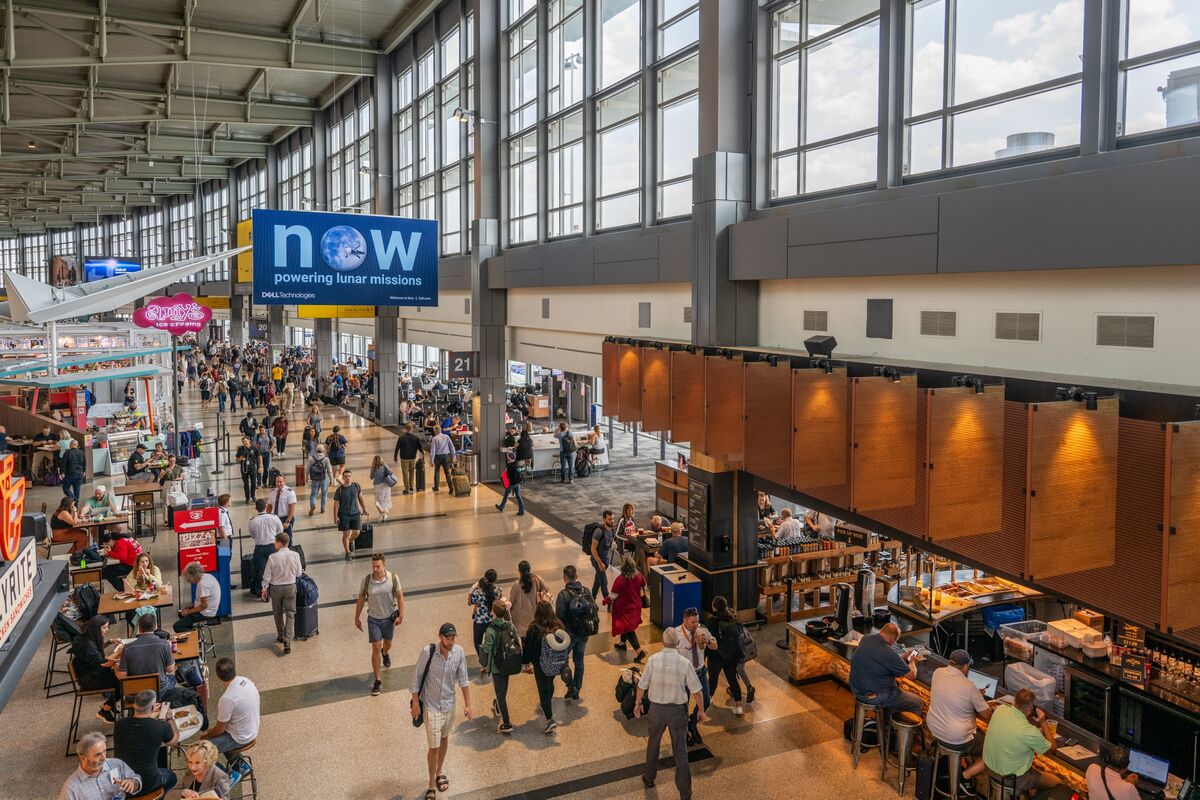
However, this success has come at a cost. Austin-Bergstrom, originally designed to accommodate far fewer travelers, is straining under the weight of its own popularity. Long lines, crowded terminals, and limited flight options have become increasingly common, prompting city officials to take decisive action.
The Bond Proposal: A Plan for Expansion
The $1.18 billion bond sale represents the first phase of a multi-billion-dollar expansion plan aimed at transforming Austin-Bergstrom into a world-class airport. The funds will be used to finance several critical projects, including the construction of a new concourse, the renovation of existing terminals, and the addition of new gates to accommodate larger aircraft.
The expansion is designed to increase the airport’s capacity by 50%, allowing it to handle up to 25 million passengers annually. In addition, plans include modernizing security checkpoints, upgrading baggage handling systems, and enhancing amenities to improve the overall passenger experience.
“This bond issuance is a testament to Austin’s commitment to supporting its growth and ensuring that our airport can meet the needs of travelers, businesses, and visitors,” said Gina Fiandaca, Austin’s Assistant City Manager for Mobility. “We’re not just building for today—we’re building for the next generation.”
A Broader Context: Infrastructure Challenges in Boomtowns
Austin is not alone in facing infrastructure challenges amid rapid growth. Cities like Nashville, Denver, and Raleigh have all grappled with similar issues as they transition from regional hubs to national and international destinations. The pressure on airports to expand and modernize has become a defining feature of America’s urban landscape in the 21st century.
However, the timing of Austin’s bond sale adds an extra layer of complexity. The global economy is still recovering from the impacts of the COVID-19 pandemic, and rising interest rates have made borrowing more expensive. The success of the bond issuance will depend on investor confidence in Austin’s long-term economic prospects—a factor that city officials are banking on.
“Austin’s fundamentals are strong,” said John Hewitt, a municipal bond analyst at RBC Capital Markets. “Its diverse economy, tech-driven growth, and population trends make it an attractive investment, even in a challenging market.”
Community Concerns and Environmental Considerations
While the expansion has been broadly welcomed as necessary, it has not been without controversy. Some residents have raised concerns about the potential impact on surrounding neighborhoods, particularly with regard to noise pollution and increased traffic. Environmental advocates have also called for greater attention to sustainability, urging the city to incorporate green building practices and reduce the airport’s carbon footprint.
In response, city officials have emphasized their commitment to balancing growth with environmental responsibility. The expansion plan includes provisions for energy-efficient design, the use of renewable energy sources, and steps to mitigate noise and traffic impacts.
“We’re listening to the community and making sure that this project reflects Austin’s values,” said Jacqueline Yaft, Executive Director of Austin-Bergstrom International Airport. “Sustainability is a key priority, and we’re committed to doing this the right way.”
Looking Ahead: A Gateway to the Future
The bond sale comes as Austin-Bergstrom International Airport prepares to celebrate its 25th anniversary next year. Since opening in 1999, the airport has grown from a modest regional facility into a bustling international hub, serving flights to destinations across the United States, Europe, and Latin America. The expansion represents the next chapter in its evolution, positioning Austin-Bergstrom to compete with major airports in cities like Dallas, Houston, and Atlanta.
For Austin, the stakes are high. The city’s ability to sustain its growth and attract investment hinges in part on its capacity to provide world-class infrastructure. The bond sale is a bold step forward, but it is also just the beginning.
As Austin continues to navigate its ascent, the expansion of Austin-Bergstrom International Airport symbolizes both the challenges and opportunities of life in one of America’s fastest-growing cities. For now, the future of Austin’s skyward ambitions rests on the success of Tuesday’s bond sale—a moment that will shape the trajectory of the city for decades to come.
Closing Thought
In a world where cities are increasingly defined by their ability to adapt to change, Austin’s airport expansion serves as a litmus test for the balance between ambition and responsibility, growth and sustainability. Whether it succeeds will depend not only on financial markets but also on the city’s capacity to navigate the complexities of its own transformation.
