


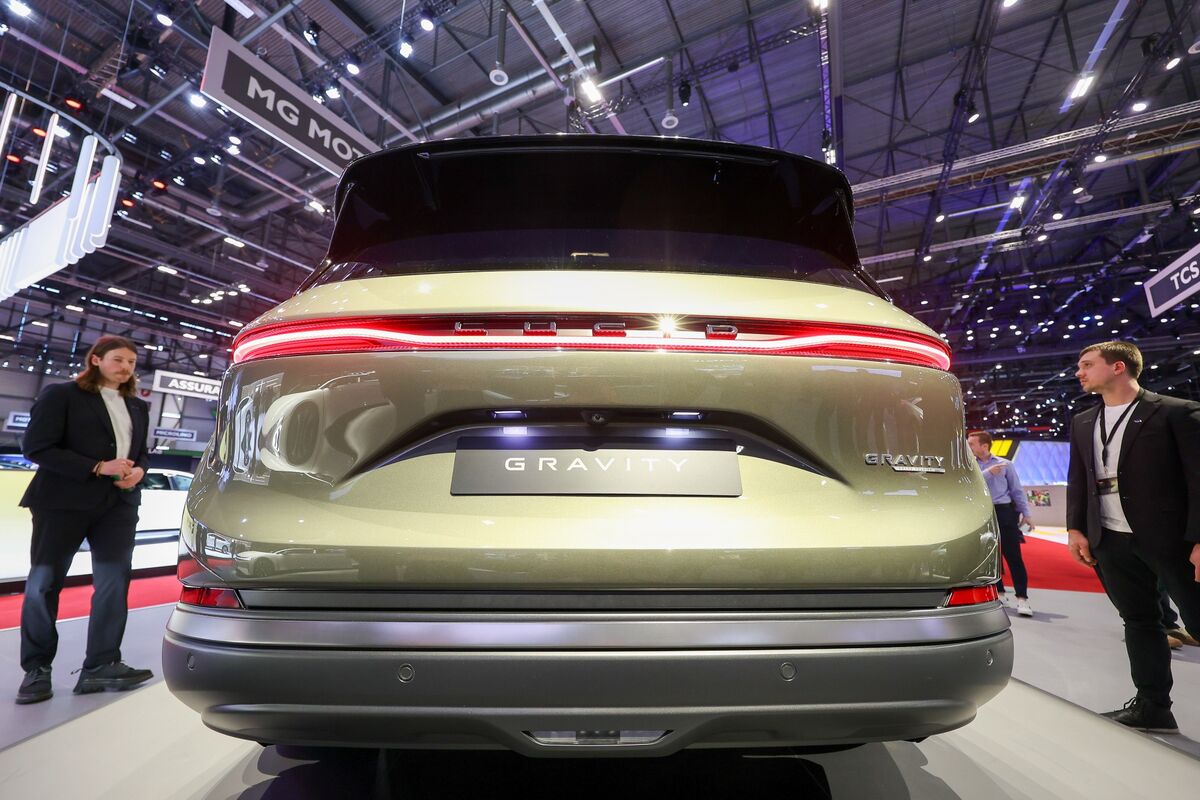

Lucid Group Names New CEO and Secures $750 Million Investment Amid Critical Production Phase
In a pivotal move to strengthen its position in the fiercely competitive electric vehicle (EV) market, Lucid Group Inc. has announced a leadership shakeup and secured a substantial $750 million investment from its two largest backers. The luxury EV manufacturer, known for its cutting-edge technology and high-end designs, is entering a crucial phase of production and expansion, and these strategic decisions aim to ensure its continued growth and stability. The announcement comes at a time when the EV industry faces significant challenges, including supply chain disruptions, rising costs, and increasing competition from established automakers and startups alike.
On Wednesday, Lucid revealed that Peter Rawlinson, the company’s former CEO and current chief technology officer, will step back into the role of CEO, while Derek Jenkins, Lucid’s senior vice president of design and brand, will take on the position of president. The reshuffling of leadership roles is intended to streamline operations and focus on accelerating production as Lucid prepares to ramp up its output of luxury electric vehicles. Rawlinson, a veteran automotive engineer who played a key role in the development of Tesla’s Model S, has been instrumental in shaping Lucid’s innovative approach to EV technology, particularly its emphasis on efficiency and range.
Alongside the leadership changes, Lucid disclosed a $750 million infusion from its two major investors, Saudi Arabia’s Public Investment Fund (PIF) and Ayar Third Investment Company, a subsidiary of PIF. The investment underscores the confidence of Lucid’s backers in the company’s long-term potential, despite recent financial headwinds and production delays. Lucid plans to allocate the funds toward expanding its manufacturing capabilities, enhancing its supply chain, and accelerating the development of new models.
The Road Ahead: Challenges and Opportunities
Lucid’s latest announcements come at a critical juncture for the company. Since its debut as a publicly traded company in 2021, Lucid has garnered significant attention for its flagship model, the Lucid Air, a luxury sedan praised for its industry-leading range and advanced features. However, the company has faced challenges in scaling production to meet demand. Lucid initially projected annual production of 20,000 vehicles for 2022 but later revised its target to between 6,000 and 7,000 units due to supply chain constraints and logistical hurdles.
The EV market, while rapidly growing, has become increasingly competitive. Established automakers such as Tesla, Ford, and General Motors are investing heavily in electrification, while startups like Rivian and Nio are vying for market share. Lucid’s focus on the luxury segment sets it apart, but the company must navigate a complex landscape of regulatory pressures, fluctuating raw material costs, and shifting consumer preferences.
The $750 million investment from PIF and Ayar Third Investment Company provides Lucid with much-needed capital to address these challenges. The Saudi Arabian sovereign wealth fund has been a key supporter of Lucid since its early days, investing over $2 billion in the company prior to its IPO. This latest funding round reaffirms PIF’s commitment to Lucid’s vision of revolutionizing the EV industry.
Leadership Transition: A Strategic Realignment
The decision to reinstate Peter Rawlinson as CEO reflects Lucid’s focus on leveraging his technical expertise and leadership experience to navigate this critical phase. Rawlinson’s deep understanding of EV technology and his track record in innovation position him as a driving force behind Lucid’s continued success. Derek Jenkins, who will assume the role of president, brings a wealth of experience in design and branding, having previously worked at Mazda and Volkswagen. His appointment signals Lucid’s commitment to maintaining its reputation for sleek, high-end vehicles that appeal to discerning consumers.
The leadership transition also highlights Lucid’s emphasis on aligning its executive team with its strategic goals. As the company prepares to scale production, Rawlinson and Jenkins will work closely to ensure operational efficiency and drive growth.
The Broader Context: EV Industry Trends
Lucid’s latest developments are emblematic of broader trends in the EV industry. Governments worldwide are accelerating efforts to transition away from fossil fuels, with many countries setting ambitious targets for EV adoption. In the United States, the Biden administration has pledged to make half of all new vehicle sales electric by 2030, while the European Union has proposed a ban on the sale of new gasoline and diesel cars by 2035.
Despite these favorable tailwinds, EV manufacturers face significant obstacles. The global semiconductor shortage, which began in 2020, has disrupted production across the automotive industry, while rising prices for lithium, nickel, and other raw materials have increased manufacturing costs. Additionally, the growing demand for EVs has prompted automakers to expand their offerings, intensifying competition in the market.
Lucid’s ability to overcome these challenges will depend on its capacity to execute its production plans, innovate in a rapidly evolving industry, and differentiate itself from competitors. The company’s focus on luxury and performance has positioned it as a leader in the premium EV segment, but sustaining this momentum will require careful navigation of the complexities of the global automotive market.
Closing Thoughts: A Test of Resilience
As Lucid Group enters this critical phase, the company must balance ambition with pragmatism. The $750 million investment provides a financial cushion, but its success will ultimately hinge on its ability to deliver on its promises and meet the expectations of investors and consumers alike. With Peter Rawlinson at the helm and Derek Jenkins leading its design and branding efforts, Lucid is poised to capitalize on its strengths and address its challenges head-on.
The EV industry’s future is bright, but the path forward is fraught with uncertainty. For Lucid, the next few years will be a test of resilience, innovation, and adaptability. As the company strives to carve out its niche in a competitive market, its actions today will shape its trajectory for years to come. Only time will tell whether Lucid can emerge as a lasting force in the electric vehicle revolution.
