



AI-Powered Filmmaking Takes Center Stage as Luma Partners with Wonder Project to Launch Innovative Dreams
By [Your Name]
In a bold move that signals the next frontier of filmmaking, artificial intelligence (AI) video generation startup Luma has unveiled Innovative Dreams, a groundbreaking production company created in collaboration with Wonder Project, a streaming service specializing in faith-based films and television shows available on Amazon Prime. The partnership aims to revolutionize the filmmaking process by leveraging AI to streamline production, reduce costs, and enhance creativity, marking a significant evolution in how cinematic content is created and consumed globally.
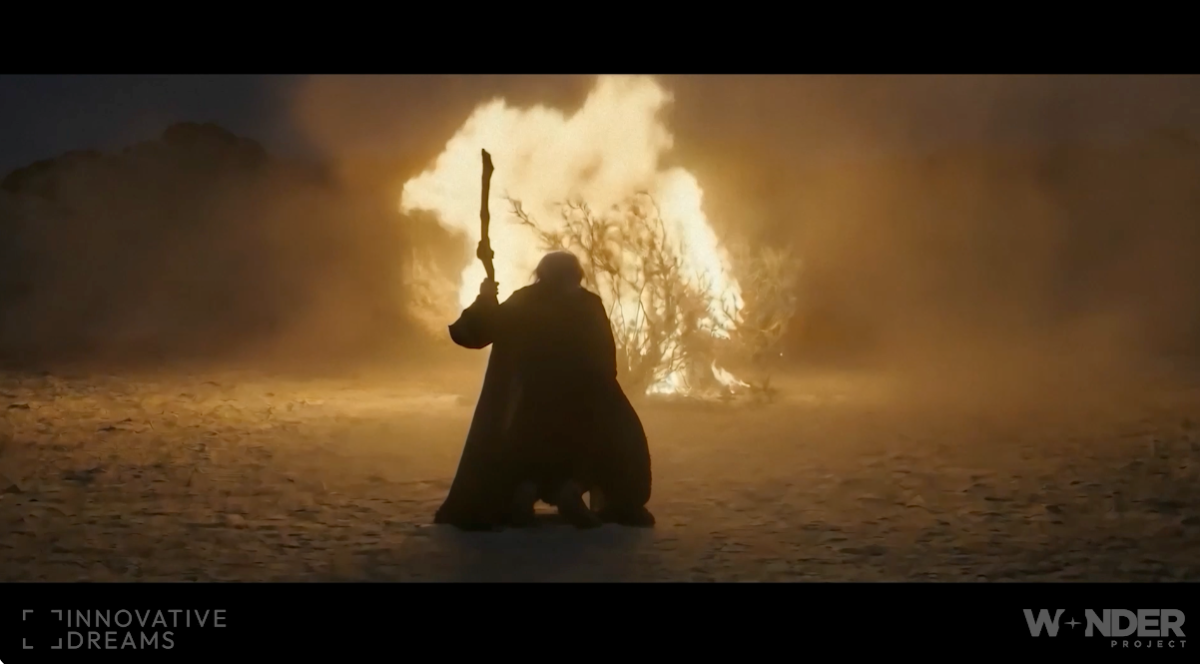
Innovative Dreams’ debut project, The Old Stories: Moses, starring acclaimed British actor Sir Ben Kingsley, is set to premiere this spring on Prime Video. The venture brings together seasoned filmmakers from director Jon Erwin’s team and Luma’s cutting-edge AI technology, offering a glimpse into the future of collaborative storytelling. “We’re blending the artistry of traditional filmmaking with the limitless potential of AI to create something truly transformative,” said Erwin in a statement.
The AI-Driven Filmmaking Revolution
At the heart of Innovative Dreams’ mission is Luma’s suite of AI-powered tools, known as Luma Agents, which are designed to handle end-to-end creative tasks across text, image, video, and audio. These tools enable filmmakers to make real-time adjustments to sets, props, lighting, and even actor footage, significantly reducing the reliance on post-production. “This is a game-changer,” Luma said in a social media post. “AI isn’t just about making things faster or cheaper—it’s about making them better than ever before.”
The partnership also introduces a novel approach called “real-time hybrid filmmaking,” which combines elements of performance capture (popularized by films like Avatar) and virtual production (seen in The Mandalorian). Traditionally, performance capture requires actors to wear suits with facial markers in a green-screen environment, while virtual production involves actors performing in front of LED screens with real-time graphics. Luma’s technology allows filmmakers to capture human actors anywhere and seamlessly integrate them into photorealistic scenes, even generating entirely new faces mapped onto the actor’s movements and expressions.
“What we’re doing is unlocking creative possibilities that were previously unimaginable,” Erwin explained in a promotional video. “You can film an actor in one location and transport them into a fully realized digital world—or create a completely new character that retains the actor’s essence. It’s filmmaking without limits.”
A Growing Trend in AI-Driven Content Creation
Luma’s venture is part of a broader trend in the entertainment industry, as startups and studios increasingly turn to AI to overcome the soaring costs and logistical challenges of traditional filmmaking. Competitor Higgsfield recently launched an original sci-fi series, and London-based Wonder Studios is collaborating on an AI-enhanced documentary with Campfire Studios. Meanwhile, Runway co-founder Cristóbal Valenzuela has urged studios to rethink their budgets, suggesting that AI could enable them to produce 50 films for the cost of a single $100 million blockbuster, thereby increasing the odds of a box-office hit.
Luma founder and CEO Amit Jain has echoed this sentiment, arguing that generative AI can democratize filmmaking by making it more accessible and efficient without compromising quality. “Hollywood’s current model is constrained by escalating costs,” Jain told TechCrunch. “AI offers a way to break free from those constraints and unlock new opportunities for storytellers.”
Wonder Project: A Focus on Faith-Based Content
The partnership with Wonder Project underscores Luma’s commitment to serving niche audiences while showcasing its technology’s versatility. Launched in 2023 by director Jon Erwin and former Netflix executive Kelly Hoogstraten, Wonder Project aims to produce content tailored to faith and values audiences worldwide. Its inaugural series, House of David, a Biblical drama about the life of King David, premiered on Amazon Prime in 2025 to critical acclaim.
While Innovative Dreams’ initial projects are rooted in religious storytelling, it remains unclear whether the company will expand into other genres. When asked for clarification, representatives declined to comment, leaving open the possibility of broader applications for Luma’s AI tools.
Challenges and Opportunities Ahead
Despite its promise, the integration of AI into filmmaking is not without challenges. Critics have raised concerns about the potential displacement of traditional roles in the industry, from editors to visual effects artists. Others worry that the reliance on AI could dilute the human touch that makes storytelling so powerful. However, proponents argue that AI is a tool to augment, not replace, human creativity.
“AI won’t replace the artist; it will empower them,” Erwin said. “What we’re doing is giving filmmakers the tools to tell their stories more effectively and efficiently than ever before.”
A New Era for Filmmaking
As Innovative Dreams prepares to launch its first project, the partnership between Luma and Wonder Project represents a watershed moment for the entertainment industry. By harnessing the power of AI to push the boundaries of creativity and efficiency, the venture could pave the way for a new era of filmmaking—one where technology and artistry coexist seamlessly to bring ambitious ideas to life.
Whether AI-driven production becomes the norm or remains a niche innovation, its impact on the industry is undeniable. As filmmakers and technologists continue to explore the possibilities, one thing is clear: the future of storytelling is being rewritten, and Luma is at the forefront of this cinematic revolution.
As the debate over AI’s role in filmmaking continues, the balance between innovation and tradition will ultimately shape the industry’s path forward. For now, audiences can look forward to The Old Stories: Moses as a testament to the potential of AI to redefine the art of storytelling.
