


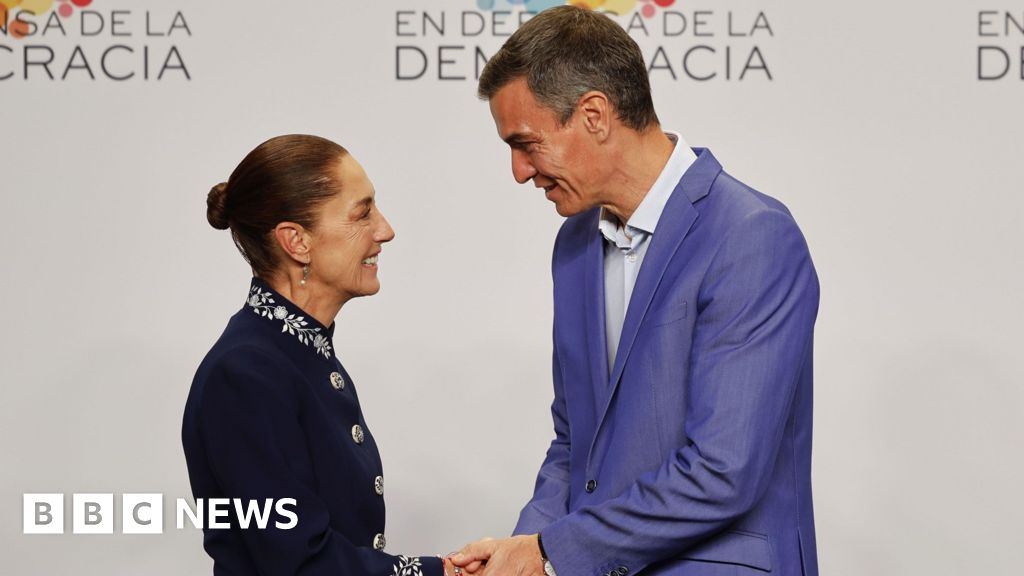

Global Tensions Rekindled Over Colonial Legacy as Mexican President Calls for Reconciliation
13 October 2023
The scars of colonial history, long buried beneath the weight of time and progress, have resurfaced in a contentious global debate. Mexican President Andrés Manuel López Obrador’s recent comments on Spanish colonialism have ignited a firestorm of controversy, raising questions about the lingering impact of colonial legacies on modern geopolitics. In a world grappling with identity, reparations, and historical justice, the Mexican leader’s assertion that “there were never tensions over Spanish colonisation” has sparked heated dialogue—not only between Mexico and Spain but also across nations still haunted by their colonial pasts.
As the world watches, this debate transcends borders, touching upon issues of race, inequality, and the unfinished business of historical reckoning. With rising populism, decolonisation movements, and global calls for reparations, López Obrador’s remarks have struck a nerve, prompting a deeper examination of how colonial history continues to shape the present.
The Context: A Thorny Historical Legacy
The history of Spanish colonisation in the Americas is a complex tapestry of conquest, exploitation, and cultural transformation. From the 15th to the 19th centuries, Spain’s empire spanned vast territories, including present-day Mexico, leaving behind a legacy of profound cultural and demographic shifts. Indigenous populations were decimated, traditions were erased, and a new social hierarchy emerged, with lasting effects that persist to this day.
In recent years, the global discourse on colonialism has intensified. Movements like Black Lives Matter and decolonisation campaigns in academia have brought issues of historical injustice to the forefront. Countries such as Germany, Belgium, and the United Kingdom have faced increasing pressure to acknowledge and address their colonial atrocities. Spain, however, has largely avoided such scrutiny—until now.
The Mexican President’s Statement: A Call for Reconciliation?
On 12 October 2023, coinciding with Spain’s National Day, President López Obrador addressed the contentious topic of Spanish colonialism. “We must look to the future with unity and leave behind the divisions of the past,” he stated, emphasising that there were “never tensions” over colonisation between Mexico and Spain.
This statement, however, has been met with mixed reactions. While some view it as a pragmatic effort to foster diplomatic ties, others see it as a dismissal of the profound suffering endured by Indigenous populations. Critics argue that López Obrador’s rhetoric glosses over the ongoing disparities faced by Indigenous communities in Mexico, many of whom continue to struggle with poverty, marginalisation, and land rights disputes.
Spain, for its part, has responded cautiously. Spanish Prime Minister Pedro Sánchez praised López Obrador’s “forward-looking approach” but stopped short of addressing the broader implications of colonialism. This diplomatic dance underscores the delicate balance between acknowledging historical wrongs and maintaining contemporary alliances.
Why This Matters: A Global Reckoning
The debate over López Obrador’s comments is not confined to Mexico and Spain; it is part of a broader global conversation about how nations reckon with their histories. From Africa to Asia to the Americas, countries are grappling with the legacies of colonialism—whether through demands for reparations, the removal of colonial-era statues, or the reevaluation of historical narratives.
In Africa, nations like Kenya and Namibia have sought reparations for atrocities committed during colonial rule. In India, activists continue to challenge the British Empire’s legacy, from economic exploitation to cultural erasure. Even in Europe, former colonial powers face growing pressure to confront their pasts, as seen in Belgium’s recent apologies for its role in the Congo.
López Obrador’s remarks highlight a critical issue: how nations navigate the tension between historical justice and modern diplomacy. For Mexico, a country where Indigenous peoples make up a significant portion of the population, this debate is deeply personal. For Spain, it represents an opportunity—or perhaps an obligation—to engage more fully with its colonial history.
The Human Cost: Voices from the Margins
Amid the diplomatic and political discourse, the voices of Indigenous communities often go unheard. In Mexico, where nearly 25% of the population identifies as Indigenous, the legacy of colonisation is not a distant memory but a lived reality. Many Indigenous groups face systemic discrimination, limited access to education and healthcare, and threats to their ancestral lands.
“The President’s words ignore the struggles we face every day,” says María López, an Indigenous activist from Oaxaca. “Colonisation didn’t end in the 19th century; its effects are still with us.”
Her sentiments echo those of Indigenous leaders worldwide, who argue that reconciliation cannot occur without addressing the structural inequalities rooted in colonial history.
Looking Ahead: A Path to Justice?
As the debate over colonialism continues to unfold, one thing is clear: the past cannot be erased, but it can be acknowledged. Nations must find a way to honour historical truths while building bridges for the future. For Mexico and Spain, this means engaging in honest dialogue about the impact of colonisation and working together to address its lasting effects.
For the global community, López Obrador’s statement serves as a reminder of the unfinished work of decolonisation. It challenges us to confront uncomfortable truths, amplify marginalised voices, and strive for a more equitable world.
Conclusion: A Call for Nuanced Dialogue
The legacy of colonialism is a global issue that demands a global response. While President López Obrador’s comments may have aimed to foster reconciliation, they have inadvertently reignited a vital conversation about historical justice. In a world increasingly divided by identity and history, this moment offers an opportunity for nations to engage in nuanced dialogue—one that acknowledges the past while striving for a more inclusive future.
As history continues to shape the present, the question remains: how will we choose to reckon with it? The answer will define not only Mexico and Spain but also the broader trajectory of global peace and security in the 21st century.
