



U.S. Navy Seizes Iranian Ship in Gulf Amid Rising Tensions
Dramatic Gulf Interception Sparks Fears of Wider Conflict
In a high-stakes maritime confrontation, U.S. forces intercepted and seized an Iranian-flagged cargo ship in the Gulf, escalating already volatile tensions between Washington and Tehran. The incident, confirmed by former President Donald Trump on his Truth Social platform, marks one of the most direct military clashes between the two nations in recent months. According to U.S. Central Command (CENTCOM), the vessel, identified as the Touska, was boarded after failing to heed warnings—a move Iran has condemned as an “act of armed piracy” and vowed to retaliate against. The seizure comes amid a fragile regional ceasefire, raising fears of renewed hostilities in a waterway critical to global energy supplies.
How the Interception Unfolded
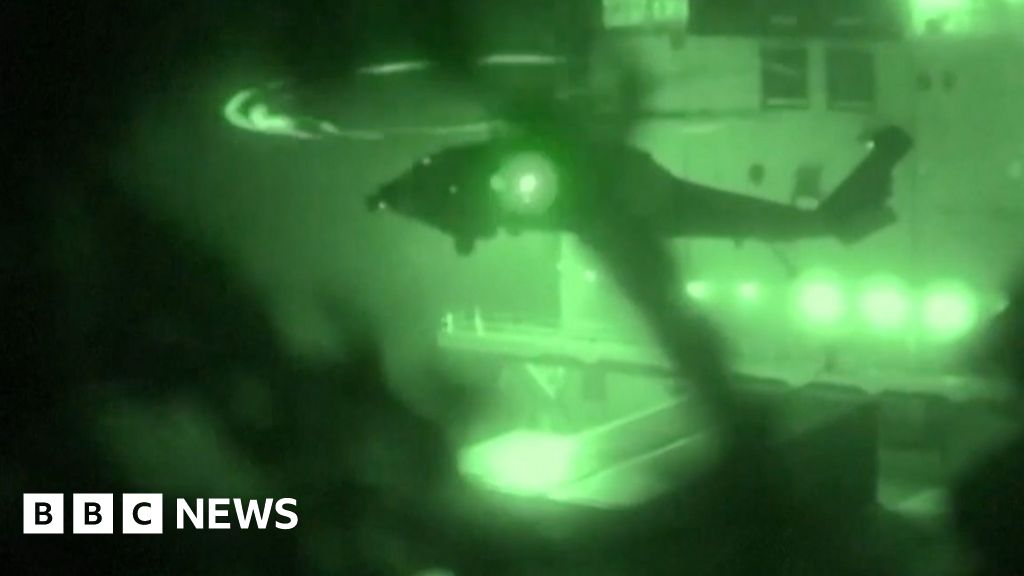
The operation began when the U.S. Navy detected the Touska moving through international waters under what American officials described as suspicious circumstances. After repeated radio warnings went unanswered, the U.S. deployed Marines from a nearby warship to forcibly board the vessel. CENTCOM released video footage showing the tense encounter, including the initial warning shots and the subsequent boarding operation.
Iran’s Foreign Ministry swiftly denounced the seizure, calling it a “blatant violation of international law” and warning of “serious consequences.” While the exact cargo of the Touska remains undisclosed, past Iranian shipments in the region have included weapons bound for militant groups—a frequent point of contention with the U.S.
Global Implications: Why This Matters
The Strait of Hormuz, where the incident occurred, is one of the world’s most critical maritime chokepoints, with nearly a fifth of global oil shipments passing through its narrow waters. Any military escalation here risks disrupting energy markets, potentially sending fuel prices soaring worldwide.
The confrontation also underscores the fragile state of U.S.-Iran relations, which have deteriorated further since the collapse of the 2015 nuclear deal. With Iran accelerating its nuclear program and backing regional proxies in Yemen, Syria, and Lebanon, Washington has maintained a hardline stance, including strict sanctions and naval blockades to curb Tehran’s influence.
Historical Context: A Pattern of Confrontations
This is not the first time U.S. and Iranian forces have clashed at sea. In recent years, Iran has repeatedly seized foreign tankers, while the U.S. has intercepted arms shipments allegedly destined for groups like the Houthis in Yemen. Just last year, a similar standoff nearly triggered a broader conflict after Iranian speedboats harassed American warships.
The latest incident comes as both nations test each other’s red lines—Iran by continuing its maritime activities despite sanctions, and the U.S. by enforcing a strict interdiction policy. With neither side willing to back down, analysts warn that even a minor skirmish could spiral into a larger confrontation.
What Happens Next?
Iran has promised retaliation, though the form it will take remains uncertain. Past responses have included missile strikes on U.S. bases, cyberattacks, or seizures of Western vessels in the Gulf. Meanwhile, the Biden administration faces mounting pressure to justify the seizure amid criticism from allies and adversaries alike.
The international community, including the UN and European powers, will likely call for restraint, but with trust between Washington and Tehran at an all-time low, diplomatic solutions appear increasingly unlikely.
A Dangerous New Flashpoint
As the world watches, the seizure of the Touska serves as a stark reminder of how quickly tensions in the Gulf can ignite. With global energy supplies and regional stability hanging in the balance, this latest confrontation could be the spark that reignites a long-simmering conflict—or a moment that forces both sides to step back from the brink. Either way, the stakes could not be higher.
