


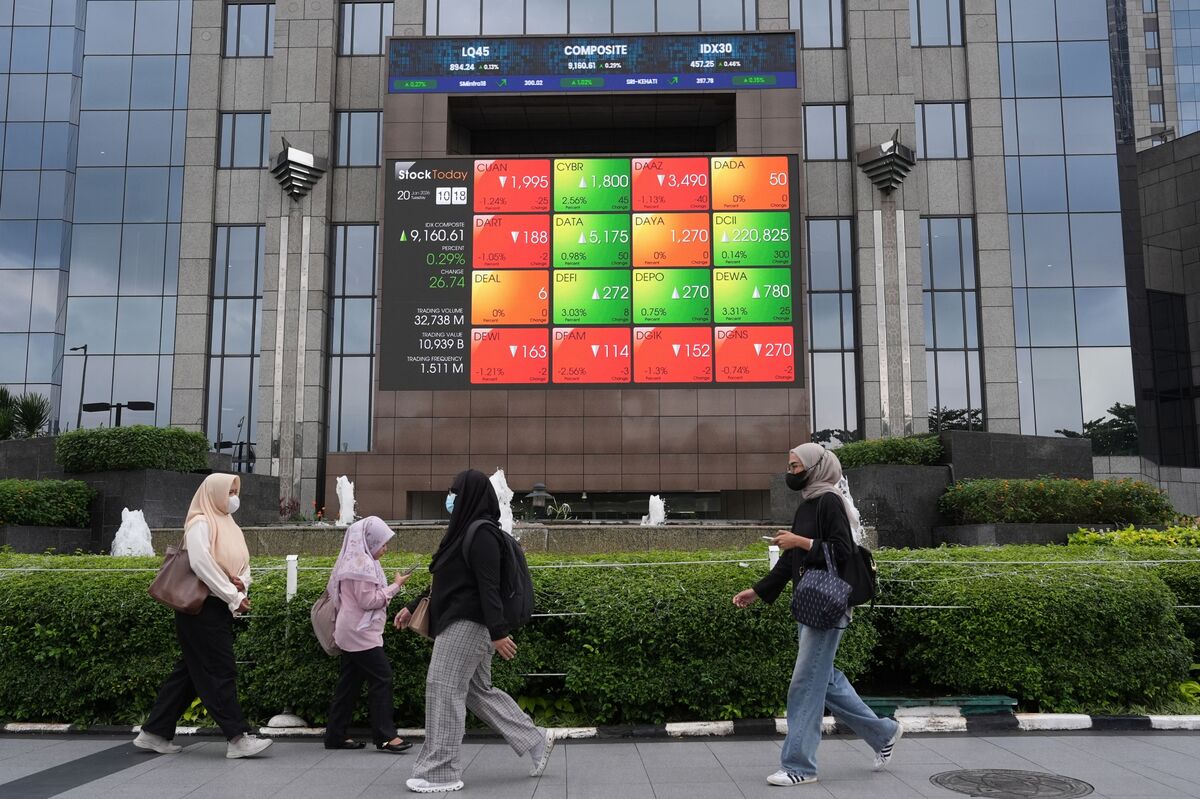

Indonesia Stock Exchange Tightens Listing Rules to Boost Market Integrity
Jakarta, Indonesia – In a bold move to strengthen market transparency and attract global investors, the Indonesia Stock Exchange (IDX) announced sweeping reforms targeting companies with excessive shareholder concentration. The new measures will exclude firms with highly concentrated ownership from key benchmark indexes, signaling Indonesia’s commitment to aligning with international governance standards amid rising foreign scrutiny of emerging markets.
Cracking Down on Concentrated Ownership
The IDX confirmed this week that companies identified as having disproportionately dominant shareholders—typically defined as a single entity controlling more than 80% of shares—will be phased out of major indices, including the LQ45 and IDX30. These indexes, which track top-performing and highly liquid stocks, serve as critical indicators for institutional investors. The decision follows mounting concerns that concentrated ownership structures distort pricing, reduce liquidity, and deter foreign capital by creating perceptions of unfair advantages or governance risks.
“Market fairness requires diversified ownership to ensure genuine price discovery and equal opportunities,” said IDX President Director Iman Rachman in a press briefing. “This reform reflects our proactive stance in addressing structural weaknesses.” Analysts note the move could initially impact family-owned conglomerates and state-linked enterprises, which have long dominated Indonesia’s corporate landscape.
Context: Why Ownership Concentration Matters
Indonesia’s equity market, Southeast Asia’s second-largest after Thailand, has struggled with transparency issues for years. A 2022 World Bank report highlighted that over 40% of IDX-listed firms had a single majority shareholder owning more than 50% of shares—a rate far higher than in peer markets like Malaysia or Singapore. Such concentration often leads to weaker minority shareholder protections, erratic trading volumes, and vulnerability to price manipulation.
The reforms come as Indonesia seeks to elevate its status as an investment destination. The country recently secured an upgrade to “Emerging Market” status from FTSE Russell, but MSCI continues to classify it as a “Frontier Market,” citing lingering governance concerns. “Index providers and global funds are watching closely,” said Maynard Arifin, a Jakarta-based capital markets analyst. “This sends a message that Indonesia is serious about modernization.”
Industry Reactions and Potential Fallout
While investor advocates applauded the move, some business groups warned of unintended consequences. The Indonesian Employers Association (Apindo) cautioned that sudden delistings could destabilize mid-cap firms reliant on index-linked passive investments. However, the IDX clarified that the changes will be implemented gradually, with affected companies given 12–18 months to diversify ownership or face exclusion.
Notably, the policy avoids retroactive penalties—existing index members won’t be immediately removed but must comply during periodic reviews. This approach mirrors strategies adopted by Brazil’s B3 exchange in 2020, which saw improved liquidity post-reform.
Broader Implications for Southeast Asia
Indonesia’s decision places it at the forefront of a regional push for market reforms. Neighboring Vietnam, for instance, has faced criticism for similar ownership imbalances, while the Philippines has introduced stricter free-float rules. The IDX’s move could pressure other ASEAN exchanges to follow suit, particularly as global asset managers increasingly prioritize ESG (Environmental, Social, and Governance) metrics.
The Jakarta Composite Index (JCI) has gained 9% year-to-date, outperforming regional peers, but analysts argue sustained growth hinges on deeper structural changes. “Foreign inflows remain cautious,” noted Credit Suisse’s ASEAN equity strategist, Fiona Lim. “Investors want proof that reforms are enforceable, not just aspirational.”
What’s Next?
The IDX will release detailed technical guidelines by Q1 2024, with enforcement expected mid-year. Market participants are advised to review their shareholder registers, while regulators plan enhanced monitoring to prevent artificial diversification schemes.
For Indonesia, the stakes extend beyond equities. A more transparent market could bolster the country’s bid to host multinational corporate headquarters and attract higher-value IPOs. As one senior finance ministry official privately conceded, “This isn’t just about indexes—it’s about credibility.”
With global capital flows increasingly sensitive to governance risks, Indonesia’s latest reforms may well determine whether it graduates from a frontier darling to a mainstream emerging market. Only time will tell if actions match ambitions.
