


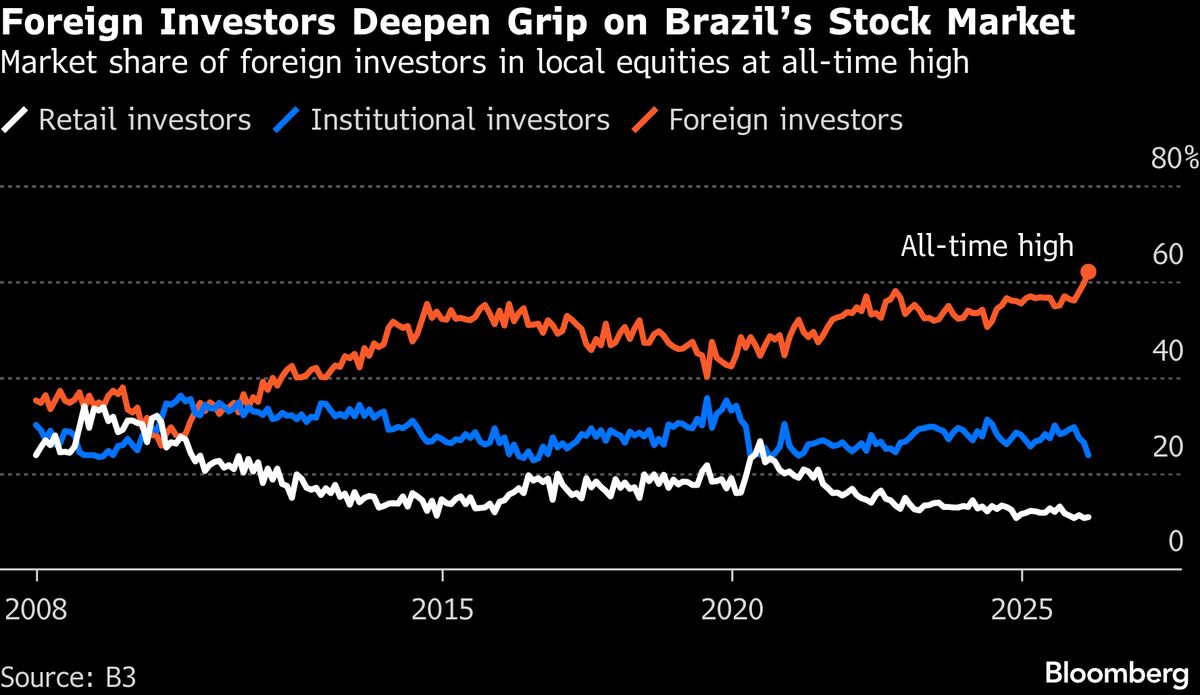

Global Investors Flock to Brazilian Stock Market Amid Renewed Risk Appetite
As global markets regain their footing after months of uncertainty, Brazil’s stock exchange is emerging as a focal point for international investors. Capital flows into the country’s equities market have surged in recent months, and senior executives at leading global banks predict this trend will continue through the rest of the year. The renewed interest in Brazilian assets reflects a broader shift in investor sentiment, driven by a combination of favorable macroeconomic conditions, attractive valuations, and a global hunt for higher returns in emerging markets.
A Resurgent Risk Appetite
The global investment landscape has undergone significant changes in 2023. After a tumultuous period marked by inflationary pressures, aggressive central bank rate hikes, and geopolitical tensions, markets are beginning to stabilize. The U.S. Federal Reserve’s signals of a potential pause in its tightening cycle, coupled with easing inflation in key economies, have reignited investors’ willingness to take on risk. Against this backdrop, emerging markets like Brazil are benefiting from a resurgence of capital inflows.
Brazil, Latin America’s largest economy, has been particularly well-positioned to capitalize on this shift. The country’s benchmark Bovespa index has outperformed many of its global peers this year, buoyed by strong corporate earnings, stable commodity prices, and a more favorable political environment under President Luiz Inácio Lula da Silva. While Lula’s left-leaning policies initially raised concerns among investors, his administration has since struck a more pragmatic tone, emphasizing fiscal responsibility and economic growth.
The Case for Brazilian Equities
Several factors are driving the influx of foreign capital into Brazilian stocks. First, the country’s equity market offers compelling valuations compared to developed markets. With price-to-earnings ratios significantly lower than those in the U.S. or Europe, Brazil presents an attractive opportunity for investors seeking undervalued assets. Additionally, Brazil’s commodity-driven economy remains a key beneficiary of sustained demand for agricultural and energy exports, particularly as China’s reopening fuels global trade.
Second, Brazil’s monetary policy has been a stabilizing force. After hiking interest rates to combat inflation, the country’s central bank, Banco Central do Brasil, has begun to ease its stance, cutting rates in a measured manner. Lower borrowing costs are expected to stimulate domestic consumption and investment, further boosting corporate earnings and investor confidence.
Third, Brazil’s financial markets have matured significantly over the past decade, offering greater transparency and improved regulatory frameworks. Foreign investors are increasingly comfortable navigating these markets, aided by a robust local banking sector and a growing presence of global financial institutions.
Challenges Remain
Despite the optimism, Brazil’s economic outlook is not without risks. Infrastructure bottlenecks, bureaucratic inefficiencies, and lingering concerns about fiscal discipline could weigh on long-term growth. Critics have warned that Lula’s ambitious social spending plans could strain public finances, potentially undermining investor confidence.
Moreover, the global economic environment remains uncertain. While risk appetite has improved, any resurgence of inflationary pressures or geopolitical instability could prompt investors to retreat from emerging markets. Brazil’s heavy reliance on commodity exports also leaves it vulnerable to fluctuations in global demand and prices.
Global Banks Bullish on Brazil
Despite these challenges, major global banks are optimistic about Brazil’s prospects. Executives at institutions such as Goldman Sachs, JPMorgan, and Bank of America have highlighted the country’s resilience and growth potential. In a recent report, Goldman Sachs noted that Brazil’s equity market is poised for further gains, driven by strong earnings growth and improving macroeconomic fundamentals.
Similarly, Bank of America emphasized Brazil’s role as a “haven” within emerging markets, citing its relatively stable currency, robust reserves, and proactive central bank policies. These endorsements have reinforced investor sentiment, prompting a wave of capital inflows from North America, Europe, and Asia.
Broader Implications for Emerging Markets
Brazil’s resurgence is part of a broader trend reshaping global capital flows. As developed markets grapple with slower growth and tighter monetary policies, investors are increasingly turning to emerging economies in search of higher returns. Countries with strong governance, sound fiscal policies, and diversified economies are likely to attract significant capital in the years ahead.
This shift underscores the growing importance of emerging markets in the global financial system. While developed economies like the U.S. and Europe remain dominant, the rise of countries like Brazil highlights the potential for a more balanced and dynamic global economy.
Conclusion
As the year progresses, Brazil’s stock market is expected to remain a magnet for foreign investors, driven by favorable valuations, robust economic fundamentals, and a renewed appetite for risk. While challenges persist, the country’s ability to navigate these headwinds will be crucial in sustaining investor confidence and capital flows. For now, Brazil stands as a testament to the resilience and potential of emerging markets in an increasingly interconnected world. Whether this momentum can be maintained will depend on both domestic reforms and the global economic landscape, making it a story worth watching closely.
