


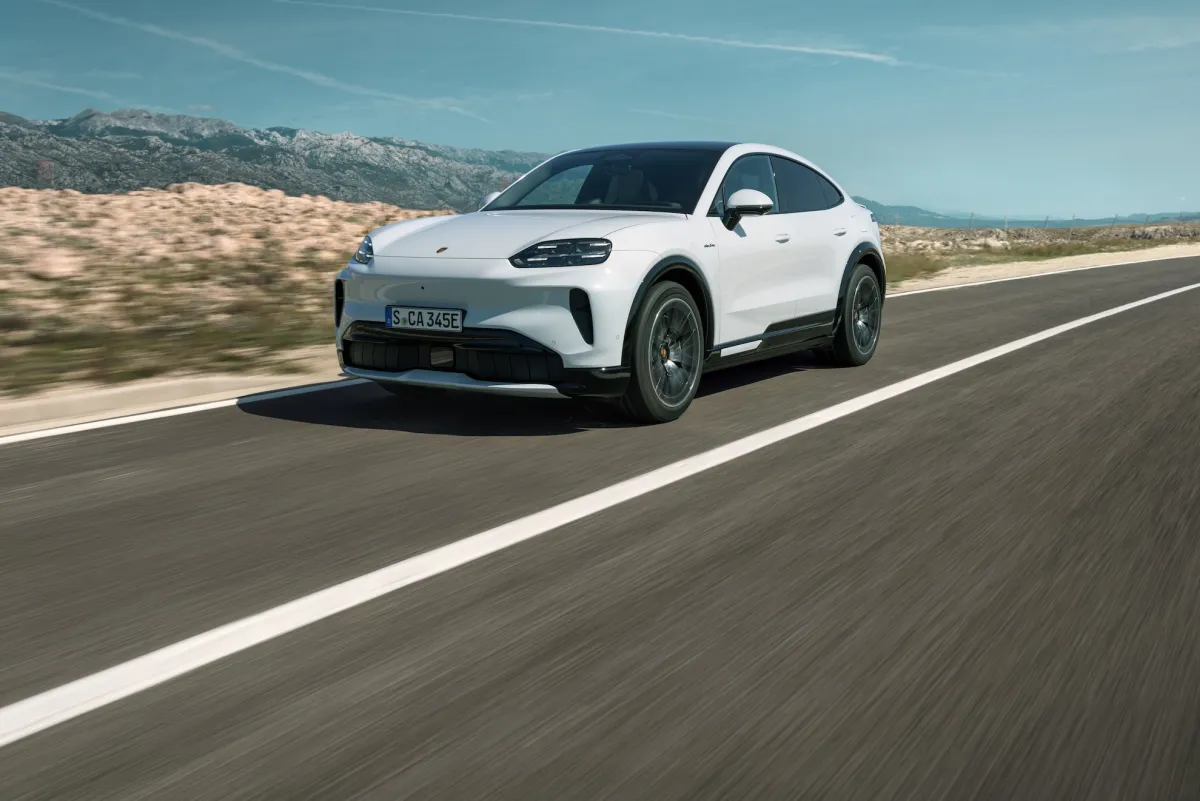

Porsche Doubles Down on Luxury EV Market with Electrified Cayenne Coupe Launch
By [Your Name], Senior Automotive Correspondent
Stuttgart, Germany – In a bold move signaling its continued confidence in the electric vehicle (EV) market, Porsche has announced the global launch of its all-electric Cayenne Coupe, set to hit dealerships by late summer. The high-performance SUV, which blends Porsche’s signature sporty design with zero-emission technology, arrives at a pivotal moment for the auto industry as demand for premium EVs faces scrutiny amid shifting consumer preferences.
The Cayenne Coupe Electric—officially branded as such—will join an expanding lineup of battery-powered Cayenne variants, including the base Cayenne Electric, Cayenne S Electric, and Cayenne Turbo Electric. Unlike Porsche’s compact Macan SUV, which will transition to an EV-only model, the Cayenne Coupe will coexist with its gasoline and hybrid counterparts well beyond 2030, according to company officials. This strategic decision positions Porsche to gather critical data on consumer preferences in the luxury EV segment.
A Proven Winner Goes Electric
The coupe variant of the Cayenne has been a resounding success since its gasoline-powered debut in 2019. Initially capturing 20% of Cayenne sales within its first year, the sleeker, sportier model now accounts for 40% of the lineup’s global sales—and in some markets, an astonishing 90%. This track record suggests strong potential for the electric iteration, despite its premium price tag starting at $113,800 (excluding delivery fees).
“The Cayenne Coupe has always resonated with buyers who want the practicality of an SUV with the dynamic silhouette of a sports car,” said a Porsche spokesperson. “Electrifying it was the natural next step.”
Performance Meets Luxury
Porsche has spared no expense in ensuring the Cayenne Coupe Electric lives up to its performance heritage. All variants feature an 800-volt powertrain—borrowed from the Taycan EV—along with adaptive air suspension and an aerodynamic roof design incorporating an adaptive rear spoiler. Buyers will also benefit from Tesla’s North American Charging Standard (NACS) port, ensuring access to the largest fast-charging network in the U.S.
The base model delivers 435 horsepower and 615 lb-ft of torque, accelerating from 0-60 mph in 4.5 seconds. For those craving more adrenaline, the Turbo variant cranks out a staggering 1,139 horsepower—rivaling the Tesla Model S Plaid and Lucid Air Sapphire—with a blistering 2.4-second 0-60 mph time. While official EPA range estimates remain undisclosed, real-world testing suggests approximately 360 miles per charge, though opting for larger performance tires could reduce that figure by 10%.
A Calculated Gamble in a Volatile EV Market
Porsche’s decision to retain combustion-engine Cayennes alongside their electric counterparts reflects a nuanced approach to the industry’s electrification push. While competitors like General Motors and Ford have scaled back EV investments due to softening demand, Porsche’s luxury clientele may prove more resilient.
“Luxury buyers are less sensitive to charging infrastructure concerns or price fluctuations,” noted Rebecca Lindland, an auto industry analyst at Cars.com. “Porsche is betting that its brand loyalty and performance credentials will outweigh any EV hesitancy.”
The move also underscores Porsche’s broader strategy: electrify where it makes sense, but don’t abandon proven sellers. The Cayenne, after all, remains the brand’s best-selling model, with over 87,000 units sold globally in 2023.
The Road Ahead
As Porsche prepares for the Cayenne Coupe Electric’s debut, all eyes will be on whether luxury consumers embrace the EV transition as enthusiastically as they did the coupe’s gasoline predecessor. With its blend of cutting-edge technology, head-turning design, and Porsche’s racing pedigree, the model could very well become the brand’s most successful electric offering yet.
For now, the question remains: Will the allure of instant torque and silent acceleration be enough to justify the six-figure price tag? The answer, much like the future of the EV market itself, is still unfolding.
