



The Rise of Dedicated Dictation Devices: SpeakOn’s Bold Entry and Room for Improvement
In an era where voice technology is rapidly transforming how we interact with our devices, the quest for seamless dictation tools has become a priority for many. From AI-powered apps to voice assistants, the market is brimming with options—yet, users often encounter frustrating limitations, such as poor microphone quality or platform constraints. Enter SpeakOn, a dedicated dictation device developed by Notta, which promises to revolutionize the way we dictate messages, emails, and more. But does it deliver on its promise? Our hands-on experience reveals a product with potential but also significant room for refinement.
A Pebble-Sized Solution for Everyday Dictation
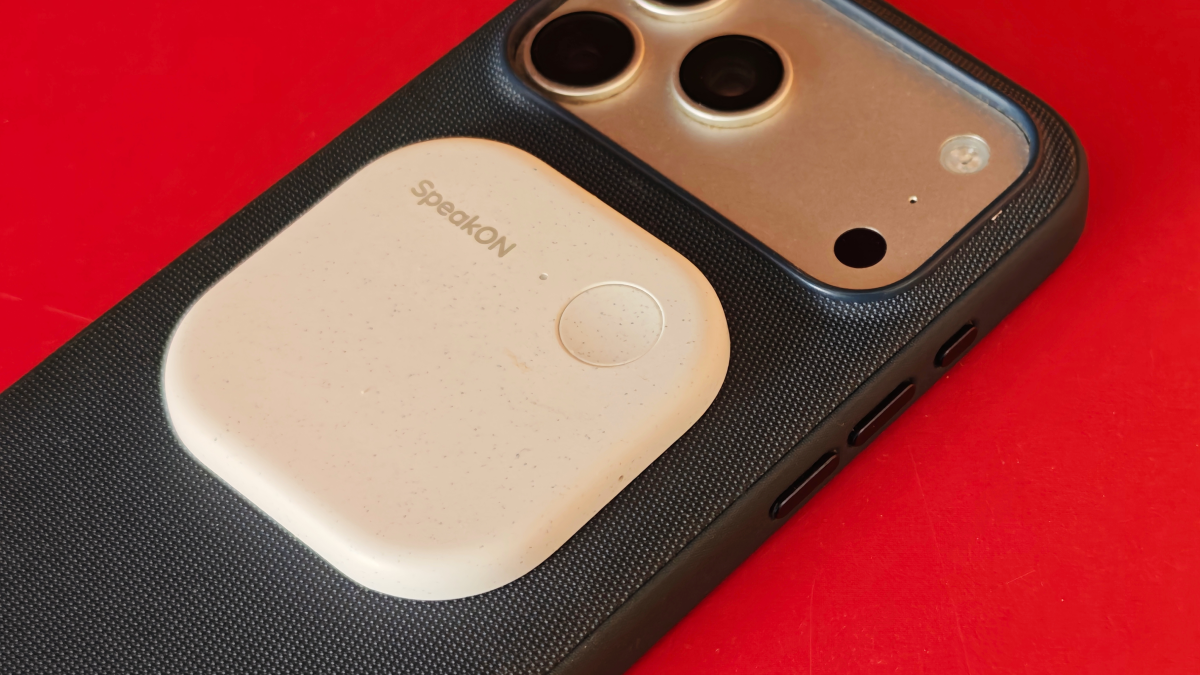
SpeakOn is a compact, MagSafe-compatible device designed to attach seamlessly to the back of an iPhone. Weighing just 25 grams, it’s light enough to be carried discreetly in a pocket or used directly on the phone without adding noticeable bulk. Its pebble-like design is sleek and unobtrusive, reminiscent of other MagSafe accessories like Plaud’s AI meeting notetaker.
The device operates through a companion iOS app, which functions as a keyboard replacement for dictation. Users can initiate dictation by pressing a button on the SpeakOn device, releasing it when finished. The app boasts features such as automatic filler word removal, text formatting, and translation capabilities across multiple languages, including English, Japanese, Spanish, French, and Arabic.
One standout feature is SpeakOn’s dedicated microphone, which eliminates the need to rely on the iPhone’s built-in mic. This is a significant advantage over traditional dictation apps, which often require the phone’s mic to remain active for extended periods, draining battery life. SpeakOn claims its mic can capture audio within a two-foot radius, though our testing found this range to be somewhat optimistic in real-world scenarios.
Mixed Performance in Practice
While SpeakOn’s concept is innovative, its execution falls short in several areas. Despite its dedicated microphone, the device struggles to pick up audio clearly unless the phone is held within close proximity—approximately two feet or less. Even within this range, ambient noise frequently interfered with dictation accuracy, leading to frustrating miscommunications.
Another limitation is the app’s AI-driven text editing feature, which aims to refine and tone-shift the dictated text based on context. While this could theoretically enhance professionalism or clarity, it often felt heavy-handed and unnecessary. For instance, phrases like “Does this app work automatically?” were transformed into “Does this application operate automatically?”—a change that felt overly formal and unnatural. Similarly, casual expressions like “Sure, no worries” were reworded into “There is no need to be concerned,” which deviated from the intended tone.
Platform compatibility is another area where SpeakOn falls behind. Currently, the device is only compatible with iOS, leaving Mac users without a viable option for cross-device dictation. Expanding support to macOS and other platforms could significantly broaden its appeal and utility.
Battery Life and Pricing: A Balanced Equation
SpeakOn’s battery performance is a mixed bag. The company claims the device can last up to 10 hours of continuous use and boasts a 20-day standby time. However, in our testing, standby time fell short of this estimate, lasting only a few days. A possible solution could be implementing an automatic power-off feature after periods of inactivity to conserve battery life.
On the pricing front, SpeakOn offers a $129 upfront cost for a plan allowing 5,000 words per week, alongside a $12 monthly subscription for unlimited usage. Compared to competitors like Wispr Flow, which typically caps free plans at 2,000 words per week, SpeakOn’s offering is competitive but not without room for improvement.
The Road Ahead for Dedicated Dictation Devices
SpeakOn represents a promising step forward in the evolution of dictation technology. Its dedicated hardware and focus on usability are commendable, yet there’s undeniable room for improvement. Enhanced microphone quality, broader platform support, and more nuanced AI editing could elevate SpeakOn from a niche gadget to a mainstream must-have.
As voice technology continues to advance, SpeakOn’s early-mover advantage positions it well in a growing market. However, the device’s future success will depend on its ability to address user feedback and stay ahead of competitors who may soon enter the space with similar offerings.
In conclusion, SpeakOn is a fascinating glimpse into the potential of dedicated dictation devices—a concept that, with refinement, could redefine how we interact with our digital world. As the technology matures, the question remains: will SpeakOn lead the charge, or will it be overtaken by faster-moving innovators? Only time will tell.
