


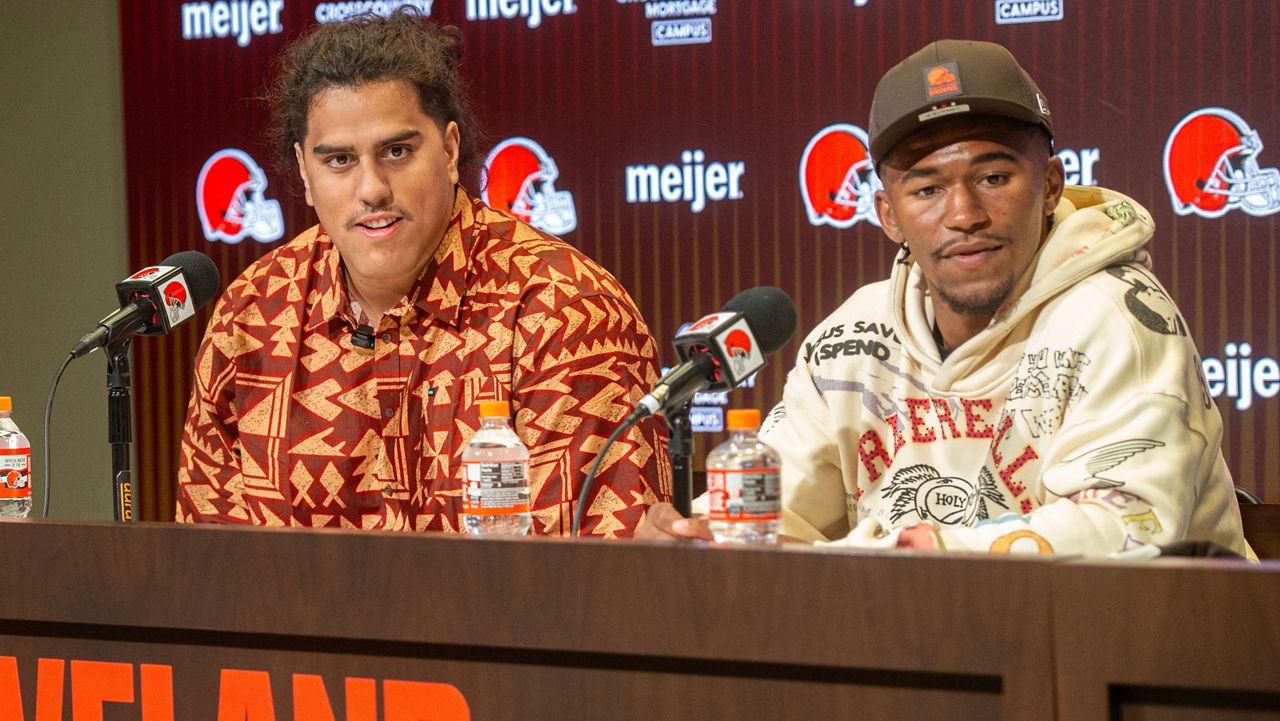

Cleveland Browns Go All-In on Offensive Revamp in 2026 NFL Draft
BEREA, Ohio — The Cleveland Browns entered the 2026 NFL Draft with a clear mission: fix an offense that has struggled due to inconsistent quarterback play, unreliable receivers, and a banged-up offensive line. By the time the draft concluded, the team had made significant moves to address those weaknesses, signaling a fresh start under first-year head coach Todd Monken.
A Heavy Offensive Focus
General Manager Andrew Berry didn’t hold back, using two of the Browns’ first three picks on wide receivers and three selections on offensive linemen. Tight ends and even a late-round quarterback were added to the mix, making this one of the most offense-heavy drafts in recent franchise history.
“I’m excited about the work Andrew has done,” Monken said. “But what matters now is how we develop these players and put them in positions to succeed.”
Reinforcing the Trenches
The Browns made a bold move early, selecting Utah left tackle Spencer Fano with the No. 9 overall pick. Fano, a powerful and agile blocker, is expected to anchor the line for years to come. Cleveland also traded up in the third round to grab Florida’s Austin Barber, a versatile lineman who could play tackle or guard.
Perhaps the most intriguing addition was Parker Brailsford, an athletic center from Alabama taken in the fifth round. Though veteran Elgton Jenkins was signed in free agency to start at center, Brailsford’s mobility could push Jenkins to guard if the rookie impresses in camp.
“Centers who can pull and get to the second level give you flexibility in the run game,” Berry said. “Parker does that exceptionally well.”
New Weapons at Receiver
Last season, five of Cleveland’s top six pass-catchers were running backs or tight ends—a glaring issue for a team needing explosive plays. The Browns responded by drafting KC Concepcion (Texas A&M) in the first round and Denzel Boston (Washington) in the second.
Concepcion, a polished route-runner with elite speed, should immediately stretch defenses. Boston, standing 6-foot-4, brings a physical presence with strong hands, making him a red-zone threat.
A Late-Round QB Gamble
Despite drafting Shedeur Sanders and Dillon Gabriel in 2025, Berry didn’t shy away from adding another arm, selecting Taylen Green (Arkansas) in the sixth round. Green, a dual-threat quarterback with size and speed, was productive in the SEC but struggled with turnovers (17 fumbles in two seasons).
“He has rare physical gifts—size, speed, a big arm,” Berry said. “He needs refinement, but his work ethic gives him a chance.”
Defensive Steals
While offense dominated the draft, Cleveland found value on defense, particularly with Emmanuel McNeil-Warren, a hard-hitting Toledo safety known for forcing fumbles (nine in college). Berry called him the most surprising player still available when they picked him in the third round.
The Browns also added Alabama linebacker Justin Jefferson in the fifth round, adding depth to a unit that needed reinforcements.
Berry’s Aggressive Moves
Cleveland’s front office was far from passive, making six trades over the three-day draft. The biggest was moving down from No. 6 to No. 9 in a deal with Kansas City, netting extra picks while still landing their top O-line target, Fano.
What’s Next?
The Browns’ draft class reflects a clear shift toward rebuilding an offense that has held the team back. If the new additions develop quickly, Cleveland could finally field a balanced attack to complement its strong defense.
For now, all eyes will be on training camp to see if these rookies can turn potential into production.
— Reported by Nexio News
