


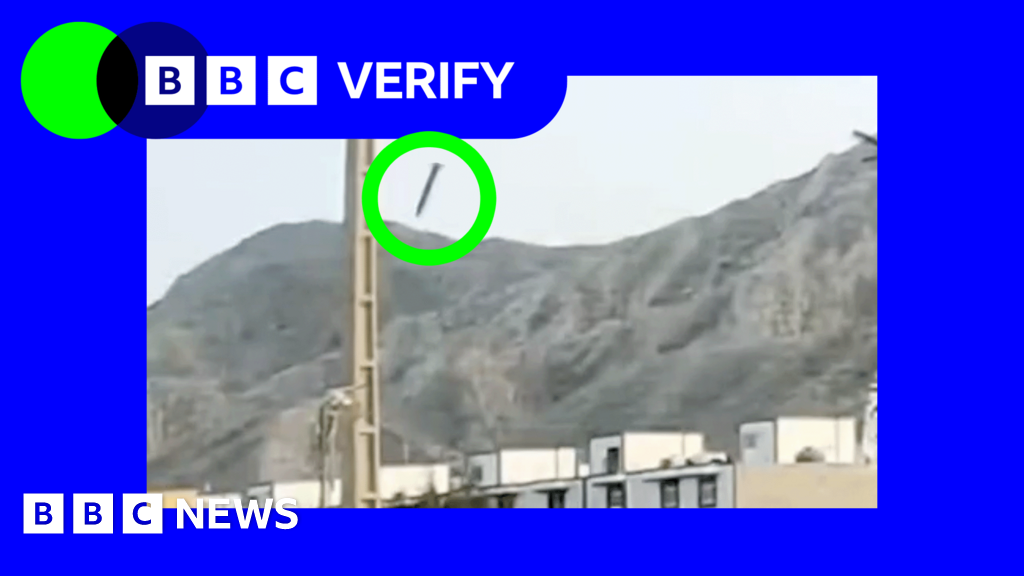

US Deploys Precision Strike Missile in Iran: A New Escalation in Global Tensions
The footage is chilling: a plume of smoke rises ominously over the southern Iranian town of Lamerd, the aftermath of a precision strike that has left analysts and global leaders scrambling to understand its implications. This is not just another military operation—it marks the bold deployment of the US Army’s cutting-edge Precision Strike Missile (PrSM), a weapon designed to redefine modern warfare. The strike, confirmed by military analysts, has ignited fears of a broader escalation in global conflicts, raising questions about the future of diplomacy, regional stability, and the global arms race.
The Weapon That Changed the Game
The Precision Strike Missile, or PrSM, is no ordinary munition. Developed by Lockheed Martin, this next-generation missile boasts unparalleled accuracy, capable of hitting targets up to 500 kilometers away with pinpoint precision. Its modular design allows it to adapt to various mission requirements, making it one of the most versatile weapons in the US arsenal. Unlike traditional ballistic missiles, the PrSM is designed to evade advanced air defense systems, a feature that has made it a cornerstone of the Pentagon’s strategy for countering sophisticated adversaries.
The deployment of the PrSM in Lamerd underscores its operational readiness and signals a shift in US military tactics. Until now, the missile had been largely untested in live combat scenarios. Its use in Iran highlights the Pentagon’s confidence in its capabilities and serves as a stark reminder of the increasing technological sophistication of modern warfare.
Global Context: A World on Edge
The strike in Lamerd comes at a time of heightened global tensions. The Middle East remains a tinderbox, with ongoing conflicts in Syria, Yemen, and Iraq exacerbating regional instability. Iran, a key player in these conflicts, has long been a flashpoint in US foreign policy, particularly since the collapse of the 2015 nuclear deal. The deployment of the PrSM marks the latest chapter in a decades-long standoff between Washington and Tehran, one that has far-reaching implications for global security.
Beyond the Middle East, the use of advanced missile technology like the PrSM raises concerns about a new arms race. Russia and China, already engaged in their own military modernization programs, are likely to view the PrSM as a challenge to their strategic interests. This could accelerate the development of countermeasures, further destabilizing an already fragile global order.
Why This Strike Matters
The significance of the PrSM deployment extends far beyond its immediate military impact. For Iran, the strike is a sobering reminder of US military superiority and a potential catalyst for further escalation. Tehran has already vowed to retaliate, raising the specter of a wider conflict that could draw in regional allies like Russia and China.
For the international community, the strike underscores the complexities of modern warfare. The PrSM’s precision minimizes collateral damage, but its deployment also lowers the threshold for military action, making it easier for states to justify preemptive strikes. This shift in military doctrine has profound implications for global governance, challenging existing norms around the use of force and the role of diplomacy in conflict resolution.
For the US, the strike represents a calculated gamble. While it demonstrates Washington’s commitment to countering Iranian influence, it also risks alienating allies and destabilizing an already volatile region. The Biden administration’s decision to deploy the PrSM reflects a broader strategy of deterrence, but it also raises questions about the long-term sustainability of such an approach.
The Human Cost
Behind the geopolitical maneuvering lies a human tragedy. Lamerd, a relatively small town with no strategic significance, has now become a symbol of the devastating impact of modern warfare. While the PrSM’s precision reduces civilian casualties, the psychological toll on local populations is immeasurable. For the residents of Lamerd, the strike is a stark reminder of their vulnerability in a world increasingly defined by military might.
Looking Ahead: A Fragile Future
As the dust settles in Lamerd, the world is left grappling with the implications of this latest escalation. The deployment of the PrSM is not just a military milestone; it is a harbinger of a new era in global conflict, one defined by advanced technology, shifting alliances, and the ever-present threat of escalation.
For policymakers, the challenge lies in balancing deterrence with diplomacy, ensuring that technological advancements do not outpace the mechanisms for conflict resolution. For the global community, the strike serves as a wake-up call, a reminder of the urgent need to address the root causes of instability and forge a path toward lasting peace.
In the end, the story of the PrSM is not just about a missile. It is about the choices we make as a global society—choices that will shape the future of warfare, diplomacy, and humanity itself. As the world watches and waits, one thing is clear: the stakes have never been higher.
