


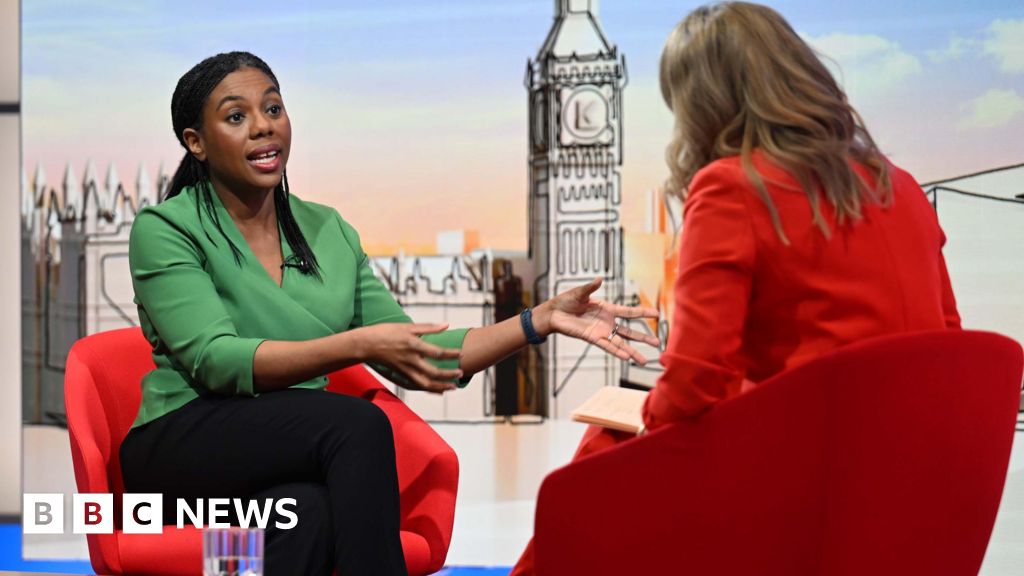

UK Tory Leader Signals Potential Direct Payments to Households Amid Energy Crisis, Warns of Trade-Offs
The leader of Britain’s Conservative Party has left the door open to providing direct financial support to households should energy bills spike dramatically in the coming months. However, the proposal, which could alleviate pressure on struggling families, comes with a stark warning: such measures would come at a significant cost to taxpayers and public spending priorities. The statement underscores the growing pressure on the UK government to address the deepening energy crisis, which has already pushed millions into financial hardship.
The potential for direct payments reflects the severity of the challenges facing the UK as global energy prices remain volatile and domestic energy suppliers grapple with rising costs. While the Tory leader did not confirm any specific plans, the mere suggestion signals a possible shift in government strategy as winter approaches and households brace for higher heating and electricity costs.
Context: A Nation in Crisis
The UK has been caught in the crosshairs of a global energy crisis exacerbated by geopolitical tensions, supply chain disruptions, and the lingering economic fallout from the COVID-19 pandemic. The war in Ukraine has further strained energy markets, driving up the cost of natural gas and oil. In the UK, these external pressures have coincided with domestic challenges, including aging infrastructure and a reliance on imported energy.
Earlier this year, the government introduced a cap on energy prices to shield consumers from the worst of the crisis. However, critics argue that the cap is insufficient to protect low-income households from rising bills. The possibility of direct payments suggests a more targeted approach to assistance, but it also raises questions about how such a program would be funded and implemented.
The Trade-Offs of Government Intervention
In his remarks, the Tory leader emphasized that any decision to provide direct financial support would require difficult trade-offs. While such measures could provide immediate relief to households, they would likely entail cuts to other public services or increased borrowing, potentially straining the country’s already fragile finances.
“The reality is that every pound spent on one priority is a pound that cannot be spent elsewhere,” the leader said. “We must balance the need to support families with the imperative to maintain fiscal responsibility.”
The comments reflect a broader debate within the Conservative Party about the role of government in addressing economic crises. Some MPs have called for bold intervention to protect vulnerable households, while others warn against excessive spending that could undermine long-term economic stability.
Public Reaction and Criticism
The suggestion of direct payments has elicited mixed reactions from the public and opposition leaders. Advocates for low-income families have welcomed the acknowledgment of the crisis but argue that the government must act swiftly to prevent further hardship.
“Talk of potential support is not enough,” said a spokesperson for a leading poverty advocacy group. “Families are facing impossible choices between heating their homes and putting food on the table. The government must act now, not later.”
Opposition leaders, meanwhile, have criticized the Conservative Party for failing to provide a concrete plan. The Labour Party has accused the government of being reactive rather than proactive, arguing that the energy crisis requires a comprehensive strategy rather than piecemeal measures.
What’s Next?
As the UK prepares for the winter months, the government faces mounting pressure to chart a clear path forward. While the possibility of direct payments offers a potential lifeline to struggling households, it also raises broader questions about how the country will address its energy challenges in the long term.
Experts warn that reliance on short-term fixes could delay much-needed investments in renewable energy and energy efficiency, leaving the UK vulnerable to future crises. The Tory leader’s comments suggest that the government is weighing its options carefully, but critics argue that bold action is needed now to prevent further economic and social upheaval.
Future Implications
The unfolding energy crisis is likely to have far-reaching implications for the UK’s economy, politics, and social fabric. As households grapple with rising costs, the government’s response will shape public perceptions of its ability to handle crises effectively.
For the Conservative Party, the stakes are particularly high. With a general election looming, the government’s handling of the energy crisis could prove decisive in winning or losing voter confidence. The suggestion of direct payments may be a calculated move to demonstrate empathy and responsiveness, but it also highlights the difficult choices facing policymakers.
In the coming months, the government’s actions—or inaction—will be under intense scrutiny. As the energy crisis deepens, one thing is clear: the UK cannot afford to delay meaningful solutions any longer.
