



Targeted Strike in Southern Lebanon Claims Lives of Journalists, Escalating Tensions in the Region
A Deadly Attack Amid Rising Hostilities
In a tragic escalation of violence in the Middle East, three journalists were killed in a targeted attack in southern Lebanon on Saturday, 28 March. The incident unfolded in the town of Jezzine, where Ali Shoeib, a reporter for the Hezbollah-affiliated Al Manar TV station, was struck alongside Fatima Ftouni and her brother, cameraman Mohamed Ftouni, both of whom worked for the channel Al Mayadeen. The deaths have sparked outrage across the region, raising questions about the targeting of media professionals and the broader implications for regional security.
The Israel Defense Forces (IDF) acknowledged the killing of Shoeib, labeling him a “terrorist” but failed to provide evidence substantiating claims of his involvement in any military activities. Notably, the IDF has remained silent on the deaths of Fatima and Mohamed Ftouni, leaving their deaths unaddressed. This incident has further strained the already tense relationship between Israel and Lebanon, where hostilities have been simmering for months.
A Global Context: Rising Tensions in the Middle East
The attack comes amid a backdrop of heightened tensions in the Middle East, particularly along the Israel-Lebanon border. Since the onset of the Israel-Hamas conflict in October 2023, skirmishes between Israel and Hezbollah, the Iran-backed militant group in Lebanon, have intensified. These clashes have resulted in civilian casualties and raised fears of a broader regional conflict.
The killings of journalists in such a volatile environment underscore the risks faced by media professionals working in conflict zones. Journalists in Lebanon, Syria, and Gaza have increasingly found themselves in the crosshairs, with international organizations documenting a rise in attacks on press freedom. The Committee to Protect Journalists (CPJ) has condemned this latest incident, calling for an independent investigation to determine whether international humanitarian laws were violated.
Why This Matters: Implications for Press Freedom and Global Security
The targeted killing of journalists has far-reaching consequences, not only for the families of the victims but also for global press freedom and regional stability. Journalists play a critical role in documenting conflicts and holding power to account. When they are silenced through violence, the world loses vital sources of information, and accountability becomes elusive.
This incident also highlights the escalating risks of a wider conflict in the Middle East. The Israel-Lebanon border has become a flashpoint, with Hezbollah launching attacks on Israeli military positions and Israel retaliating with airstrikes. The involvement of Iran, which supports Hezbollah, adds another layer of complexity to the situation. If these tensions are not managed carefully, the region could spiral into a full-scale war, with global ramifications for energy markets, geopolitical alliances, and humanitarian crises.
The Human Cost: Mourning Lives Lost
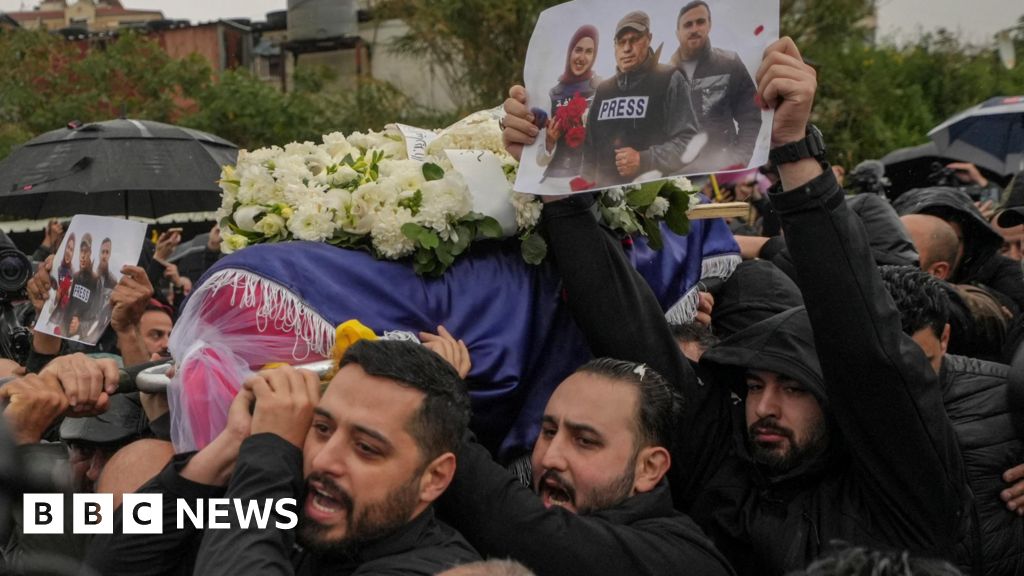
The funerals of the three journalists were marked by grief and anger. Hundreds of mourners gathered in Jezzine to pay their respects, with colleagues and family members condemning the attack as an assault on journalism itself. Fatima Ftouni, described as a dedicated reporter, and her brother Mohamed, a skilled cameraman, were remembered for their commitment to telling the stories of those affected by conflict. Ali Shoeib, too, was mourned as a journalist who sought to shed light on the realities of war.
Their deaths serve as a stark reminder of the dangers faced by journalists in the Middle East. According to Reporters Without Borders, the region remains one of the most perilous places for media professionals, with dozens killed or imprisoned each year.
A Call for Accountability and Restraint
As the international community reacts to this tragic event, calls for accountability are growing louder. Human rights organizations are urging Israel to provide transparency about the circumstances of the attack and to ensure that its military operations comply with international law. At the same time, regional actors are being urged to exercise restraint to prevent further escalation.
The United Nations has expressed concern about the rising violence along the Israel-Lebanon border, warning that any miscalculation could have devastating consequences. Diplomatic efforts are underway to de-escalate tensions, but the path to peace remains uncertain.
Conclusion: A Fragile Peace Hangs in the Balance
The deaths of Ali Shoeib, Fatima Ftouni, and Mohamed Ftouni are a grim reminder of the fragility of peace in the Middle East. As journalists continue to risk their lives to report on the realities of conflict, the international community must not turn a blind eye to the threats they face. This incident underscores the urgent need for accountability, transparency, and a renewed commitment to press freedom.
In a world increasingly shaped by geopolitical rivalries and regional conflicts, the ability of journalists to operate safely is not just a matter of principle—it is a cornerstone of democracy and global security. The stakes could not be higher, and the loss of these three lives serves as a poignant call to action for all who value peace and truth.
