


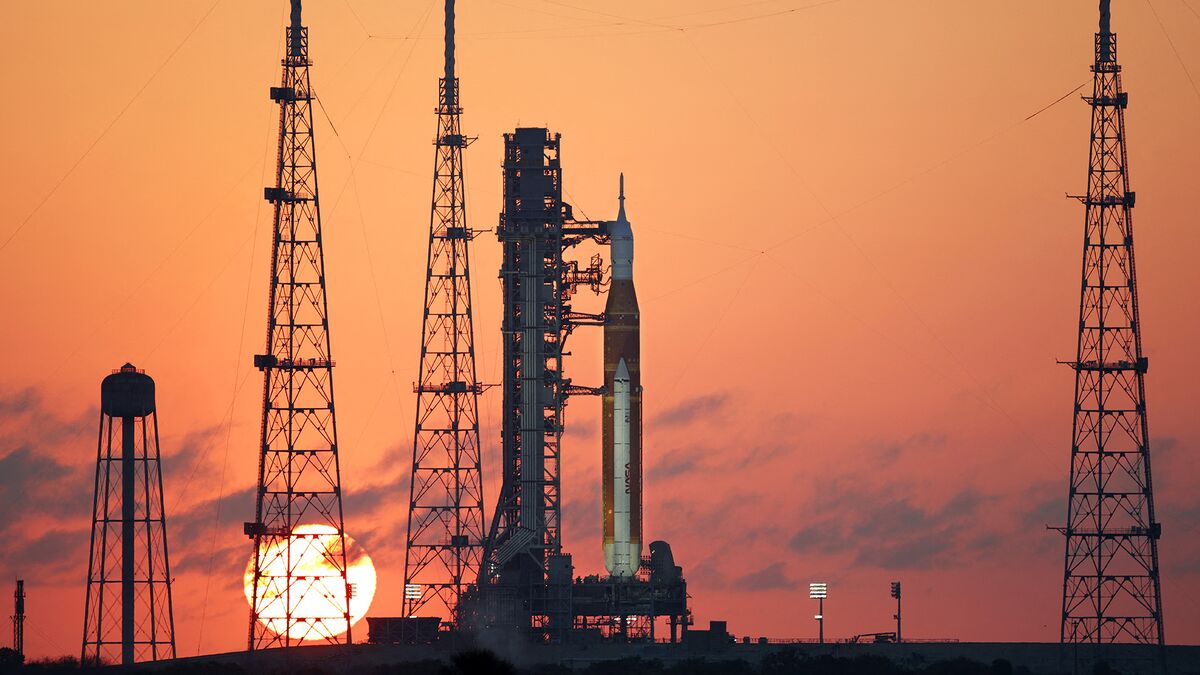

NASA’s Artemis II Mission Marks Historic Return to the Moon After Half a Century
In a monumental leap for space exploration, NASA is poised to send astronauts back to the moon for the first time in over 50 years. The Artemis II mission, scheduled for liftoff on Wednesday night, represents a critical milestone in humanity’s renewed quest to explore the lunar surface and beyond. As anticipation builds, this mission not only rekindles memories of the Apollo era but also sets the stage for a new chapter in space exploration, one that aims to establish a sustainable human presence on the moon and eventually pave the way for manned missions to Mars.
The Artemis program, named after the twin sister of Apollo in Greek mythology, was launched in 2017 with the ambitious goal of returning humans to the moon by the mid-2020s. Unlike the Apollo missions, which were largely driven by Cold War competition, Artemis seeks to foster international collaboration and leverage cutting-edge technology to achieve long-term exploration goals. Artemis II, the program’s second mission, will carry a crew of four astronauts on a journey around the moon, testing the systems and capabilities of NASA’s Orion spacecraft in preparation for future lunar landings.
The last time humans set foot on the moon was in December 1972 during the Apollo 17 mission. Since then, space exploration has primarily focused on low-Earth orbit, with initiatives like the International Space Station (ISS) dominating the agenda. However, the Artemis program represents a significant shift in priorities, signaling NASA’s determination to push the boundaries of human exploration once again. “This is not just about returning to the moon,” said NASA Administrator Bill Nelson in a recent statement. “It’s about going there to stay, to learn, and to prepare for the next giant leap—sending humans to Mars.”
The Artemis II Mission: A Critical Test Flight
Artemis II is a crewed test flight designed to validate the performance of the Orion spacecraft and its life-support systems in deep space. The mission will see four astronauts—three Americans and one Canadian—travel approximately 230,000 miles from Earth, orbit the moon, and return home over a 10-day period. This trajectory, known as a free-return orbit, ensures that the spacecraft can safely return to Earth even if an engine failure occurs during the mission.
The crew includes NASA astronauts Commander Reid Wiseman, Pilot Victor Glover, and Mission Specialist Christina Koch, alongside Canadian Space Agency astronaut Jeremy Hansen. Their journey will mark the first time humans have ventured beyond low-Earth orbit since Apollo 17, making it a historic moment for space exploration.
One of the key objectives of Artemis II is to test the Orion spacecraft’s ability to sustain human life in the harsh environment of deep space. Equipped with advanced navigation, communication, and life-support systems, Orion is designed to carry astronauts farther than any spacecraft in history. The mission will also provide valuable data on the effects of prolonged exposure to cosmic radiation, a critical factor for future long-duration missions to Mars.
Technological Innovations and International Collaboration
The Artemis program is notable not only for its scientific ambitions but also for its emphasis on international collaboration and technological innovation. Unlike the Apollo program, which was driven primarily by U.S. efforts, Artemis involves partnerships with space agencies from around the world, including the European Space Agency (ESA), the Canadian Space Agency (CSA), and the Japan Aerospace Exploration Agency (JAXA).
Central to the Artemis missions is NASA’s Space Launch System (SLS), the most powerful rocket ever built. Standing at 322 feet tall, the SLS is capable of generating 8.8 million pounds of thrust, making it the only rocket capable of launching the Orion spacecraft and its crew to the moon in a single launch. The SLS represents a significant leap forward in rocket technology, combining proven components from the Space Shuttle program with cutting-edge advancements in propulsion and materials science.
The Artemis program also underscores NASA’s commitment to inclusivity and diversity. The Artemis II crew includes Christina Koch, who holds the record for the longest single spaceflight by a woman, and Jeremy Hansen, the first Canadian astronaut to participate in a lunar mission. This diversity reflects NASA’s broader goal of ensuring that space exploration is accessible to people of all backgrounds and nationalities.
The Road Ahead: From Artemis II to Lunar Landings
While Artemis II is a crewed mission, it will not include a lunar landing. That honor is reserved for Artemis III, currently scheduled for 2025, which aims to land the first woman and the next man on the moon’s surface. Artemis III will mark the beginning of NASA’s efforts to establish a sustainable human presence on the moon, with plans to build a lunar base camp and the Gateway, a space station in lunar orbit that will serve as a staging point for future missions.
The Gateway will act as a hub for scientific research and international collaboration, providing astronauts with a platform to conduct experiments and prepare for missions to Mars and other destinations in the solar system. NASA envisions the Artemis program as a stepping stone for humanity’s exploration of deep space, with lessons learned on the moon serving as a foundation for future endeavors.
Challenges and Criticisms
Despite its ambitious goals, the Artemis program has faced its share of challenges and criticisms. Budget overruns and delays have plagued the development of the SLS rocket and Orion spacecraft, raising concerns about the program’s long-term viability. Some critics argue that the immense cost of the Artemis program—estimated at over $90 billion—could be better spent on addressing pressing issues on Earth, such as climate change and poverty.
Others have questioned the feasibility of NASA’s timeline, particularly in light of the technical complexities involved in returning humans to the moon and establishing a sustainable presence there. However, proponents of the program argue that the scientific and technological advancements achieved through Artemis will have far-reaching benefits for humanity, from improving our understanding of the moon and its resources to inspiring the next generation of explorers.
A Moment of Inspiration
As the world watches the launch of Artemis II, the mission serves as a powerful reminder of humanity’s enduring curiosity and determination to explore the unknown. For the first time in decades, astronauts will once again venture beyond the confines of low-Earth orbit, gazing upon the moon not as a distant, unreachable object but as a destination ripe for discovery.
The Artemis program represents more than just a return to the moon; it symbolizes a collective effort to push the boundaries of what is possible, to transcend national borders and political differences in pursuit of a shared goal. Whether Artemis II succeeds in its objectives or not, its mission will undoubtedly inspire millions around the world, reigniting the spirit of exploration that has driven humanity to achieve the extraordinary.
As the countdown to liftoff begins, the world waits with bated breath, eager to witness the next chapter in the story of human exploration. For now, the moon remains a distant beacon, but with Artemis, it is closer than ever. The journey ahead is fraught with challenges, but the promise of discovery makes it a voyage worth undertaking.
