


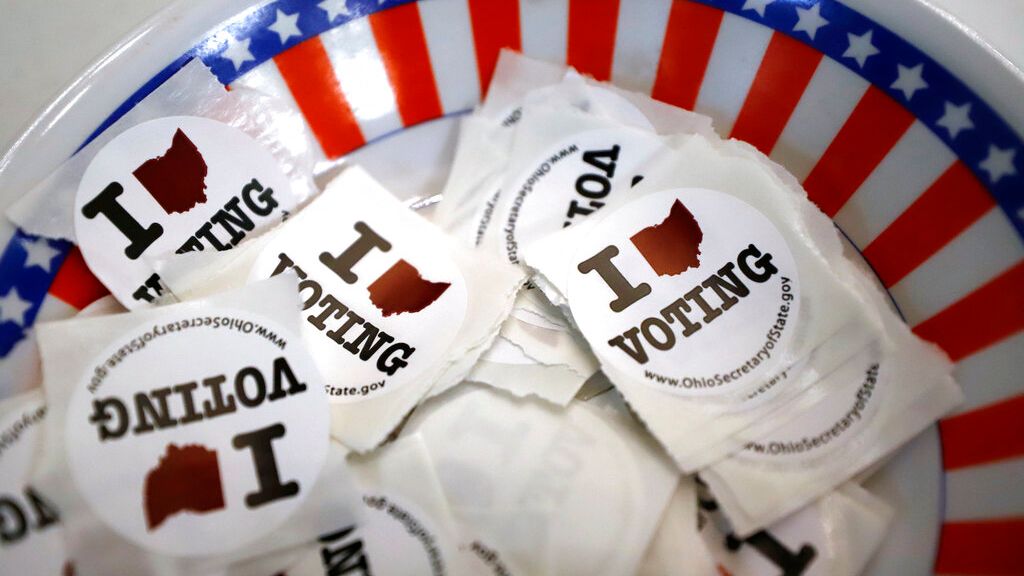

Ohio Primary Election Sees Early Voting Amid Concerns Over Low Turnout
COLUMBUS, Ohio — Early voting has begun for Ohio’s May 5 primary election, but political analysts warn that turnout could be disappointingly low due to a lack of competitive races and voter confusion caused by redistricting. With most statewide races featuring uncontested primaries or limited competition, experts say the electorate may feel less motivated to cast their ballots this spring.
Key Races to Watch
One of the few competitive races in the primary is for Ohio secretary of state, where both Republican and Democratic candidates are vying for their party’s nomination. However, most top-tier contests are experiencing minimal intra-party competition.
In the gubernatorial race, Republican Vivek Ramaswamy, a prominent entrepreneur and former presidential candidate, faces two GOP challengers, while Democrat Amy Acton is running unopposed. Similarly, U.S. Senator Jon Husted, appointed by Governor Mike DeWine in 2025 after JD Vance resigned to become vice president, has no Republican opposition.
The real political showdown, according to analysts, will come in November when Husted faces either Sherrod Brown or Rob Kincaid, depending on who wins the Democratic primary. Brown, a three-term senator and former secretary of state, is a household name in Ohio politics, making this race one to watch.
Tom Sutton, political science professor emeritus at Baldwin Wallace University, predicts the November Senate race could mirror the historically expensive 2024 contest between Bernie Moreno and Brown, which saw a staggering $400 million spent by both campaigns. “This will likely be another record-breaking race,” Sutton said.
Redistricting Adds Confusion
One factor complicating voter engagement is Ohio’s recent redistricting, which has redrawn district lines and left many voters unfamiliar with the candidates on their ballots. “People may look at their ballot and not recognize who’s running,” Sutton explained.
This confusion, coupled with the lack of competitive races, could further depress turnout. Sutton noted that primary elections are crucial because they often determine the outcome of general elections, especially in districts heavily skewed toward one party.
Why Primaries Matter
Low turnout in primaries tends to favor the most passionate and politically extreme voters, Sutton said. “It’s party regulars and those with entrenched opinions who tend to show up,” he explained. “This can lead to more polarizing candidates being chosen, which then influences the general election.”
In heavily Democratic or Republican districts, voters from the minority party often feel their votes won’t make a difference, further discouraging participation. “If you’re a Republican in Cuyahoga County, for example, you might feel there’s no point in voting because it’s so Democratic,” Sutton said.
Despite these challenges, Sutton emphasized the importance of primary elections. “Primaries are where candidates get chosen,” he said. “If people don’t engage, we end up with candidates who don’t represent the broader electorate.”
How to Vote
Ohio’s primary election is set for May 5, and voters have several options to cast their ballots. Mail-in ballots must be received by county boards of elections by that date. Early in-person voting is also available and runs through May 3.
As the primary approaches, political observers are urging Ohioans to participate, even if the races seem less competitive than in previous years. With redistricting reshaping districts and November’s Senate race expected to be a blockbuster, every vote could carry significant weight.
— Reported by Nexio News
