


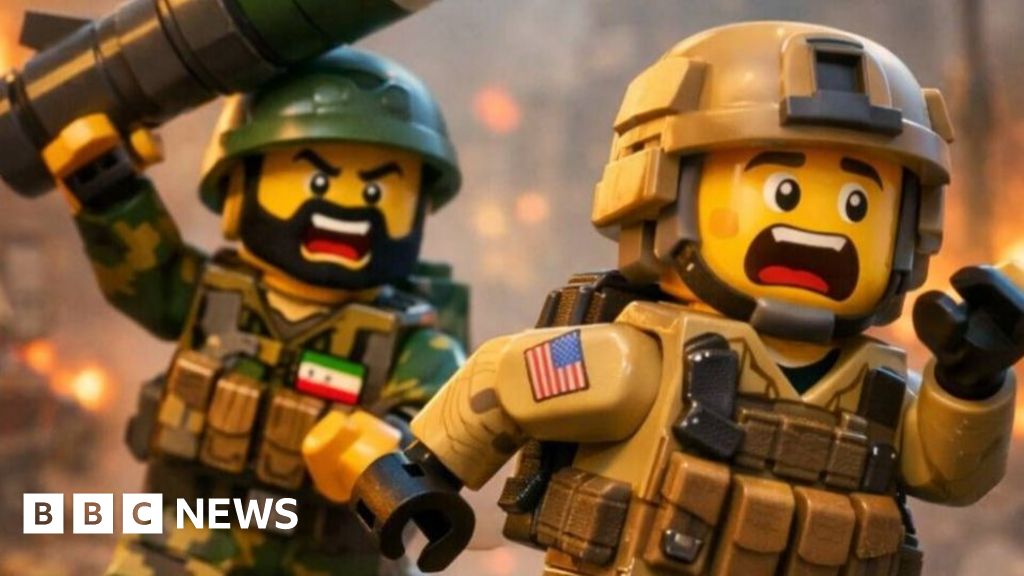

Global Security Alert: The Rise of “Slopaganda” and Its Threat to Digital Stability
A New Era of Digital Warfare Emerges
The term slopaganda—once dismissed as mere internet slang—has evolved into a formidable weapon in the digital age. Cybersecurity experts now warn that what was once considered low-quality disinformation has transformed into a highly sophisticated tool of manipulation, capable of destabilizing democracies, inciting violence, and reshaping global narratives. Unlike traditional propaganda, slopaganda leverages AI-generated content, deepfakes, and algorithmic amplification to spread at unprecedented speed and scale. The implications are dire: from election interference to radicalization, the world is facing a new breed of information warfare—one that thrives in chaos.
What Is Slopaganda?
Slopaganda refers to deliberately low-effort, misleading, or inflammatory content designed to overwhelm audiences, distort reality, and erode trust in institutions. Initially associated with meme culture and fringe online communities, it has now been weaponized by state and non-state actors. Unlike classic disinformation campaigns, which rely on carefully crafted narratives, slopaganda floods platforms with high-volume, low-quality posts—making fact-checking nearly impossible.
Recent examples include:
- AI-generated images falsely depicting political leaders in compromising situations
- Viral conspiracy theories amplified by bot networks
- Deliberately absurd claims intended to muddy public discourse
Why It Matters: A Global Security Crisis
The shift from traditional propaganda to slopaganda marks a critical escalation in digital warfare. Unlike past efforts, which sought to persuade, modern slopaganda aims to paralyze—creating confusion, division, and apathy.
1. Election Interference on Steroids
With over 60 countries holding elections in 2024, slopaganda poses an unprecedented threat. Rather than pushing a single false narrative, bad actors can flood social media with contradictory claims, making it impossible for voters to discern truth. In India, deepfake videos of politicians went viral ahead of elections. In the U.S., AI-generated robocalls mimicked President Biden’s voice to discourage voting.
2. Radicalization and Violence
Extremist groups have adopted slopaganda tactics to recruit and incite violence. The Christchurch shooter’s manifesto was deliberately designed to spread via shock value, while ISIS-affiliated networks use AI to generate hyper-realistic recruitment videos. The result? A surge in lone-wolf attacks and online radicalization.
3. Economic and Social Instability
Beyond politics, slopaganda disrupts markets and public trust. False rumors about bank collapses have triggered stock sell-offs, while fabricated health scares (like “5G causes COVID”) have led to real-world harm. The World Economic Forum now ranks misinformation as a top global risk—ahead of climate change and cyberattacks.
Who’s Behind It?
Attribution is difficult, but three key actors dominate:
- State-Sponsored Groups (Russia, China, Iran) – Using slopaganda to weaken Western cohesion.
- Extremist Networks – Exploiting chaos to recruit and mobilize.
- Profit-Driven Troll Farms – Selling disinformation-as-a-service to the highest bidder.
Can It Be Stopped?
Governments and tech firms are scrambling to respond:
- EU’s Digital Services Act now mandates rapid takedowns of harmful content.
- Meta and Google are deploying AI to detect synthetic media.
- UN Initiatives push for global norms on AI misuse.
Yet, experts warn that slopaganda evolves faster than defenses. “We’re in an arms race,” says Dr. Elena Petrov, a cybersecurity analyst. “The next phase could involve real-time deepfakes during live events—imagine a fake war declaration going viral mid-crisis.”
The Stakes Have Never Been Higher
Slopaganda is no longer a fringe nuisance—it’s a systemic threat to global security. In an era where truth is malleable and trust is fragile, the battle for digital integrity will define the next decade. Without urgent, coordinated action, societies risk descending into perpetual distrust—a world where no fact is certain, and no institution is credible. The time to act is now, before the line between reality and fiction vanishes entirely.
