



U.S.-Iran Nuclear Talks Collapse in Pakistan, Raising Stakes in Middle East Crisis
ISLAMABAD, Pakistan — Marathon negotiations between the United States and Iran ended in failure over the weekend, dealing a significant blow to diplomatic efforts aimed at easing tensions in the Middle East and preventing a broader regional conflict. The high-stakes talks, held in Pakistan’s capital, broke down after Tehran refused to commit to halting its nuclear weapons program, leaving Washington with no choice but to walk away—at least for now.
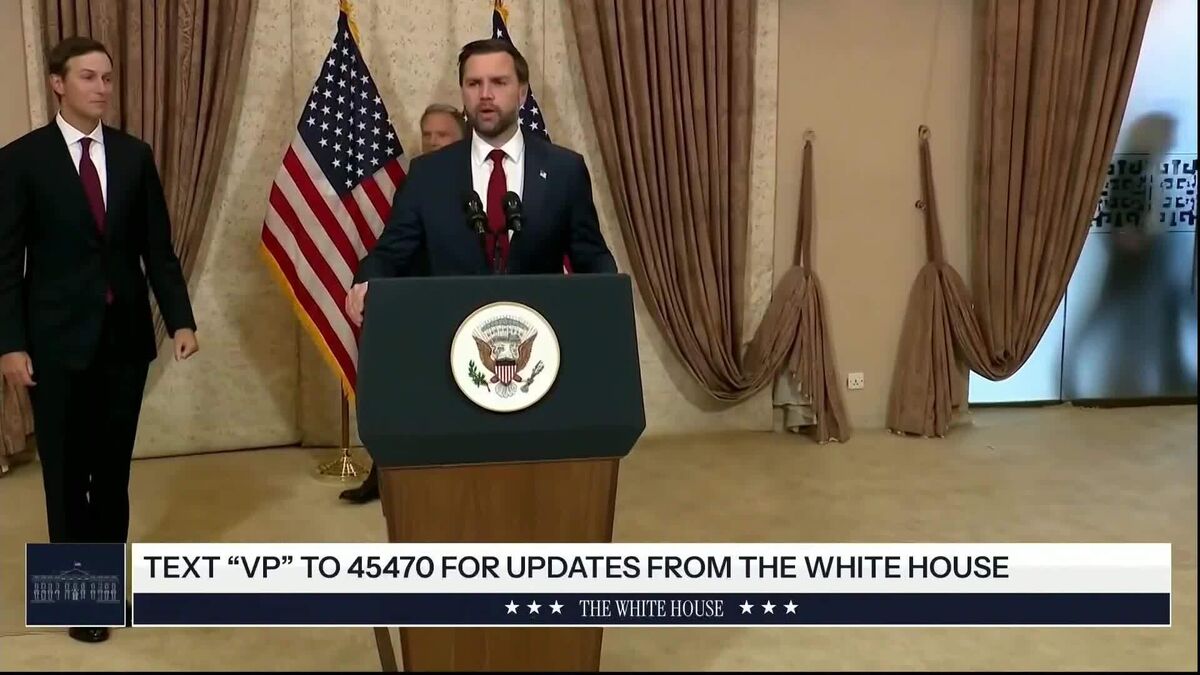
The breakdown marks a major setback for the Biden administration, which had hoped to revive a diplomatic path toward stabilizing the region amid Israel’s ongoing war in Gaza and escalating proxy conflicts involving Iranian-backed militant groups. U.S. Vice President JD Vance, who led the American delegation, confirmed that negotiators would return to Washington without a deal, signaling a hardening stance against Iran’s nuclear ambitions.
A High-Stakes Diplomatic Failure
The talks, held behind closed doors in Islamabad, were seen as a critical opportunity to de-escalate tensions following months of indirect clashes between Iran and the U.S., including attacks on shipping lanes, drone strikes, and confrontations involving Iranian proxies in Iraq, Syria, and Yemen.
Despite initial optimism, negotiations faltered over Iran’s refusal to provide verifiable assurances that it would not pursue nuclear weapons development. U.S. officials had demanded explicit guarantees, including unrestricted access for international inspectors to Iranian nuclear facilities—a condition Tehran has long resisted.
“We came to the table in good faith, but Iran’s unwillingness to commit to a non-nuclear path leaves us no choice but to reassess our approach,” Vice President Vance told reporters before departing Pakistan. “The ball is now in Iran’s court.”
Why These Talks Mattered
The failure of the Islamabad negotiations carries far-reaching consequences. Since the collapse of the 2015 Joint Comprehensive Plan of Action (JCPOA)—the landmark nuclear deal abandoned by the Trump administration in 2018—Iran has steadily ramped up uranium enrichment, bringing it closer than ever to weapons-grade capability.
The Biden administration had hoped to rein in Tehran’s nuclear advances through renewed diplomacy, but Iran’s hardline leadership, emboldened by its deepening alliance with Russia and China, has shown little willingness to compromise. Meanwhile, Israel—which views a nuclear-armed Iran as an existential threat—has repeatedly warned that it will take military action if diplomacy fails.
The timing of the breakdown is especially precarious. With Israel’s war against Hamas in Gaza entering its seventh week and Hezbollah militants exchanging near-daily fire with Israeli forces along the Lebanon border, the risk of a wider war looms larger than ever. Iran’s Revolutionary Guard Corps has also intensified attacks on U.S. bases in Iraq and Syria, raising fears of direct confrontation between Washington and Tehran.
Global Reactions and What Comes Next
The international response to the failed talks has been mixed. European Union foreign policy chief Josep Borrell expressed “deep disappointment,” urging both sides to return to negotiations. Meanwhile, Russia and China—key allies of Iran—blamed the U.S. for imposing “unrealistic demands” on Tehran.
Within Iran, hardliners celebrated the diplomatic stalemate as a victory, with state media framing the U.S. withdrawal as proof of Washington’s weakening leverage. Reformists, however, warned that further isolation could deepen Iran’s economic crisis, already exacerbated by years of U.S. sanctions.
For now, the Biden administration faces limited options. Additional sanctions are likely, but their effectiveness is questionable given Iran’s ability to circumvent restrictions through black-market oil sales and partnerships with Moscow and Beijing. Military action remains a last resort, though Pentagon officials have reportedly updated contingency plans for potential strikes on Iranian nuclear sites.
A Region on the Brink
The collapse of the Islamabad talks leaves the Middle East in an increasingly volatile state. With no clear diplomatic off-ramp, the risks of miscalculation—whether through an accidental clash between U.S. and Iranian forces or an Israeli preemptive strike—are growing by the day.
For now, all eyes are on Tehran. Will it double down on nuclear escalation, or will economic and political pressures force a return to negotiations? The answer could determine whether the region descends into all-out war—or finds an uneasy peace.
As one Western diplomat grimly noted: “The road to diplomacy just got much longer, and the path to conflict much shorter.”
