


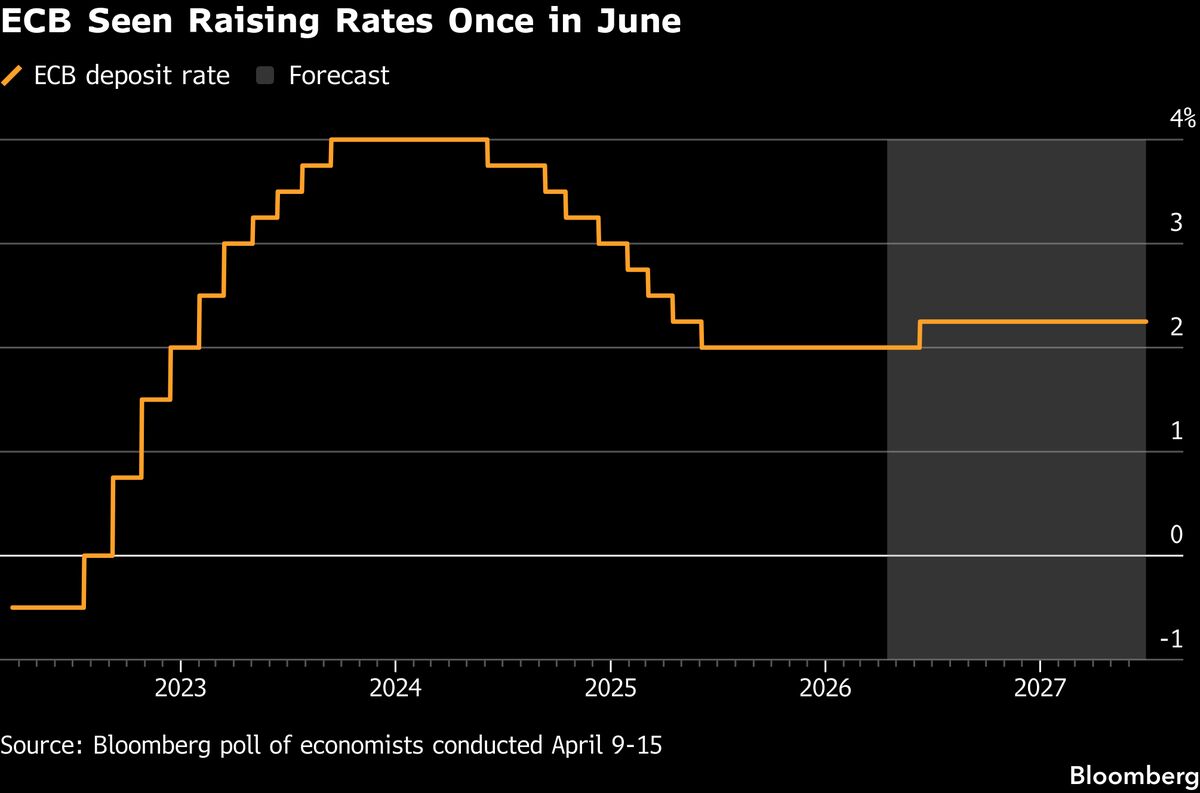

ECB Poised to Raise Interest Rates in June Amid Escalating Inflation Pressures Driven by Geopolitical Tensions
In a decisive move to combat surging inflation, the European Central Bank (ECB) is expected to raise interest rates in June, according to a Bloomberg survey conducted this week. The decision comes as inflationary pressures across the eurozone intensify, fueled in part by escalating geopolitical tensions stemming from the conflict in Iran. The ECB’s anticipated rate hike marks a significant shift in monetary policy as the central bank grapples with the dual challenge of stabilizing prices while navigating the fallout from global instability.
The eurozone, already facing economic headwinds from lingering pandemic effects and supply chain disruptions, now contends with an added layer of volatility as geopolitical crises exacerbate inflationary trends. The conflict in Iran has disrupted oil supplies, sending energy prices soaring and further straining economies still recovering from the COVID-19 pandemic. With inflation hovering at multi-decade highs, the ECB’s decision underscores the urgency of addressing price stability in a region grappling with economic uncertainty.
Inflation Surge: A Complex Web of Factors
Inflation in the eurozone has been a persistent concern for policymakers since the latter half of 2021, driven initially by pent-up demand following pandemic-related lockdowns and exacerbated by supply chain bottlenecks. However, recent developments have added new dimensions to the crisis. The conflict in Iran, a major oil-producing nation, has sent shockwaves through global energy markets, pushing crude oil prices to levels not seen in years.
Energy costs are a critical component of inflation, particularly in Europe, where households and businesses are heavily reliant on oil and gas imports. The ripple effects of higher energy prices are felt across the economy, from transportation and manufacturing to retail and services. This phenomenon, known as “cost-push inflation,” occurs when rising production costs lead to higher prices for consumers.
Compounding the issue are food prices, which have also surged due to disruptions in agricultural supply chains and adverse weather conditions. The war in Ukraine, another geopolitical flashpoint, has further strained global food supplies by limiting exports of wheat and other essential commodities.
Against this backdrop, inflation in the eurozone reached 7.5% in April 2023, well above the ECB’s target of 2%. While central banks worldwide have responded to inflationary pressures with rate hikes, the ECB has been relatively cautious, fearing that premature tightening could stifle economic growth. However, mounting price pressures and market expectations appear to have forced the bank’s hand.
The ECB’s Delicate Balancing Act
The ECB’s decision to raise interest rates reflects the delicate balance policymakers must strike between curbing inflation and supporting economic recovery. Higher interest rates are a traditional tool for combating inflation, as they reduce consumer spending and investment by making borrowing more expensive. However, tighter monetary policy also risks dampening economic activity, particularly in a region still grappling with uneven growth.
The eurozone’s economic recovery has been markedly slower than that of the United States, with GDP growth projected at just 1.3% for 2023, according to the European Commission. Countries like Italy and Spain continue to lag behind stronger economies such as Germany and France, raising concerns that a one-size-fits-all monetary policy may not be equally effective across the bloc.
Moreover, the ECB’s move comes amid renewed fears of stagflation—a scenario characterized by stagnant growth and high inflation. Stagflation presents a policy dilemma for central banks, as traditional tools like interest rate hikes may exacerbate economic stagnation while failing to adequately control inflation.
Geopolitical Tensions and Market Volatility
The conflict in Iran has added a layer of unpredictability to an already volatile global economic landscape. Iran, a major oil exporter, plays a pivotal role in global energy markets, and any disruption to its production has immediate repercussions worldwide. Sanctions, military strikes, and political instability have all contributed to fluctuating oil prices, complicating efforts to forecast inflation trends.
Financial markets have responded to the uncertainty with heightened volatility, as investors grapple with the implications of escalating tensions and rising interest rates. Stock markets in Europe and beyond have experienced sharp fluctuations, while bond yields have risen in anticipation of tighter monetary policy.
The ECB’s decision to raise rates is also influenced by external factors, particularly the actions of other major central banks. The U.S. Federal Reserve has already implemented several aggressive rate hikes in response to inflation, creating pressure on the ECB to follow suit to prevent the euro from depreciating excessively. A weaker euro can exacerbate inflation by making imports more expensive, further complicating the ECB’s task.
Implications for the Eurozone Economy
While the ECB’s rate hike is aimed at stabilizing prices, its broader impact on the eurozone economy remains uncertain. Higher interest rates could curb consumer spending and business investment, potentially slowing economic growth. At the same time, borrowing costs for governments in the eurozone are likely to rise, adding to fiscal pressures in highly indebted countries like Italy and Greece.
For households, the rate increase could translate into higher mortgage payments and reduced disposable income, further straining budgets already stretched by rising living costs. Small and medium-sized enterprises (SMEs), which form the backbone of the European economy, may also face challenges in accessing affordable credit, hindering their ability to invest and expand.
However, the ECB’s decision also signals its commitment to restoring price stability, which is essential for long-term economic health. Persistent inflation erodes purchasing power and undermines consumer confidence, making it harder for economies to recover from shocks.
Looking Ahead: Navigating Uncertain Horizons
As the ECB prepares to raise interest rates, policymakers face a challenging road ahead. The central bank must navigate a complex web of economic and geopolitical factors while striving to maintain credibility in its inflation-fighting efforts. Communication will be key, as markets and the public alike seek clarity on the ECB’s strategy moving forward.
The June rate hike is likely to be the first in a series of moves aimed at bringing inflation under control, but the pace and scale of future adjustments remain uncertain. Much will depend on how geopolitical tensions evolve and whether supply chain disruptions ease in the coming months.
For now, the ECB’s decision underscores the central bank’s determination to tackle inflation head-on, even in the face of significant economic and geopolitical risks. As the eurozone braces for tighter monetary policy, the question remains whether the measures will strike the right balance between stability and growth in an increasingly uncertain world.
