



Hungary’s Political Shifts Signal Broader European Instability
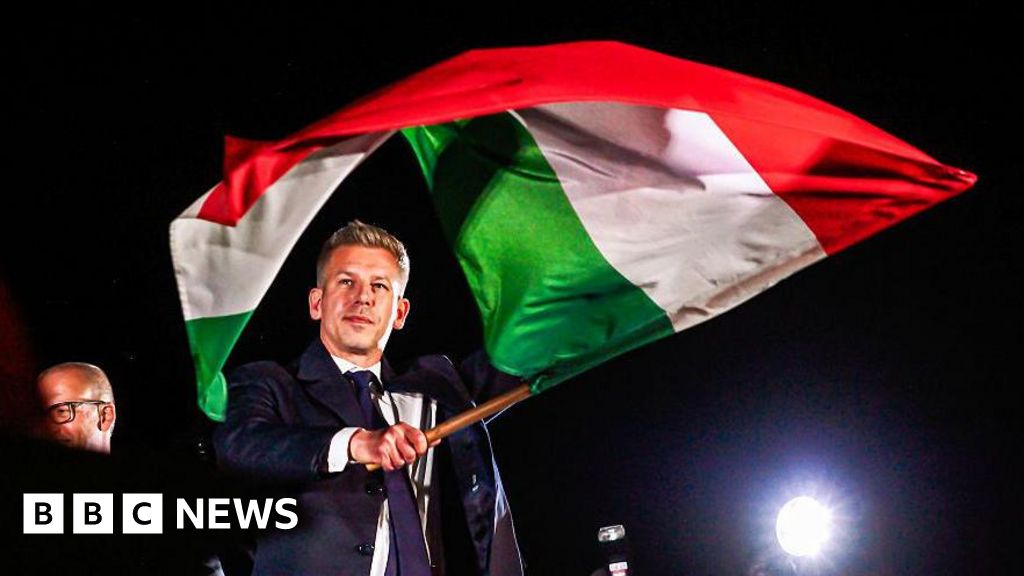
The stage was set, the crowd roared, and the familiar rhetoric echoed across the Hungarian countryside. Yet, as Prime Minister Viktor Orbán addressed his supporters, something felt markedly different. Flanked by his younger protégés—Foreign Minister Péter Szijjártó, 47, and Transport Minister János Lázár, 51—Orbán, 60, appeared not as the invincible leader who has dominated Hungarian politics for over a decade, but as a figure grappling with the weight of time and transformation. This stark juxtaposition of youth and experience at his rallies has sparked discussions far beyond Hungary’s borders, raising questions about the stability of one of Europe’s most controversial governments and its implications for the continent.
Hungary’s Political Landscape in Flux
Hungary under Orbán has long been a contentious topic in European politics. Since his return to power in 2010, Orbán has dismantled democratic institutions, centralized power, and championed a nationalist agenda that has drawn both admiration and condemnation. His party, Fidesz, has maintained a strong grip on Hungarian politics, often leveraging anti-immigrant sentiments and Euroscepticism to rally support.
However, recent internal dynamics suggest cracks in this seemingly unshakable facade. Szijjártó and Lázár, emerging as prominent figures within Fidesz, have increasingly taken center stage at Orbán’s rallies. Their youthful energy and modern appeal contrast sharply with Orbán’s more traditional demeanor. While their presence was likely intended to inject vitality into the party, it has inadvertently drawn attention to Orbán’s advancing age and the potential fatigue of his leadership.
A Generational Divide in Fidesz
The rise of Szijjártó and Lázár reflects a broader generational shift within Fidesz. Szijjártó, Hungary’s foreign minister, has been a key player in navigating Hungary’s complex relationship with the European Union and its neighbors. Known for his diplomatic acumen, he has often served as the face of Hungary’s foreign policy, advocating for a “sovereign” Hungary within a skeptical EU.
Lázár, on the other hand, has focused on domestic issues, particularly infrastructure and transportation. His pragmatic approach and ability to connect with younger voters have made him a rising star within the party.
Yet, their prominence raises questions about the party’s future. Are they being groomed as successors, or is their visibility a strategic move to divert attention from Orbán’s waning appeal? Either way, the generational divide within Fidesz highlights the challenges of maintaining unity in a party built around a singular, charismatic leader.
Global Implications of Hungary’s Instability
Hungary’s internal struggles are not just a domestic concern; they resonate globally. As a member of the European Union and NATO, Hungary plays a pivotal role in shaping European security and policy. Orbán’s alignment with populist movements across Europe—and his courtship of authoritarian leaders like Russia’s Vladimir Putin—has positioned Hungary as a thorn in the side of Western democracy.
If Orbán’s leadership falters, it could lead to a power vacuum within Fidesz, destabilizing Hungary’s political landscape. This, in turn, could have ripple effects across Europe, emboldening other populist movements or creating opportunities for pro-democracy forces to reclaim lost ground.
Moreover, Hungary’s relationship with the EU hangs in the balance. Orbán’s defiance of EU norms has led to prolonged standoffs over issues like rule of law and migration. A leadership transition could either ease these tensions or exacerbate them, depending on the direction Hungary takes.
Why This Matters Beyond Borders
The generational shift within Fidesz is emblematic of broader trends reshaping global politics. As leaders who rose to prominence in the late 20th century age, questions about succession and renewal are becoming increasingly urgent. From the United States to China, the world is witnessing the end of an era defined by post-Cold War alliances and ideologies.
Hungary’s predicament also underscores the fragility of populist movements. While these movements often thrive on charismatic leadership, they struggle to institutionalize their power beyond the figurehead. Orbán’s potential decline serves as a cautionary tale for populist leaders elsewhere, highlighting the challenges of sustaining momentum in the face of generational and societal change.
The Human Element: Voices From Hungary
Amid the political maneuvering, ordinary Hungarians are watching closely. Many who once supported Orbán now express concerns about the country’s direction. “We need fresh ideas,” says Anna Kovács, a 35-year-old teacher from Budapest. “But we also need leaders who can unite us, not divide us.”
Others remain loyal to Orbán, viewing him as a bulwark against globalism and cultural change. “He has kept Hungary strong,” says József Tóth, a retired farmer. “I don’t care if he’s older. He’s still the best leader we have.”
These divergent voices reflect the deep fissures within Hungarian society, mirroring broader divisions in Europe and beyond.
Conclusion: A Turning Point for Hungary and Beyond
As Hungary stands at a crossroads, the world watches with bated breath. The generational divide within Fidesz, symbolized by the contrasting energies of Orbán and his younger counterparts, is more than a political spectacle—it is a harbinger of change. Whether this shift leads to renewal or further instability remains to be seen.
What is clear, however, is that Hungary’s evolution will resonate far beyond its borders. In an era of geopolitical uncertainty, the fate of one small Central European nation could have profound implications for the future of democracy, security, and global stability. As the curtain falls on one chapter of Hungary’s history, the world braces for what comes next.
