



Bargain Hunters Flood Private Credit Market as Distressed Assets Offer Rare Value
By [Your Name], Financial Correspondent
Investors Pounce on Discounted Private Debt Amid Market Uncertainty
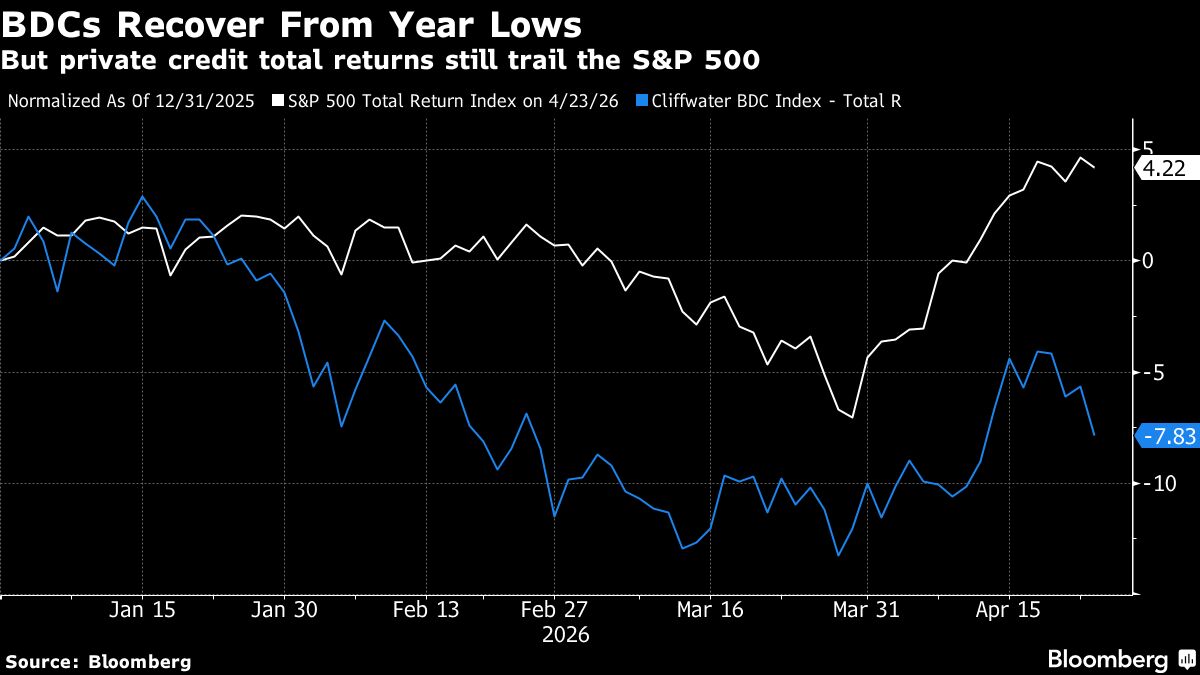
A wave of opportunistic investors is racing to acquire private credit funds at steep discounts, betting that today’s undervalued assets will deliver outsized returns as markets stabilize. With global interest rates remaining elevated and economic growth uneven, private debt—once a niche asset class—has emerged as an unlikely bargain bin for institutional buyers and hedge funds seeking high-yield opportunities.
The trend reflects a broader shift in investor strategy as traditional fixed-income markets offer diminishing returns. Private credit funds, which typically lend to mid-sized companies outside conventional banking channels, have seen their valuations slump amid rising defaults and tighter liquidity. Yet for those willing to shoulder the risk, the current dislocation presents a rare chance to buy high-quality debt at fire-sale prices.
Why Private Credit Is Suddenly in the Spotlight
Private lending has ballooned into a $1.7 trillion industry, fueled by post-2008 financial regulations that pushed riskier borrowers away from banks. These funds typically offer floating-rate loans, making them attractive in high-rate environments. However, the Federal Reserve’s aggressive monetary tightening has strained many borrowers, leading to a spike in distressed debt.
Now, secondary markets are seeing a surge in discounted sales. According to data from Jefferies, private credit funds traded at an average 86 cents on the dollar in Q1 2024—down from 97 cents a year earlier. Some high-risk tranches have fallen below 70 cents, drawing comparisons to the post-2008 distressed-debt boom.
“Investors with dry powder are seeing this as a generational buying opportunity,” said Miranda Reeves, a senior analyst at BlackRock. “The key is distinguishing between fundamentally sound businesses facing temporary stress and those with structural problems.”
Who’s Buying—And What Are the Risks?
The buyers fall into three main categories:
- Opportunistic Hedge Funds – Firms like Oaktree Capital and Apollo Global are actively acquiring discounted loans, betting on eventual recoveries.
- Institutional Investors – Pension funds and sovereign wealth funds, seeking higher yields than public bonds can offer, are increasing allocations.
- Specialized Distressed-Debt Funds – Vehicles like Ares Management’s Secondary Private Credit Fund are raising billions to capitalize on the dislocation.
Yet risks abound. Default rates in private credit reached 3.2% in 2023, the highest since 2010, according to S&P Global. Many loans lack the covenants that protect lenders in public markets, leaving buyers exposed if the economy worsens.
“The market is pricing in a soft landing, but if we hit a deeper recession, these discounts could widen further,” warned Credit Suisse strategist David Liang.
Case Study: The Surprising Resilience of Mid-Market Debt
Not all private credit is equally risky. Middle-market companies—those with $50 million to $1 billion in revenue—have proven surprisingly resilient. Unlike highly leveraged mega-corporations, these firms often have simpler capital structures and closer lender relationships, making restructuring easier.
One example is Chicago-based industrial supplier Mercer International, which recently refinanced $800 million in private debt at favorable terms despite sector-wide pressures. “The best opportunities are in boring, stable businesses that just need time,” noted Goldman Sachs’ private credit head, Anika Patel.
The Bigger Picture: What This Means for Global Finance
The rush into discounted private credit underscores deeper trends reshaping finance:
- Bank Retreat – Stricter capital rules have made banks reluctant to lend, pushing more companies toward private funds.
- Yield Hunger – With 10-year Treasuries yielding around 4%, investors are forced into riskier assets for meaningful returns.
- Secondary Market Growth – Once-illiquid private debt is becoming more tradable, mirroring the evolution of junk bonds in the 1980s.
Regulators are watching closely. The Bank of England recently flagged private credit as a potential systemic risk, citing opacity and leverage concerns. Still, for now, the buying frenzy shows no signs of slowing.
Conclusion: A High-Stakes Gamble on the Future
For investors, private credit offers a tantalizing proposition: the chance to lock in double-digit yields if the economy holds steady—or steep losses if it doesn’t. As the Fed signals potential rate cuts later this year, the window for these bargains may soon close.
“The smart money isn’t just buying cheap—it’s buying selectively,” said Reeves. “This isn’t a rising tide lifting all boats. It’s a stock-picker’s market.”
Whether today’s discount hunters are proven right will depend less on financial engineering than on the old-fashioned fundamentals of cash flow and survival. In the high-stakes world of private credit, the line between a steal and a trap has never been thinner.
