


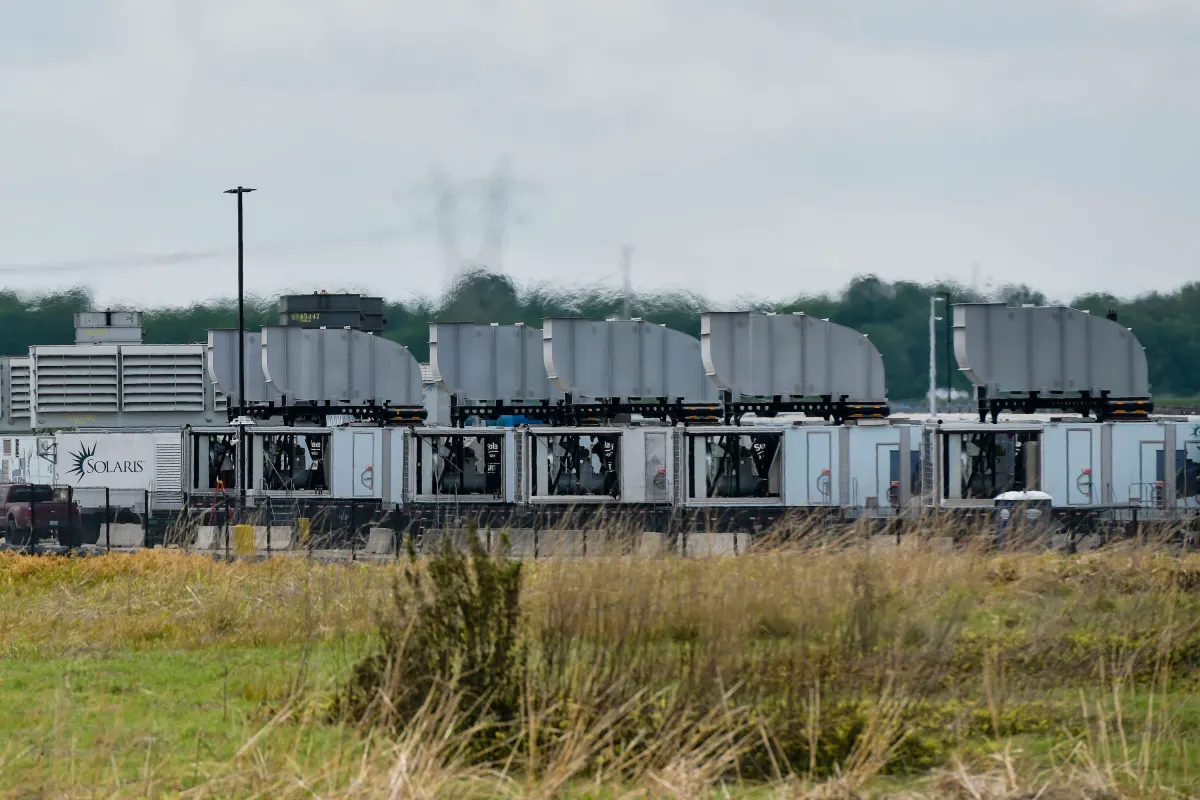

Maine Governor Vetoes Landmark Data Center Moratorium Bill Amid Rising National Debate
April 25, 2026
In a decision that could reshape the trajectory of Maine’s energy and tech sectors, Governor Janet Mills has vetoed a controversial bill that sought to impose a statewide moratorium on new data center construction until November 2027. The legislation, known as L.D. 307, would have been the first of its kind in the United States, reflecting growing concerns over the environmental and economic impacts of large-scale data centers. However, Mills’ veto underscores the complexities of balancing technological advancement, local economic interests, and environmental sustainability in an era increasingly defined by digital infrastructure demands.
The bill, introduced by Democratic State Representative Melanie Sachs, proposed a temporary halt on new data center permits and called for the establishment of a 13-member council to study the implications of these facilities. The council would have been tasked with making recommendations on future construction, with a focus on mitigating environmental harm and ensuring grid stability. The moratorium was widely seen as a response to mounting public opposition to data centers, driven by concerns over their significant energy consumption, potential strain on local utilities, and contributions to greenhouse gas emissions. Similar concerns have led lawmakers in states like New York to consider parallel measures, though Maine’s proposal was notable for its statewide scope and duration.
Governor Mills, a Democrat currently running for the U.S. Senate, acknowledged these concerns in her veto letter to the state legislature. She stated that the pause on new data centers would have been “appropriate given the impacts of massive data centers in other states on the environment and electricity rates.” However, she argued that the bill’s failure to include an exemption for a specific data center project in the Town of Jay rendered it unacceptable. Mills emphasized that the Jay project “enjoys strong local support from its host community and region,” suggesting that its potential economic benefits outweighed the broader concerns addressed by the moratorium.
The Town of Jay project, which has been hailed as a significant economic opportunity for a region still recovering from the decline of traditional industries, has been a focal point of debate. Proponents argue that the data center could bring hundreds of jobs and millions in investment to an area in need of revitalization. Critics, however, warn that the facility’s energy demands could strain Maine’s grid and exacerbate existing environmental challenges. The state, which has long prided itself on its natural beauty and commitment to sustainability, finds itself at a crossroads as it navigates the competing priorities of economic growth and environmental stewardship.
Representative Sachs, the bill’s sponsor, expressed disappointment with Mills’ decision, stating that the veto “poses significant potential consequences for all ratepayers, our electric grid, our environment, and our shared energy future.” Sachs and other supporters of the moratorium argue that Maine cannot afford to proceed without a comprehensive understanding of the long-term impacts of data centers. They point to examples in other states, where large-scale facilities have led to skyrocketing energy costs and increased reliance on fossil fuels, as cautionary tales.
The veto has also reignited a broader national conversation about the future of data centers in the United States. As the demand for digital infrastructure continues to surge—driven by advancements in artificial intelligence, cloud computing, and the Internet of Things—states are grappling with how to accommodate this growth while addressing its unintended consequences. Data centers, which house the servers and equipment necessary to power the digital economy, are notoriously energy-intensive, often consuming as much electricity as small cities. This has raised alarms among environmentalists and policymakers alike, particularly in regions where renewable energy sources are still underdeveloped.
Maine’s decision comes amid a wave of proposed and enacted measures aimed at regulating data center construction. In New York, lawmakers have introduced a bill calling for a three-year pause on new facilities, citing similar concerns over energy consumption and environmental impact. Meanwhile, tech companies and industry groups have pushed back, arguing that such moratoriums could stifle innovation and hinder economic development. They advocate for a more nuanced approach, emphasizing the importance of investing in renewable energy and improving energy efficiency in data center operations.
Governor Mills’ veto has drawn mixed reactions from stakeholders across the political and economic spectrum. Environmental groups have criticized the decision, arguing that it prioritizes short-term economic gains over long-term sustainability. “Maine has an opportunity to lead by example in addressing the challenges posed by data centers,” said Sarah Thompson, a spokesperson for the Maine Environmental Coalition. “By refusing to pause and assess the situation, we risk repeating the mistakes of other states.”
Conversely, business leaders and local officials in Jay have praised Mills for safeguarding their project. “This data center represents a chance to bring much-needed jobs and investment to our community,” said Mark Reynolds, Jay’s town manager. “We believe it can be done responsibly, with minimal impact on the environment and the grid.”
As Maine moves forward, the debate over data centers is likely to intensify. The state’s unique position—with its abundant natural resources, commitment to renewable energy, and relatively small population—makes it a test case for how communities can balance competing priorities in the digital age. While Governor Mills’ veto has delayed a statewide moratorium, it has also underscored the need for a more comprehensive approach to regulating data centers, one that takes into account both their potential benefits and their risks.
The coming months will be critical as stakeholders work to forge a path forward. Whether Maine chooses to embrace technological innovation at the expense of its environmental goals or seeks to chart a more sustainable course remains to be seen. What is clear, however, is that the decisions made today will have far-reaching implications for the state’s economy, environment, and energy future. As the national conversation continues, Maine’s experience may offer valuable lessons for other states grappling with similar challenges.
In the meantime, the debate over data centers serves as a stark reminder of the trade-offs inherent in the digital age—and the difficulty of finding solutions that satisfy all stakeholders. As Governor Mills herself noted, “the balance between progress and preservation is never easy.”
