


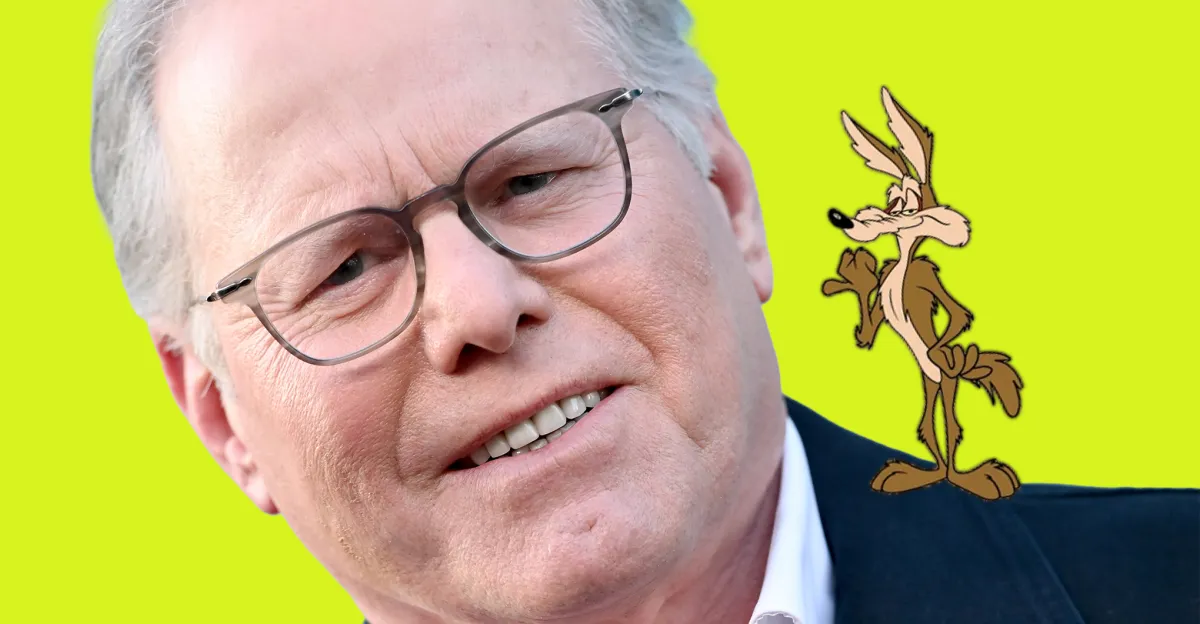

Warner Bros. Discovery’s Controversial Shelving Strategy: How Coyote v. Acme Became a Flashpoint in Hollywood’s Profit vs. Art Debate
By [Your Name]
LOS ANGELES — In an era where streaming wars and corporate consolidation dominate Hollywood, Warner Bros. Discovery (WBD) has repeatedly made headlines for an unusual—and highly controversial—business tactic: shelving nearly completed films to claim tax write-offs. The studio’s decision to cancel Batgirl, Scoob! Holiday Haunt, and, most recently, Coyote v. Acme has sparked industry-wide backlash, raising urgent questions about the balance between financial pragmatism and creative integrity. Now, as Coyote v. Acme finds an unlikely lifeline with indie distributor Ketchup Entertainment, the saga offers a revealing case study in corporate Hollywood’s shifting priorities—and the power of audience outrage.
A Pattern of Axed Projects
Under CEO David Zaslav’s leadership, WBD has aggressively pursued cost-cutting measures to offset its staggering $50 billion debt burden following the 2022 merger of WarnerMedia and Discovery. Among the most drastic steps was the abrupt cancellation of Batgirl, a $90 million DC film starring Leslie Grace, which was deep into post-production. The move, framed as a tax-saving strategy, shocked filmmakers and fans alike—particularly since the film was intended to anchor Warner’s struggling DC Extended Universe (DCEU).
Similarly, Scoob! Holiday Haunt, an animated holiday special, was scrapped despite being nearly finished. While neither project was guaranteed to be a hit, critics argued that WBD’s willingness to discard them outright signaled a troubling disregard for artistic investment. “It’s one thing to pivot strategy, but another to treat films as disposable assets,” remarked one veteran producer, speaking anonymously due to industry sensitivities.
The Coyote v. Acme Backlash and Reversal
The controversy reached a boiling point in late 2023 when WBD shelved Coyote v. Acme, a live-action/animation hybrid starring Wile E. Coyote in a courtroom battle against the Acme Corporation. Directed by Dave Green (Teenage Mutant Ninja Turtles: Out of the Shadows), the film had tested well internally and was poised for a 2024 release. Its cancellation—reportedly to secure another $30 million tax deduction—drew immediate fury.
Social media erupted with condemnation, while filmmakers and agents began boycotting meetings with WBD, fearing their projects could meet the same fate. The backlash forced the studio into rare damage control: by November 2023, WBD began shopping Coyote v. Acme to rivals like Netflix, Amazon, and Paramount. Yet, bafflingly, it rejected multiple offers—fueling speculation that the sale process was a PR stunt rather than a genuine effort to salvage the film.
Then, in a twist, Ketchup Entertainment—a smaller distributor that had previously acquired WBD’s The Day the Earth Blew Up: A Looney Tunes Movie—stepped in with a successful bid. The film is now slated for a theatrical release later this year, offering a rare victory for creative teams caught in corporate crossfires.
Zaslav’s Legacy: Profit Over Art?
The Coyote v. Acme saga underscores broader tensions in Hollywood, where studios increasingly prioritize short-term financial maneuvers over long-term brand-building. Zaslav, who once defended axing Batgirl as an act of “courage,” has faced accusations of dismantling Warner’s storied legacy. Under his watch, HBO Max purged beloved shows like Westworld and Sesame Street episodes, while DC’s cinematic universe floundered amid inconsistent leadership.
Yet the financial rationale is undeniable. WBD’s debt crisis demanded drastic action, and the studio’s recent $110 billion acquisition by Paramount-Skydance suggests shareholders endorsed Zaslav’s approach. If the deal closes, he stands to walk away with a golden parachute worth tens of millions—regardless of lingering creative grievances.
The Bigger Picture: Will Audiences Show Up?
The ultimate test lies in Coyote v. Acme’s box office performance. The film’s rescue has been framed as a populist win against corporate greed, but whether that translates to ticket sales remains uncertain. Recent Looney Tunes films—Space Jam: A New Legacy and The Day the Earth Blew Up—underperformed, and online outrage doesn’t always equate to commercial success (see: Morbius’s meme-fueled re-release flop).
Still, the industry is watching closely. A hit could embolden filmmakers and fans to push back against shelving tactics, while a miss might validate studios’ risk-averse calculus. “This isn’t just about one movie,” says entertainment analyst Laura Martin of Needham & Company. “It’s about whether audiences still have the power to influence how studios operate.”
Conclusion: A Defining Moment for Hollywood
As Coyote v. Acme heads to theaters, its journey reflects a pivotal clash in modern entertainment: the tension between balance sheets and storytelling, between executives and artists. For Warner Bros. Discovery, the film’s fate may ultimately determine whether its strategy is remembered as ruthless pragmatism or a costly misstep. And for Hollywood at large, it’s a reminder that in the age of viral outrage, the line between art and accounting has never been thinner—or more consequential.
Only time will tell if audiences, and history, judge Zaslav’s choices as shrewd or shortsighted. But one thing is certain: the debate over what Hollywood values most is far from over.
