



Asian Corporate Earnings Face Critical Test as Geopolitical Tensions Ripple Through Markets
By [Your Name], Senior Financial Correspondent
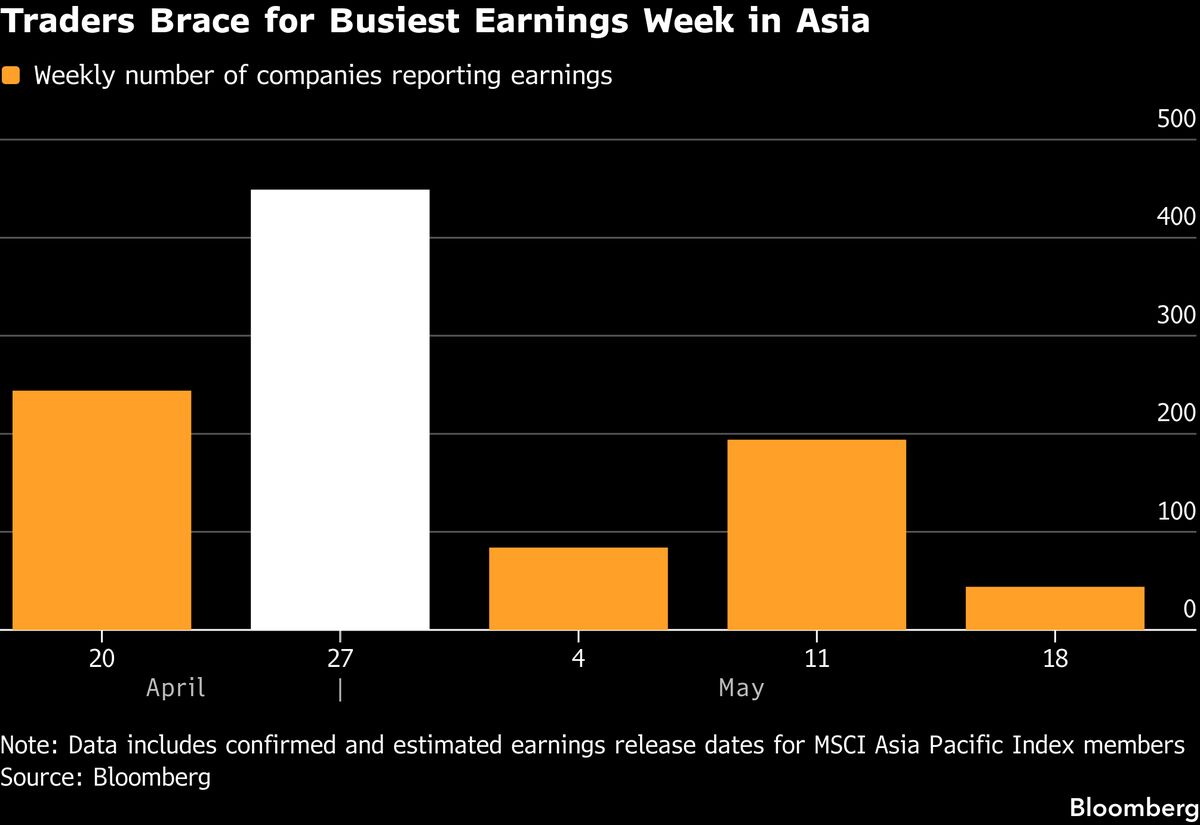
HONG KONG – As Asia’s corporate earnings season reaches its peak this week, investors worldwide are bracing for what may be the first concrete evidence of how escalating Middle East tensions—particularly the Israel-Hamas war—have reverberated through the region’s economies. With over 1,200 major companies across Japan, South Korea, China, and India set to report quarterly results, analysts warn that supply chain disruptions, volatile energy prices, and shifting consumer demand could paint a mixed picture for Asia’s growth trajectory.
The stakes are high for global markets. Asia accounts for nearly 40% of the world’s GDP, and its corporate titans—from Japanese automakers to Chinese tech giants—serve as bellwethers for international trade. Yet geopolitical instability has clouded the outlook. The conflict in Gaza, which erupted in October, has already triggered fluctuations in oil prices and shipping costs, while renewed U.S.-China trade frictions add another layer of uncertainty.
Key Sectors Under the Microscope
1. Technology & Semiconductors
South Korea’s Samsung Electronics and Taiwan’s TSMC, both set to report this week, will face scrutiny over whether Middle East instability has dented demand for consumer electronics or disrupted delicate semiconductor supply chains. Analysts at Nomura note that shipping delays in the Red Sea—where Houthi attacks have forced reroutes—could inflate logistics costs by 15-20%, squeezing margins for hardware manufacturers.
2. Energy & Commodities
Japanese refining giants like ENEOS Holdings and China’s Sinopec are expected to reveal the impact of fluctuating crude prices, which surged to $90 a barrel in April before retreating. Meanwhile, Indian steel producers such as Tata Steel may report weaker exports if European demand softens amid recession fears.
3. Automotive
Toyota and Hyundai, set to announce earnings, could highlight contrasting fortunes. While Japanese automakers benefit from a weaker yen, Korean firms face headwinds from rising raw material costs. The Israel-Hamas war has also disrupted car part shipments to key markets like Türkiye and Egypt.
Broader Economic Context
The earnings wave arrives at a precarious moment for Asia. China’s uneven post-pandemic recovery, Japan’s fragile yen, and India’s slowing export growth have already tested investor patience. The International Monetary Fund (IMF) recently trimmed its 2024 GDP forecast for emerging Asia to 4.3%, citing “geopolitical spillovers” as a primary risk.
“Corporate guidance will be just as critical as the actual numbers,” said Priyanka Kishore, head of Asia research at Oxford Economics. “If CEOs signal further caution on capital expenditure due to Middle East risks, it could trigger a regional pullback in equities.”
Investor Sentiment and Market Reactions
Early reports have been mixed. South Korean chipmaker SK Hynix posted better-than-expected profits, driven by AI-related demand, while Australian miner BHP flagged lower iron ore earnings due to China’s property slump. The MSCI Asia Pacific Index has wobbled in recent weeks, reflecting the uncertainty.
“Markets are pricing in a ‘wait-and-see’ approach,” said HSBC strategist Herald van der Linde. “But if this earnings season shows sustained margin pressures, we could see a broader correction.”
Long-Term Implications
Beyond quarterly figures, the reports may reveal structural shifts. Some firms, like Japan’s Fast Retailing (parent of Uniqlo), have already capitalized on weaker currencies to boost overseas revenue. Others, particularly Chinese exporters, could struggle if Western consumers pivot toward cheaper alternatives amid inflation.
Meanwhile, Southeast Asia’s rising stars—Vietnam’s VinFast and Indonesia’s GoTo—will test whether emerging markets can offset slower growth in China.
A Delicate Balancing Act
As Asia’s corporate heavyweights step into the spotlight this week, their disclosures will offer more than just a snapshot of past performance. They’ll serve as a litmus test for how the world’s most dynamic economies are navigating an era of fractured trade lines and unpredictable crises. For investors, the challenge will be separating short-term turbulence from long-term decline—or opportunity.
The verdict, as always, lies in the details.
