



Iran’s Power Struggle: Who Really Controls the Islamic Republic?
A Shadow War for Iran’s Future
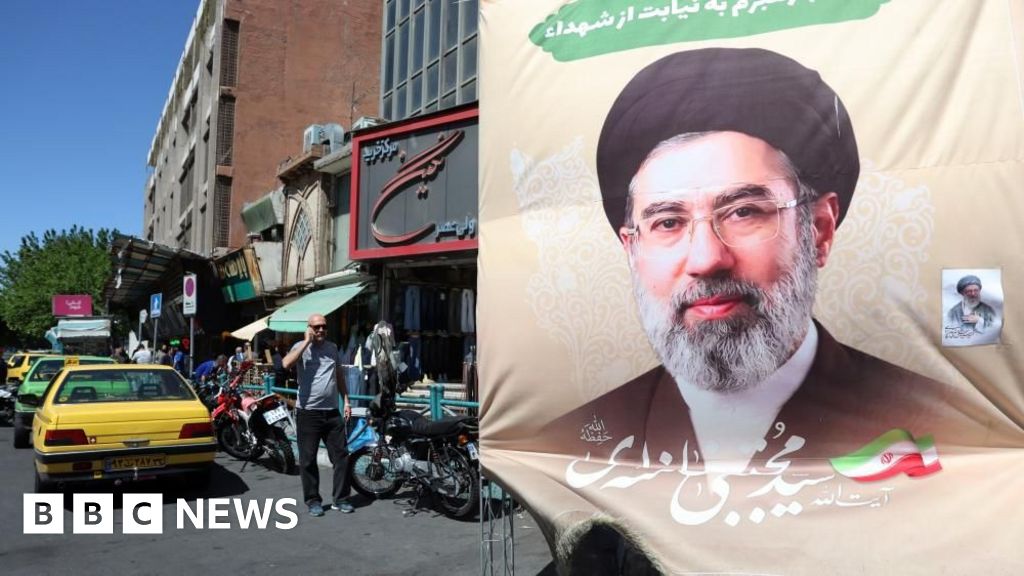
Behind the grand religious titles and carefully staged public appearances, a quiet but fierce battle for control is unfolding in Iran. The death of Supreme Leader Ayatollah Ali Khamenei—whenever it comes—will trigger one of the most consequential power transitions in the Middle East. Officially, his successor will inherit near-absolute authority over Iran’s political, military, and religious institutions. But in reality, the next leader may find themselves entangled in a web of competing factions, each vying for dominance in a system where real power is far more fragmented than it appears.
The Myth of Absolute Control
The Islamic Republic’s constitution grants the Supreme Leader ultimate authority, positioning him as the nation’s spiritual guide and chief decision-maker. Yet decades of internal rivalries, economic crises, and shifting alliances have eroded the myth of monolithic control. Khamenei himself rose to power in 1989 after a contentious selection process, and since then, his reign has been marked by constant balancing acts between hardliners, reformists, and the powerful Islamic Revolutionary Guard Corps (IRGC).
Experts suggest that the next leader—likely drawn from a small circle of clerics and loyalists—will face even greater challenges. “The Supreme Leader’s office is not just one man; it’s an institution propped up by military, economic, and ideological interests,” says Dr. Sanam Vakil of Chatham House. “Any successor will have to negotiate with these power centers or risk being sidelined.”
The IRGC: A State Within a State
No discussion of Iranian power dynamics is complete without addressing the IRGC’s overwhelming influence. Originally formed to protect the revolution, the Guards have since expanded into a sprawling economic and military empire, controlling vast sectors of Iran’s economy, from oil to telecommunications. Their elite Quds Force operates abroad, backing proxies like Hezbollah and Yemen’s Houthis, making them key players in regional conflicts.
This creates a paradox: while the Supreme Leader is the IRGC’s nominal commander, the group’s autonomy means it can shape policy independently. Recent crackdowns on protests and aggressive posturing in the Persian Gulf have been attributed to IRGC hardliners pushing their agenda—sometimes at odds with more cautious political figures.
Global Implications: Why the World Should Care
Iran’s internal power struggles have far-reaching consequences. A fragmented leadership could lead to erratic foreign policy, escalating tensions with the U.S. and Israel over nuclear negotiations or regional proxy wars. Conversely, a more centralized regime might double down on repression at home, sparking further unrest.
For global energy markets, stability in Iran is critical. The country holds the world’s fourth-largest oil reserves, and any internal turmoil could disrupt supplies, sending shockwaves through economies already grappling with inflation. Meanwhile, European and Asian powers banking on diplomatic engagement will watch closely—hoping for moderates to gain ground, but preparing for the opposite.
The Human Cost of Power Plays
Beyond geopolitics, Iran’s leadership crisis has dire implications for its people. Years of sanctions, corruption, and mismanagement have fueled widespread discontent. The 2022-2023 protest movement, sparked by the death of Mahsa Amini, revealed deep fissures between the ruling elite and a population increasingly disillusioned with clerical rule.
Activists fear that a power vacuum could lead to even harsher crackdowns as factions compete to prove their loyalty to revolutionary ideals. “The more insecure the leadership feels, the more violent the repression becomes,” warns exiled journalist Masih Alinejad.
What Comes Next?
The question of succession is not just about who replaces Khamenei—it’s about whether Iran’s system can survive intact. Will the next Supreme Leader be a compromise candidate, bridging divides between pragmatists and ideologues? Or will hardliners seize the moment to purge rivals and tighten their grip?
For now, the regime projects unity. But beneath the surface, the struggle for Iran’s soul is already underway. The outcome will shape not just the future of 85 million Iranians, but the balance of power in one of the world’s most volatile regions.
As the world watches, one thing is certain: in the high-stakes game of Iranian politics, nothing is as simple as it seems.
