



Amazon’s Uncertain Mobile Ambitions: A New Smartphone or a Leap into AI-Driven Innovation?
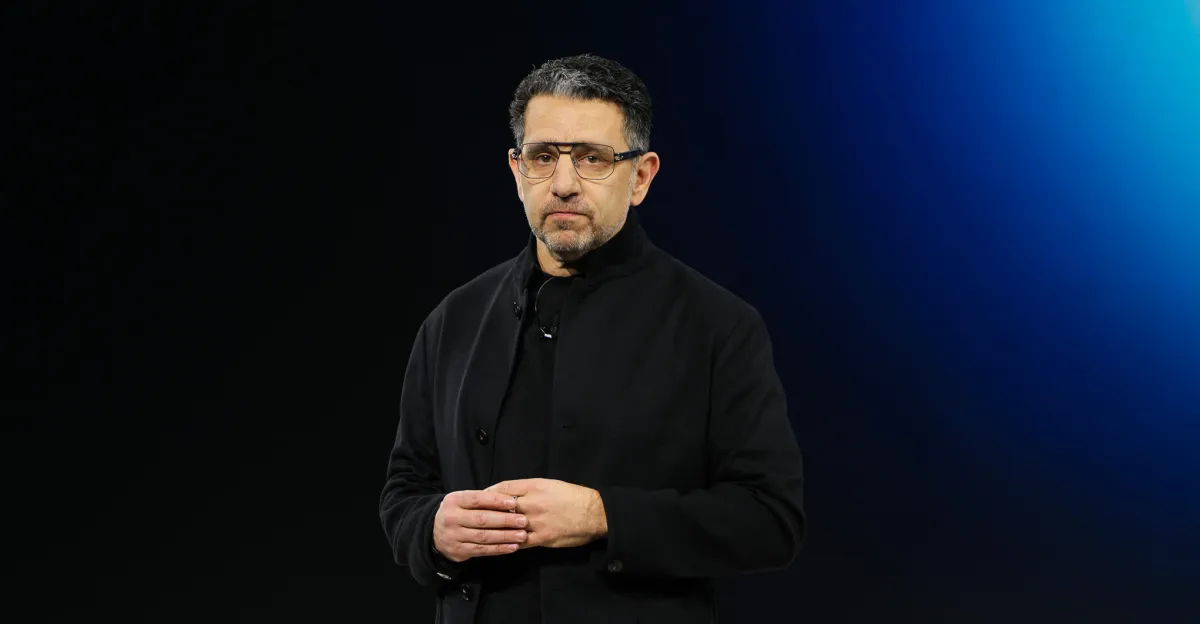
In the ever-evolving world of technology, Amazon has consistently positioned itself as a disruptor, from cloud computing to smart home devices. Yet, one question looms large: will the tech giant venture back into the smartphone market? Panos Panay, Amazon’s Head of Devices and Services, recently addressed this question in an interview with the Financial Times, offering a cryptic response that has left industry analysts and consumers speculating about the company’s next move. While Panay stopped short of confirming or denying Amazon’s smartphone ambitions, his comments suggest the company may be exploring a radically different approach to mobile technology—one that could redefine what a “phone” even means.
The speculation around Amazon’s potential smartphone venture stems from reports of a mysterious project codenamed “Transformer,” allegedly an Alexa-enabled AI device that could blur the lines between smartphones and simpler communication tools. This comes more than a decade after Amazon’s ill-fated Fire Phone, a high-profile flop that the company would likely prefer to forget. In 2014, the Fire Phone debuted with much fanfare but failed to gain traction, prompting Amazon to scrap the project just a year later. The failure was a rare misstep for a company known for its relentless innovation and market dominance.
Panay’s recent comments, however, suggest Amazon has learned its lesson. When asked directly whether Amazon is planning to release a smartphone, he responded with characteristic ambiguity: “It’s just not the goal. I know there’s a lot of rumors out there.” He acknowledged the “black and white” nature of the question but refused to deliver a definitive answer. “If I black and white say no, I would say that was accurate. But I also think it’s misleading,” he added.
This hedging has fueled speculation that Amazon’s mobile ambitions may not involve a traditional smartphone. Panay hinted at significant transformations in the smartphone industry, suggesting that the form factor is “not going anywhere” but is “going through some transformation, and will continue to do so over the next 10 years.” His words imply that Amazon may be working on a device that challenges conventional definitions of a phone, perhaps integrating cutting-edge AI capabilities or adopting an entirely new design philosophy.
The rumored Transformer project remains shrouded in mystery, but reports indicate that Amazon’s team has explored both smartphone and “dumbphone” designs, leaning heavily on the integration of its Alexa Plus AI assistant. This aligns with Panay’s broader vision for the future of devices. In the same interview, he discussed the potential of AI wearables, stating, “There’s a whole new set of form factors that we’re working on.” These remarks suggest that Amazon’s focus may extend beyond traditional smartphones to encompass innovative, AI-driven devices that could redefine how users interact with technology.
Panay’s cautious approach may also reflect lessons learned from his tenure at Microsoft, where he spearheaded the development of the Surface Duo, a dual-screen Android device that garnered mixed reviews. While the Surface Duo showcased ambitious design, it struggled to compete with more conventional smartphones, highlighting the challenges of innovating in a fiercely competitive market.
For Amazon, the stakes are high. The smartphone industry is dominated by Apple and Samsung, with smaller players struggling to carve out meaningful market share. Entering this arena would require not only a groundbreaking product but also a compelling reason for consumers to switch from their current devices. Amazon’s strength lies in its ecosystem of services—from Prime Video to Amazon Music to its vast e-commerce platform—and any new device would likely be designed to integrate seamlessly with these offerings.
Alexa, Amazon’s voice-activated AI assistant, could be a key differentiator in any future mobile device. With advancements in AI and machine learning, Alexa has evolved into a sophisticated tool capable of handling complex tasks, from managing smart homes to providing personalized recommendations. Integrating Alexa into a mobile device could offer users a uniquely connected experience, leveraging Amazon’s existing infrastructure to create a gadget that feels less like a phone and more like a hub for the company’s services.
However, the path forward is fraught with challenges. The Fire Phone’s failure serves as a cautionary tale, reminding Amazon of the risks inherent in venturing into competitive markets. Moreover, consumers’ expectations for smartphones are higher than ever, with demands for cutting-edge cameras, sleek designs, and seamless performance. Any new device would need to meet these expectations while offering something truly unique to stand out.
Despite the uncertainty, Panay’s comments suggest that Amazon is not content to sit on the sidelines. Whether through a traditional smartphone, an AI-driven wearable, or an entirely new category of device, the company appears poised to push boundaries. As Panay noted, the smartphone industry is undergoing transformation, and Amazon’s next move could play a pivotal role in shaping its future.
For now, the world waits to see whether Amazon will reenter the mobile market—and whether it can succeed where it once failed. One thing is certain: in the hands of Panos Panay and his team, innovation is never far away. As the industry watches closely, Amazon’s next chapter in mobile technology could either redefine the game or serve as another lesson in the complexities of innovation. Only time will tell.
