


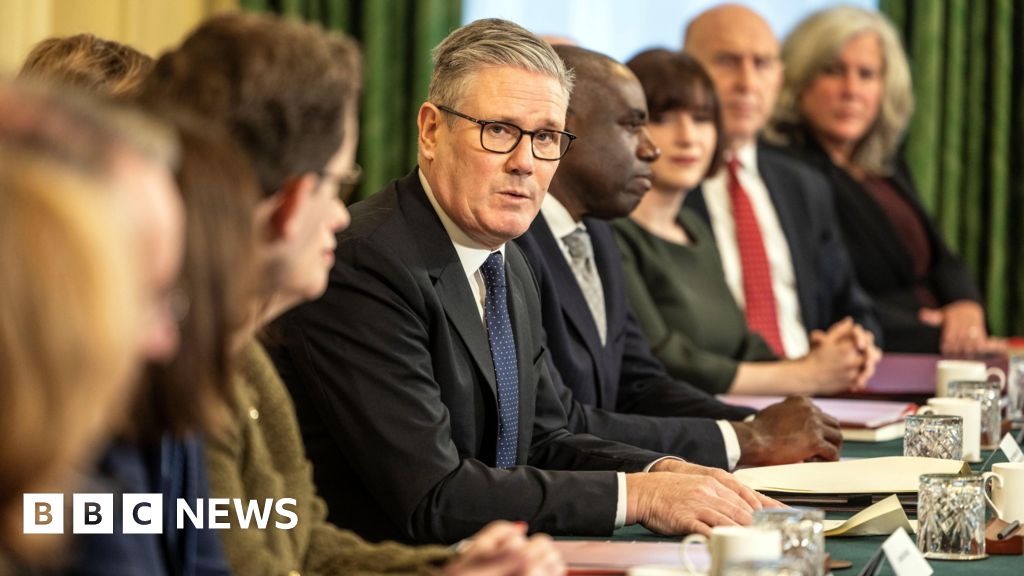

Discontent Among Labour MPs Sparks Speculation Over Sir Keir Starmer’s Leadership
London, United Kingdom — As pressure mounts within the Labour Party, questions are growing over whether Sir Keir Starmer’s leadership could face a formal challenge. Amidst internal dissatisfaction and declining confidence among some MPs, the possibility of a leadership contest looms, raising concerns about the party’s unity and future direction ahead of the next general election.
Under Labour Party rules, a leadership contest can be triggered if 20% of the party’s MPs and MEPs submit letters of no confidence in the current leader. With a total of 198 Labour MPs, this threshold would require at least 40 signatures. While no formal campaign to oust Starmer has yet materialized, murmurs of discontent suggest that discontent could be brewing behind the scenes.
Critics of the Labour leader point to his perceived lack of charisma, inconsistent messaging, and failure to capitalize on Conservative Party vulnerabilities amid scandals and economic turmoil. Starmer’s cautious approach to policy development and reluctance to embrace bold, transformative ideas have also alienated some factions within the party, particularly its more progressive wing.
One Labour MP, speaking anonymously, described a growing sense of frustration. “There’s a feeling that we’re treading water rather than making waves. The Tories are at their weakest in years, but we’re not taking advantage of it. People are starting to wonder if Keir is the right person to lead us into the next election.”
However, Starmer’s supporters remain steadfast in their defense of his leadership. They argue that his focus on rebuilding the party’s credibility after Jeremy Corbyn’s tenure, particularly in restoring trust among voters in traditionally conservative “Red Wall” constituencies, has been essential. They also highlight his efforts to tackle internal issues such as antisemitism, which had plagued the party under its previous leadership.
The Mechanics of a Leadership Challenge
For a formal leadership contest to occur, dissenting MPs would need to coordinate their efforts to ensure they reach the 20% threshold. The process begins with the submission of letters to the chair of the Parliamentary Labour Party (PLP), although these letters are not made public unless the threshold is met.
If successful, the challenge would initiate a wider election process involving Labour members, affiliated trade unions, and socialist societies. Starmer would automatically be on the ballot, alongside any challengers who gather sufficient nominations from MPs.
Political analysts suggest that while Starmer remains the likely favorite in any contest, a challenge would undoubtedly destabilize the party and distract from its efforts to present a united front against the Conservatives.
Why It Matters
The speculation surrounding Starmer’s leadership comes at a critical juncture for the Labour Party. With the Conservative Party mired in internal strife and facing public backlash over issues such as the cost-of-living crisis and NHS pressures, Labour had hoped to position itself as a viable alternative government.
However, persistent divisions within the party risk undermining these efforts. A leadership contest would not only consume valuable time and resources but could also deepen existing rifts between the party’s moderate and progressive factions.
For Starmer, the stakes could not be higher. A successful leadership challenge would mark a dramatic setback for his tenure, while even a victory in such a contest could leave him weakened and embattled, struggling to rally the party ahead of the next election.
The Wider Context
The Labour Party’s internal tensions reflect broader challenges faced by opposition parties in the UK. Since its crushing defeat in the 2019 general election, Labour has struggled to regain its footing, grappling with questions over its identity, policies, and electoral strategy.
Starmer’s leadership was initially seen as a reset, moving the party away from the polarizing politics of the Corbyn era. However, his efforts to position Labour as a “government in waiting” have been hampered by external pressures, including the COVID-19 pandemic and its economic fallout, as well as internal disagreements over issues such as climate policy, public spending, and Brexit.
Future Implications
The coming weeks will be pivotal in determining whether discontent over Starmer’s leadership translates into concrete action. Should dissenting MPs succeed in forcing a contest, the Labour Party could face a prolonged period of introspection and uncertainty, complicating its preparations for the next general election, which is expected in late 2024 or early 2025.
Alternatively, if Starmer successfully weathers the current storm, he may emerge with renewed authority, potentially galvanizing the party around a clearer vision for governance. Yet, the underlying tensions are unlikely to dissipate entirely, leaving Labour’s unity and electoral prospects hanging in the balance.
As the political landscape continues to evolve, one thing is clear: the Labour Party’s ability to navigate its internal divisions will be crucial in shaping its future—and, by extension, the future of British politics.
