


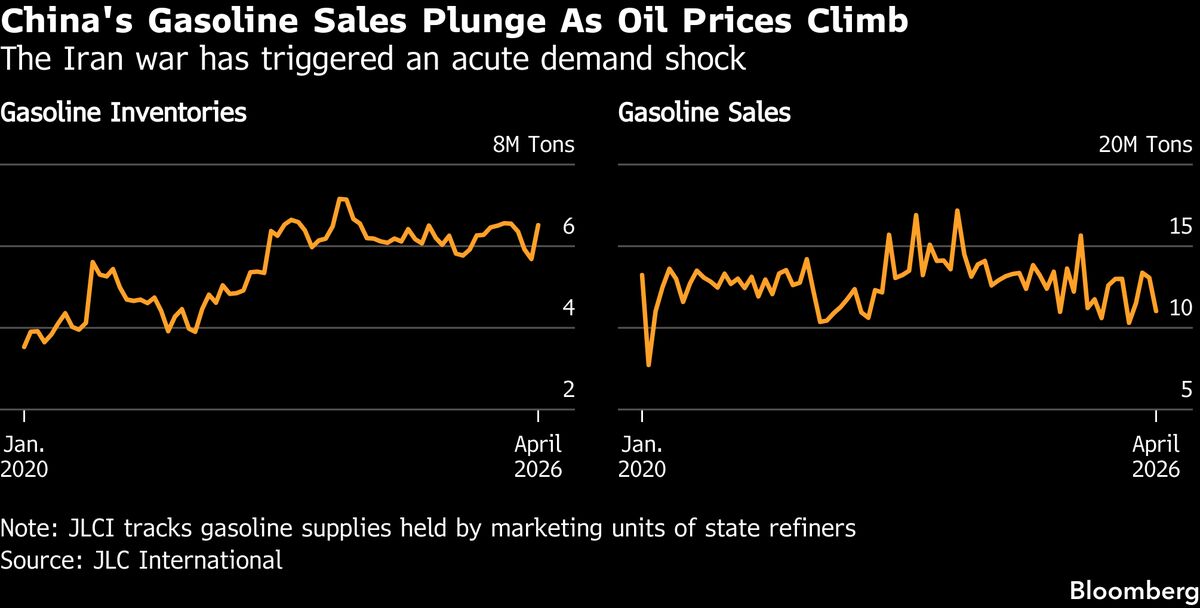

China’s Gasoline Demand Faces Sharp Decline Amid Geopolitical Tensions and Green Energy Push
Beijing, China – China, the world’s largest consumer of energy, is bracing for a significant downturn in gasoline demand this year, as soaring oil prices fueled by escalating tensions in the Middle East and a relentless global shift toward electric vehicles (EVs) reshape the energy landscape. The dual pressures of geopolitical instability and domestic policy changes are accelerating the decline of internal combustion engines (ICEs) in the country, marking a pivotal moment in China’s energy transition.
The latest forecasts from industry analysts and energy experts suggest that China’s gasoline consumption could drop by as much as 5% in 2024, following a steady decline in recent years. This trend is largely attributed to the confluence of external factors, such as the Iran-Israel conflict driving up crude oil prices, and internal drivers, including Beijing’s aggressive push toward green energy and EVs. The shift is not only reshaping China’s energy market but also sending ripples across the global oil industry, as the nation’s vast appetite for fossil fuels begins to wane.
Geopolitical Turmoil Drives Oil Price Volatility
The ongoing conflict between Iran and Israel has sent shockwaves through global energy markets, with crude oil prices surging to their highest levels in months. The escalation has reignited fears of supply disruptions in the Middle East, a region that accounts for nearly a third of the world’s oil production. Brent crude, the international benchmark, has risen sharply, breaching the $90-per-barrel mark and threatening to climb further as tensions persist.
For China, which imports over 70% of its crude oil, the price surge has translated into higher fuel costs for consumers and businesses alike. This, combined with weakening domestic demand due to economic uncertainties, has further dampened gasoline consumption. Analysts warn that prolonged geopolitical instability could exacerbate the situation, forcing China to accelerate its transition to alternative energy sources.
“Higher oil prices are a double-edged sword for China,” said Dr. Li Wei, an energy economist at Peking University. “While they incentivize the adoption of cleaner technologies like EVs, they also put pressure on consumers and industries that still rely on fossil fuels. The current geopolitical climate is accelerating a decline that was already underway.”
China’s Green Energy Ambitions Take Center Stage
The geopolitical backdrop is only part of the story. China’s declining gasoline demand is also a direct result of the country’s long-term strategy to reduce its reliance on fossil fuels and curb greenhouse gas emissions. Over the past decade, Beijing has implemented a series of ambitious policies aimed at promoting EVs, renewable energy, and energy efficiency, positioning itself as a global leader in the fight against climate change.
Central to this effort is China’s rapidly growing EV market, which has become the largest in the world. In 2023, EVs accounted for more than 30% of all new car sales in the country, a figure that is expected to rise sharply in the coming years. The government’s support for EV infrastructure, including subsidies, tax incentives, and the expansion of charging networks, has been instrumental in driving adoption.
“China’s push for EVs is reshaping its transportation sector,” said Zhang Ming, an automotive analyst based in Shanghai. “As more consumers switch to electric vehicles, the demand for gasoline is naturally declining. This trend is irreversible and will only gain momentum as EV technology improves and becomes more affordable.”
The decline in gasoline demand is also being fueled by broader societal changes, particularly in urban areas. Rising environmental awareness, coupled with stringent regulations on vehicle emissions, has led many Chinese cities to impose restrictions on ICE vehicles. In major metropolises like Beijing and Shanghai, drivers face limitations on car ownership and usage, further encouraging the shift toward cleaner alternatives.
Economic Factors Compound the Decline
Beyond geopolitical and environmental factors, economic challenges are also playing a role in China’s shrinking gasoline demand. The country’s post-pandemic recovery has been uneven, with sluggish consumer spending and a property market crisis weighing on economic growth. As households tighten their belts, discretionary spending on fuel has taken a hit, particularly in rural areas where incomes are lower.
“The economic slowdown is adding to the downward pressure on gasoline demand,” said Chen Xiaodong, a senior analyst at China National Petroleum Corporation (CNPC). “With consumers cutting back on non-essential expenses, driving less is becoming a common strategy to save money. This is especially true in regions where public transportation is less accessible.”
Implications for the Global Oil Market
China’s declining gasoline demand has far-reaching implications for the global oil market, which has long relied on the country’s insatiable appetite for energy. As the world’s second-largest economy continues to pivot toward green technologies, the ripple effects are being felt across the energy sector, from oil producers in the Middle East to refiners in Asia.
For OPEC and other major oil exporters, the slowdown in Chinese demand presents a significant challenge. The organization has already faced headwinds from the global energy transition, and China’s shift away from gasoline could further complicate efforts to stabilize oil prices. Meanwhile, refineries in Asia are grappling with dwindling margins as they adjust to lower demand for traditional fuels.
“China’s energy transition is a wake-up call for the global oil industry,” said Vandana Hari, founder of Vanda Insights, a Singapore-based energy consultancy. “As the world’s largest energy consumer moves decisively toward a greener future, other countries are likely to follow suit. This underscores the urgent need for oil producers to diversify their economies and invest in renewable energy.”
A Defining Moment for China’s Energy Policy
The decline in gasoline demand marks a defining moment in China’s energy policy, reflecting the country’s growing commitment to sustainability and self-reliance. While the transition poses challenges, particularly for industries and workers tied to the fossil fuel sector, it also offers opportunities for innovation and economic growth in the green energy space.
As China navigates this transformative period, the rest of the world will be watching closely. The nation’s ability to balance its energy needs with its environmental goals will serve as a litmus test for other countries embarking on similar journeys.
In the words of Dr. Li Wei, “China’s declining gasoline demand is not just a local phenomenon—it’s a global signal. The energy transition is no longer a distant dream; it’s happening now, and China is leading the way.”
As the world grapples with the dual challenges of geopolitical instability and climate change, China’s evolving energy landscape offers both cautionary lessons and hopeful insights for the future.
