


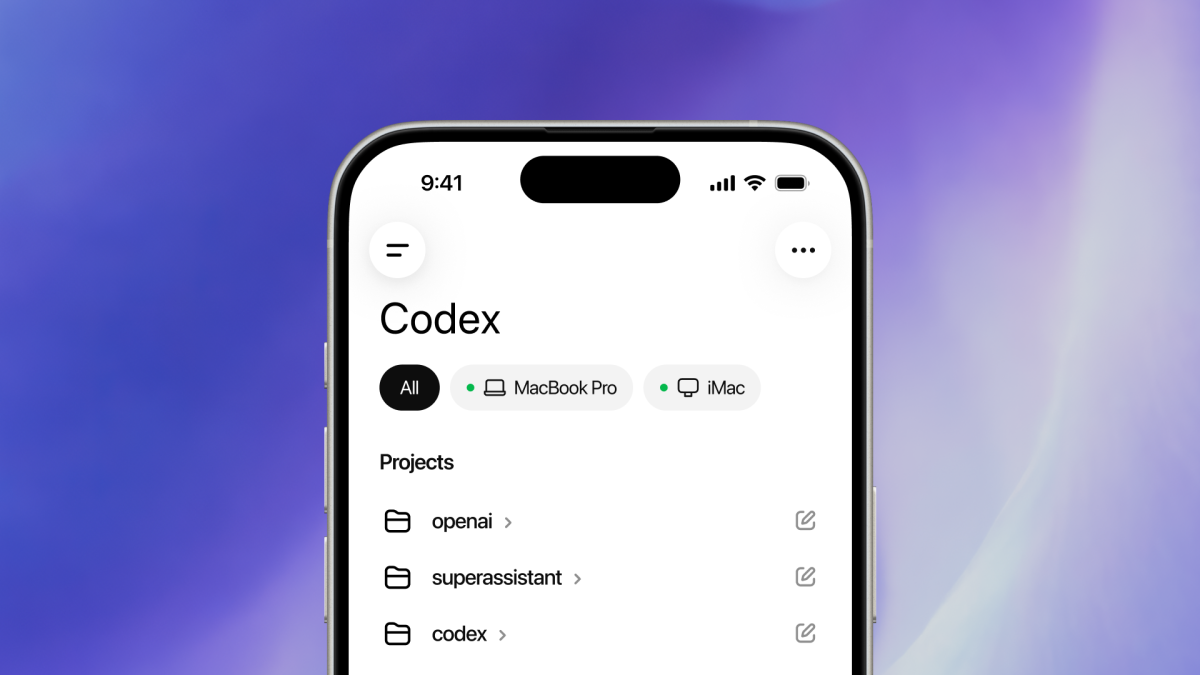

OpenAI’s Codex Goes Mobile: ChatGPT App Integration Signals New Era in AI-Powered Coding
In a significant leap forward for AI-driven development tools, OpenAI has announced the integration of its powerful coding assistant, Codex, into the ChatGPT mobile app. This groundbreaking update allows developers to monitor and manage their coding workflows directly from their smartphones, marking a major milestone in the evolution of AI-powered productivity tools. With Codex now accessible on iOS and Android devices, OpenAI is pushing the boundaries of remote coding efficiency, offering users unprecedented flexibility and control over their development processes.
The move underscores OpenAI’s commitment to enhancing the accessibility and functionality of its AI tools as it continues to compete in the fiercely contested arena of AI-driven coding assistants. Against a backdrop of growing rivalry with Anthropic’s Claude Code, this update positions OpenAI to strengthen its foothold in a rapidly evolving market.
A New Dimension of Remote Coding
The integration of Codex into the ChatGPT app enables users to view live coding environments across all devices where Codex is operational. This feature, now available in preview to all ChatGPT subscribers on iOS and Android, goes beyond simple remote control. According to OpenAI, users can seamlessly navigate multiple coding threads, review outputs, approve commands, switch AI models, or initiate entirely new tasks—all from their mobile devices.
“This is more than the ability to remotely control a single task or dispatch new tasks to your computer,” OpenAI stated. “From your phone, you can work across all of your threads, review outputs, approve commands, change models, or start something new.”
The update builds on recent enhancements to Codex, including its ability to run autonomously in the background on desktop environments. Introduced last month, this feature allows Codex to handle repetitive tasks independently, freeing developers to focus on higher-level problem-solving. Additionally, OpenAI recently launched a Chrome extension that integrates Codex into live browser sessions, further expanding its utility.
Competition Heats Up in AI Coding Assistants
OpenAI’s latest move comes amid intensifying competition with Anthropic, a rival AI company that has been making strides with its own coding assistant, Claude Code. In February, Anthropic unveiled a similar feature called “Remote Control,” enabling users to monitor Claude Code’s activities remotely. Like Codex, Claude Code has gained significant traction among businesses and tech professionals, with both tools frequently cited as indispensable in modern development workflows.
The rivalry between OpenAI and Anthropic reflects broader trends in the AI industry, where companies are racing to develop increasingly sophisticated tools that cater to the needs of developers and enterprises. Over the past year, both Codex and Claude Code have seen widespread adoption, but the competition shows no signs of slowing down. As each company rolls out new features, the battle for dominance in the AI coding assistant market continues to escalate.
Broader Implications for Developers and Enterprises
The integration of Codex into the ChatGPT app represents a significant advancement for developers, particularly those who frequently work across multiple devices or in remote settings. By enabling mobile access to live coding environments, OpenAI is addressing a key pain point for developers who need to stay productive on the go. This functionality could prove especially valuable for teams working in distributed environments, where seamless collaboration and real-time monitoring are essential.
For enterprises, the update underscores the growing importance of AI-powered tools in streamlining workflows and boosting productivity. As businesses increasingly rely on AI to automate repetitive tasks and enhance efficiency, tools like Codex and Claude Code are becoming integral to modern development processes.
A Glimpse into the Future of AI-Powered Development
The rapid pace of innovation in AI coding assistants signals a broader shift in how developers interact with technology. As these tools become more sophisticated, they are poised to transform not only the way code is written but also how development teams collaborate and manage projects. The integration of Codex into the ChatGPT app is a testament to the transformative potential of AI, offering a glimpse into a future where developers can harness the power of AI across every aspect of their work.
At the same time, the competition between OpenAI and Anthropic highlights the dynamic nature of the AI industry, where innovation is driven by a relentless pursuit of excellence. As both companies continue to push the boundaries of what AI can achieve, the ultimate beneficiary is the global developer community, which gains access to increasingly powerful tools that redefine the possibilities of coding.
Conclusion
OpenAI’s decision to integrate Codex into the ChatGPT mobile app marks a pivotal moment in the evolution of AI-driven development tools. By enabling developers to manage their workflows remotely, OpenAI is not only enhancing the functionality of Codex but also setting the stage for a new era of mobile-first productivity. As the competition with Anthropic intensifies, the ongoing innovation in AI coding assistants promises to reshape the landscape of software development, offering unparalleled opportunities for developers and enterprises alike.
While the question of which tool—Codex or Claude Code—will ultimately dominate the market remains unanswered, one thing is clear: the future of coding is mobile, intelligent, and more accessible than ever.
