


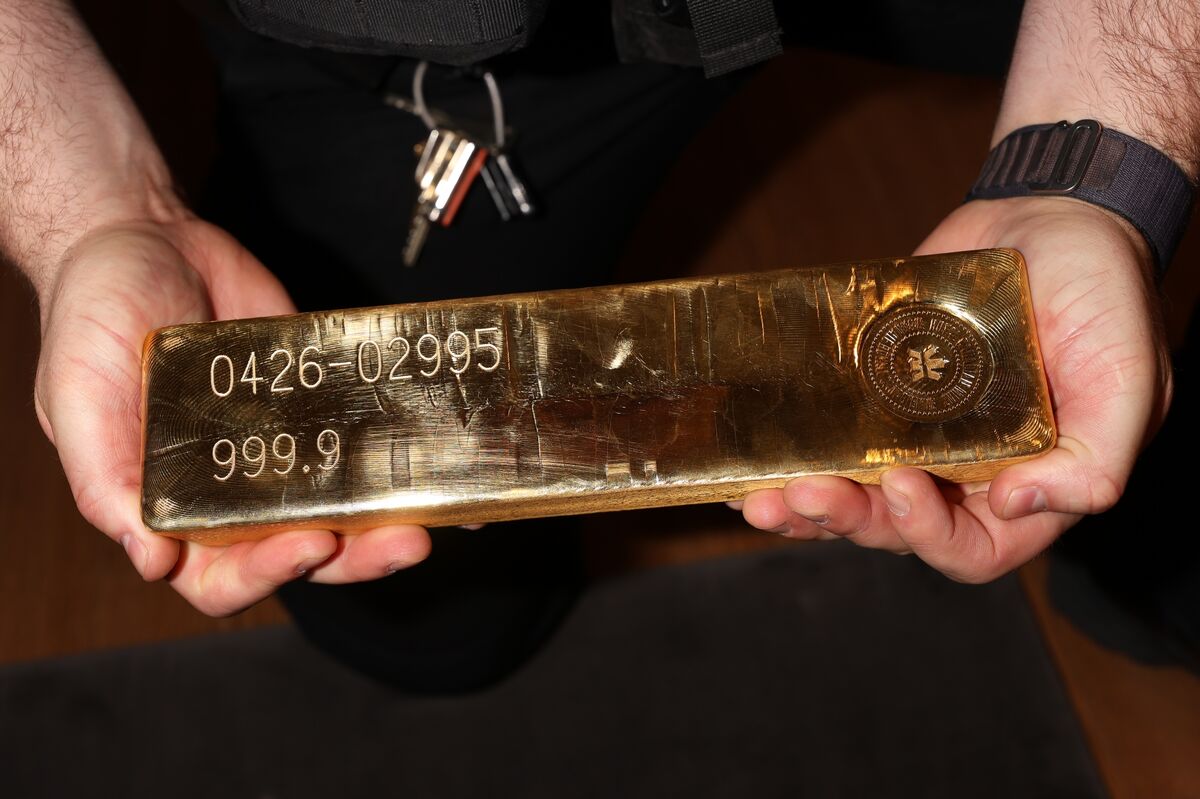

Gold Prices Face Weekly Decline as Rising US Inflation Sparks Fears of Aggressive Rate Hikes
The allure of gold as a safe-haven asset dimmed this week as prices headed for a notable decline, pressured by mounting fears of aggressive interest rate hikes in the United States. A sharp uptick in inflation, driven by geopolitical tensions and supply chain disruptions, has intensified expectations that the Federal Reserve will further tighten monetary policy. Investors, wary of higher borrowing costs and a stronger dollar, turned away from the precious metal, prompting its worst weekly performance in months.
As of Friday, spot gold traded around $1,930 per ounce, marking a significant drop from its recent highs above $2,000. The decline comes amid a broader sell-off in commodities and equity markets, underscoring the profound impact of inflation data on global financial markets. Analysts warn that the precious metal’s near-term outlook remains clouded by uncertainty, as central banks worldwide grapple with the dual challenges of curbing inflation and navigating economic slowdowns.
Inflation Surge Fuels Rate Hike Expectations
The catalyst for this week’s gold sell-off was the release of the latest US Consumer Price Index (CPI) report, which revealed a larger-than-expected increase in inflation. Prices rose by 8.5% year-over-year in March, marking the fastest pace of inflation since the early 1980s. The surge was fueled by rising energy costs, exacerbated by the ongoing conflict in Ukraine, as well as persistent supply chain bottlenecks and robust consumer demand.
The troubling inflation data has prompted a hawkish shift in market sentiment, with investors increasingly betting on more aggressive action from the Federal Reserve. Federal Reserve Chair Jerome Powell recently signaled that a 50-basis-point interest rate hike could be on the table at the central bank’s next meeting, a stark departure from its previous cautious approach. Higher interest rates typically weigh on gold, which does not yield interest, making it less attractive compared to interest-bearing assets like bonds.
Moreover, the prospect of tighter monetary policy has bolstered the US dollar, which surged to a two-year high against a basket of major currencies this week. A stronger dollar makes gold more expensive for buyers using other currencies, further dampening demand for the precious metal.
Gold’s Safe-Haven Status Tested
Historically, gold has been sought after during times of economic uncertainty and geopolitical turmoil, serving as a hedge against inflation and currency devaluation. However, the current environment presents a unique challenge for the metal. While the war in Ukraine and lingering COVID-19 disruptions have heightened global uncertainties, the Federal Reserve’s aggressive stance on inflation has overshadowed these risks.
“Gold is caught between two powerful forces,” explained Adrian Ash, director of research at BullionVault. “On one hand, you have the war in Europe and rising inflation, which should theoretically support prices. On the other hand, you have the Fed’s determination to hike rates, which is pulling investors toward the dollar and away from gold.”
The precious metal’s performance this year has been volatile, with prices soaring to near-record highs in early March as investors sought safety amid the Ukraine crisis. However, the rally proved short-lived as concerns about higher interest rates and a stronger dollar took center stage.
Broader Market Implications
The decline in gold prices reflects a broader trend in global markets, as investors recalibrate their portfolios in response to the changing macroeconomic landscape. Equity markets have also faced significant pressure this week, with major indices like the S&P 500 and Nasdaq Composite erasing gains for the year.
Meanwhile, the bond market has witnessed a sharp sell-off, driving yields higher. The yield on the benchmark 10-year US Treasury note climbed above 2.8% this week, its highest level since December 2018. Higher yields reduce the appeal of non-yielding assets like gold, further contributing to its underperformance.
“The financial markets are pricing in a scenario where the Fed moves fast and aggressively to rein in inflation,” said Katherine Tai, chief investment officer at Global Wealth Management. “This has created a challenging environment for gold, which traditionally thrives in low-rate environments.”
Global Impact on Commodities
The sell-off in gold is part of a broader retreat in commodity markets, which have been roiled by the dual forces of inflation and monetary tightening. Crude oil prices, for instance, have retreated from their recent highs as concerns about slowing economic growth offset fears of supply disruptions. Similarly, industrial metals like copper and aluminum have faced downward pressure amid weakening demand from China, the world’s largest consumer of raw materials.
However, the outlook for commodities remains uncertain, as geopolitical risks and supply constraints continue to weigh on global markets. The war in Ukraine has disrupted exports of key commodities like wheat, corn, and sunflower oil, while sanctions on Russia have tightened supplies of energy and metals.
“Commodities are in a precarious position right now,” said John Smith, head of commodity research at ABC Capital. “On one hand, you have supply-side pressures that are driving prices higher. On the other hand, you have fears of a global economic slowdown, which could dampen demand.”
Looking Ahead: What’s Next for Gold?
As investors brace for a period of heightened volatility, the outlook for gold remains uncertain. Some analysts believe that prices could rebound if inflationary pressures persist or if geopolitical tensions escalate further. Others argue that the Fed’s commitment to tightening monetary policy will continue to weigh on the metal.
“Gold’s fate hinges on how inflation evolves in the coming months,” said Michael Jones, chief economist at Financial Insights. “If inflation proves to be more persistent than expected, gold could regain its appeal as a hedge. But if the Fed succeeds in taming inflation, the metal could face further downside.”
For now, investors are likely to remain cautious, closely monitoring key economic indicators and central bank policies. The Federal Reserve’s next meeting in early May will be a critical event for markets, as policymakers weigh the risks of inflation against the potential for economic slowdown.
In the meantime, gold’s role as a safe-haven asset continues to be tested in an environment marked by rising interest rates and heightened uncertainty. Whether the metal can regain its luster or face further declines remains to be seen, but one thing is clear: the global financial landscape is undergoing a profound transformation, with far-reaching implications for investors and economies alike.
As the dust settles on this tumultuous week, gold’s trajectory serves as a reminder of the delicate balance between inflation, monetary policy, and geopolitical risks—a balance that will shape the fortunes of global markets in the months to come.
