



Inflation Hedging Challenges and the Fed’s Delicate Balancing Act: Insights from T. Rowe Price’s CIO
By [Your Name]
October 26, 2023
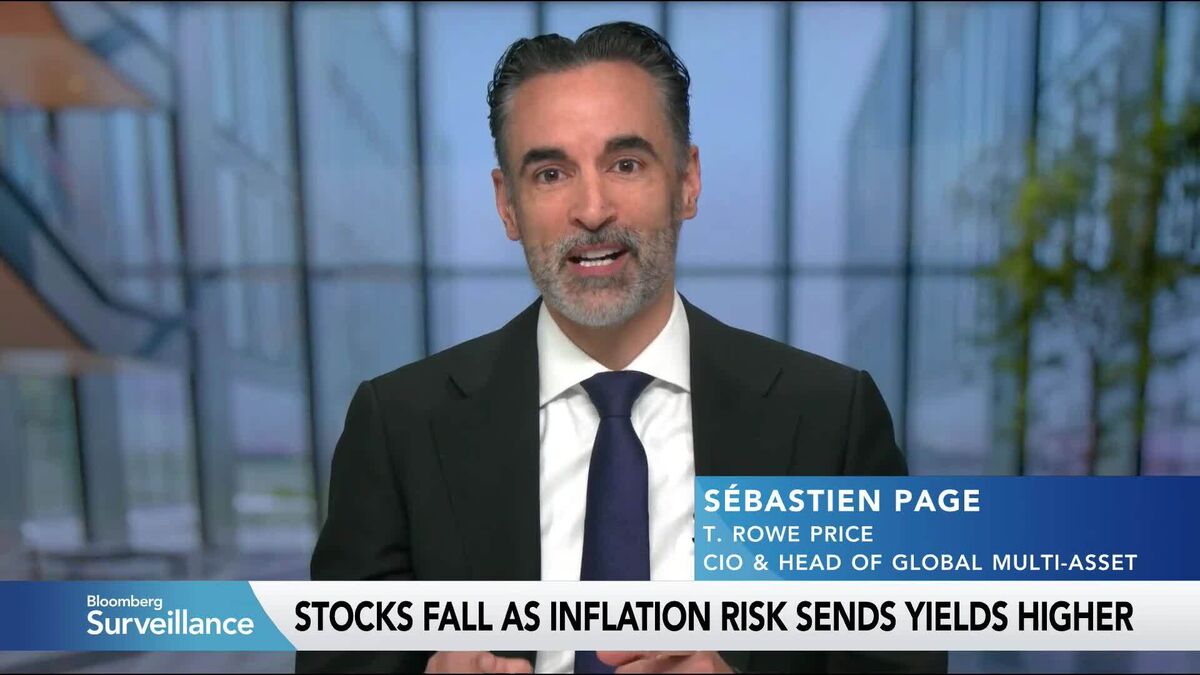
As global financial markets grapple with persistently high inflation and the Federal Reserve’s aggressive monetary tightening, investors are facing unprecedented challenges in hedging against inflation risk. Sébastien Page, Chief Investment Officer and Head of Global Multi-Asset at T. Rowe Price, recently highlighted the critical risks posed by what he describes as a “collision course between inflation and Fed policy.” Speaking on Bloomberg Surveillance, Page emphasized the complexities of navigating today’s volatile economic landscape, where traditional hedging strategies may no longer suffice.
Page’s remarks come at a time when central banks worldwide are struggling to tame inflation without triggering a severe economic downturn. The Federal Reserve, in particular, has embarked on one of its most aggressive rate-hiking cycles in decades, raising borrowing costs to combat inflation that remains stubbornly above its 2% target. However, as Page pointed out, this approach carries significant risks for financial markets, particularly in the form of tighter liquidity, higher funding costs, and heightened volatility.
The Inflation-Fed Policy Conundrum
The crux of Page’s argument centers on the delicate interplay between inflation and central bank policy. While inflation has shown signs of moderating in some regions, core inflation—which excludes volatile food and energy prices—remains elevated in many developed economies. This sticky inflation is forcing central banks to maintain a hawkish stance, even as fears of an economic slowdown grow.
“The main risk in financial markets today is the collision course between inflation and Fed policy,” Page explained. “The Fed is in a tough spot. If they ease up too soon, inflation could reignite. But if they stay too aggressive, they risk pushing the economy into a recession.”
This tension has created a challenging environment for investors. Traditional inflation hedges, such as Treasury Inflation-Protected Securities (TIPS) and commodities, have delivered mixed results in recent years. Meanwhile, the Fed’s rapid rate hikes have led to significant repricing across asset classes, from equities to bonds, leaving investors scrambling to adjust their portfolios.
The Limitations of Traditional Hedging Strategies
Page noted that while inflation hedging is a cornerstone of portfolio management, it has become increasingly difficult to execute effectively in the current environment. “The tools we’ve traditionally relied on aren’t working as they used to,” he said. “For example, TIPS are highly sensitive to real interest rates, which have been extremely volatile. Commodities, on the other hand, are influenced by a range of factors beyond inflation, including geopolitics and supply chain disruptions.”
Moreover, the Fed’s focus on inflation has led to tighter financial conditions, which have ripple effects across markets. Higher interest rates have weighed on equity valuations, particularly in growth-oriented sectors like technology, while also increasing the cost of capital for businesses. This has forced investors to reevaluate their risk exposure and consider alternative strategies.
Opportunities Amid the Uncertainty
Despite the challenges, Page sees opportunities in certain corners of the market. He highlighted the potential of active management in navigating the current environment, where passive strategies may fall short. “Active managers can adapt more quickly to changing conditions,” he said. “In a market driven by macro factors like inflation and Fed policy, that flexibility is critical.”
Page also pointed to international markets as a potential source of diversification. While U.S. inflation and Fed policy dominate headlines, other regions may offer more favorable conditions for investors. For example, some emerging markets are further along in their tightening cycles and may see inflationary pressures ease sooner.
Additionally, Page emphasized the importance of maintaining a long-term perspective. “While the near-term outlook is uncertain, history shows that markets eventually adapt to new realities,” he said. “Investors who stay disciplined and focus on fundamentals will be well-positioned to weather the storm.”
Broader Implications for Global Markets
Page’s insights reflect broader concerns among investors and policymakers alike. The Fed’s efforts to control inflation have far-reaching implications, not just for the U.S. but for the global economy. Higher U.S. interest rates have strengthened the dollar, putting pressure on emerging markets that rely on dollar-denominated debt. Meanwhile, tighter financial conditions have exacerbated concerns about corporate earnings and consumer spending.
The situation is further complicated by geopolitical uncertainties, including the war in Ukraine and escalating tensions between the U.S. and China. These factors add another layer of risk for investors, making it even more challenging to hedge effectively against inflation.
Looking Ahead
As central banks continue their inflation fight, the path forward remains uncertain. Page cautioned that investors should brace for continued volatility and be prepared to adjust their strategies as conditions evolve. “The key is to stay agile,” he said. “Markets are pricing in a lot of uncertainty right now, and that’s unlikely to change anytime soon.”
For now, the Fed’s policy trajectory will remain a critical factor driving market sentiment. Economists are divided on whether the central bank will pivot to a more dovish stance in the near term or maintain its hawkish posture well into 2024. Much will depend on upcoming economic data, including inflation readings, employment figures, and GDP growth.
Conclusion
Sébastien Page’s analysis underscores the complex challenges facing investors in an era of elevated inflation and aggressive monetary tightening. As the Fed navigates its “collision course” with inflation, markets are likely to remain volatile, testing the resilience of traditional hedging strategies. However, amid the uncertainty, opportunities exist for those willing to adapt and embrace a proactive approach.
As Page aptly summarized, “Inflation and Fed policy are shaping the market narrative for now, but investors who remain disciplined and forward-looking will find ways to thrive in this environment.” Balancing caution with opportunism may be the defining theme of this uncertain chapter in global finance.
