


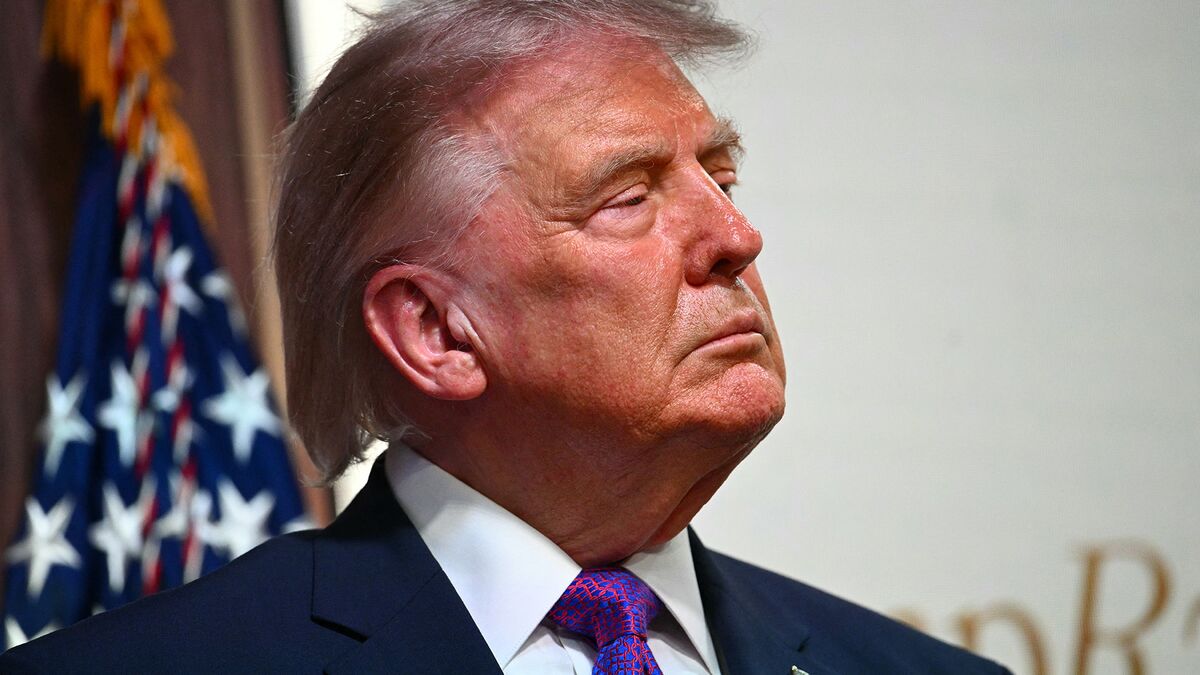

Trump’s Financial Disclosure Reveals Unprecedented Trading Activity, Raising Ethical and Policy Concerns
In a revelation that has sparked widespread debate and scrutiny, former U.S. President Donald Trump’s latest financial disclosure has unveiled a staggering level of trading activity during his time in office. The disclosure, which details 3,711 trades, predominantly in shares of American companies, has raised questions about potential conflicts of interest, particularly given the significant influence federal policy can have on corporate fortunes. The sheer volume of transactions underscores the blurring of lines between personal financial interests and public office, reigniting long-standing concerns about transparency and accountability in leadership.
The disclosure, first reported by Bloomberg, highlights Trump’s extensive engagement with the stock market, a practice that some critics argue could have influenced decision-making during his presidency. While Trump has consistently denied any wrongdoing, the scale of his trading activity has drawn attention from ethics experts, lawmakers, and the public alike. This report delves into the implications of these findings, the broader context of financial disclosures by public officials, and the potential consequences for governance and public trust.
The Scale of the Trades
The 3,711 trades recorded in Trump’s financial disclosure span a wide array of industries, including technology, energy, healthcare, and manufacturing. Notably, many of the companies in which Trump reportedly held shares are directly impacted by federal policies, such as regulatory frameworks, trade agreements, and tax legislation. For example, investments in energy companies could be influenced by decisions on environmental regulations, while holdings in healthcare firms might be affected by changes to the Affordable Care Act or drug pricing policies.
Elena Popina, US Equities Team Leader at Bloomberg News, emphasized the extraordinary nature of Trump’s trading activity during her appearance on Bloomberg This Weekend. “This level of engagement with the stock market is highly unusual for a sitting president,” she noted. “It raises legitimate questions about whether personal financial interests could have played a role in shaping policy decisions.”
Ethical Concerns and Conflicts of Interest
The revelation of Trump’s trading activity has reignited debates about the ethics of public officials engaging in financial markets. While U.S. presidents are not legally prohibited from trading stocks, many experts argue that such practices can create conflicts of interest. The concern is that leaders may prioritize personal financial gain over the public good, whether consciously or inadvertently.
“The potential for conflict is significant,” said Richard Painter, a former White House ethics lawyer under George W. Bush. “When a president’s financial portfolio is tied to specific companies or sectors, there’s a risk that policy decisions could be influenced by what benefits those investments, rather than what’s best for the country.”
Trump’s defenders, however, argue that his financial disclosures demonstrate transparency and that there is no evidence of impropriety. “President Trump has always been open about his financial interests,” said Jason Miller, a senior advisor to the former president. “His focus was always on serving the American people, not personal gain.”
Broader Context: Financial Disclosures and Public Office
Trump’s case is not the first time a public official’s financial activities have come under scrutiny. In recent years, several members of Congress have faced criticism for trading stocks in industries they oversee. For instance, during the early days of the COVID-19 pandemic, reports emerged that some lawmakers had sold stocks after receiving private briefings about the impending crisis, prompting calls for stricter regulations.
In response to these controversies, there have been bipartisan efforts to implement reforms. One such proposal is the “Ban Conflicted Trading Act,” which would prohibit members of Congress, the president, and other senior officials from trading individual stocks while in office. While the bill has yet to pass, it reflects growing public demand for greater accountability.
Legal and Policy Implications
The legal framework governing financial disclosures by public officials is complex and varies by jurisdiction. In the United States, the Ethics in Government Act of 1978 requires the president, vice president, and other senior officials to file annual financial disclosures. These documents provide a snapshot of their assets, liabilities, and income sources, offering a degree of transparency.
However, critics argue that the current system is insufficient. “Financial disclosures are only as effective as the enforcement mechanisms behind them,” said Meredith McGehee, executive director of Issue One, a nonprofit organization focused on government ethics. “Without robust oversight and penalties for noncompliance, these disclosures can become little more than a formality.”
The implications of Trump’s trading activity extend beyond ethics and legality. They also touch on broader questions about the integrity of policymaking and the public’s trust in its leaders. In an era of heightened political polarization, revelations of potential conflicts of interest can deepen skepticism and erode confidence in government institutions.
Looking Ahead: Reforms and Accountability
As the debate over Trump’s financial disclosure unfolds, it has prompted renewed calls for reforms to ensure greater accountability among public officials. Advocates argue that stricter rules on stock trading and financial disclosures are essential to restoring public trust.
“This isn’t about partisan politics; it’s about ensuring that those in power prioritize the public interest above all else,” said Walter Shaub, former director of the U.S. Office of Government Ethics. “Reforms are long overdue, and this latest revelation should serve as a wake-up call.”
At the same time, some caution against rushing to judgment without concrete evidence of wrongdoing. “Transparency is crucial, but we must also be careful not to assume guilt without proof,” said ethics expert Norman Eisen. “The focus should be on strengthening the system to prevent conflicts of interest, not on vilifying individuals.”
Conclusion
The disclosure of Donald Trump’s extensive trading activity during his presidency has sparked intense debate about ethics, accountability, and the intersection of personal finances and public office. While the former president’s defenders emphasize transparency and lack of evidence for impropriety, critics argue that the sheer volume of trades raises legitimate concerns about potential conflicts of interest.
As the United States grapples with these issues, the broader conversation about financial disclosures and ethical governance is likely to continue. Whether through legislative reforms, enhanced oversight, or public advocacy, the goal remains clear: to ensure that those in power serve the public interest above all else. As Elena Popina succinctly put it, “This isn’t just about one person; it’s about the integrity of the system as a whole.” In a world increasingly skeptical of leadership, restoring trust will require both vigilance and action.
