


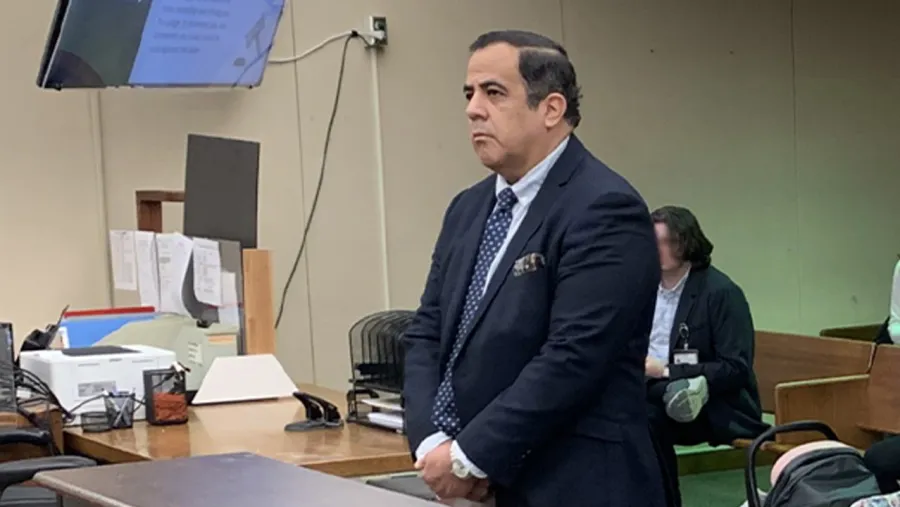

Ohio State University Professor Enters Not Guilty Plea in Assault Case
COLUMBUS, Ohio — In a contentious legal battle that has captured the attention of the Ohio State University community and beyond, Assistant Professor Luke Perez appeared in Franklin County Municipal Court on Monday to plead not guilty to charges of assault. The incident in question, which allegedly involved an altercation with an independent journalist, has prompted the university to place Perez on administrative leave pending further investigation.
The proceedings opened with a tense atmosphere as family, friends, and members of the media filled the courtroom. Perez, 38, a faculty member in the Department of English, has been a part of the university for over a decade and is known for his contributions to literary studies. However, the assault charge has raised questions not only about his future at Ohio State but also about the broader implications for faculty accountability in academic institutions.
The incident reportedly took place on a public street near the university’s campus, where Perez is accused of physically confronting Ohio State alumnus Blake Thompson. Thompson, an independent journalist, was present to cover a demonstration related to university policies when the confrontation broke out. Eyewitnesses described the altercation as aggressive, with Thompson alleging that Perez struck him during the exchange.
In court, Perez’s defense attorney argued that the professor was acting in self-defense, claiming that Thompson provoked the confrontation. “Professor Perez was simply trying to protect himself from an aggressive situation,” the attorney stated during the hearing. Meanwhile, Thompson, visibly shaken, maintained that he was merely conducting an interview when the situation escalated unexpectedly.
The assault charge carries significant weight, with potential repercussions that could affect Perez’s career and reputation in the academic field. If convicted, he could face a fine, probation, or even jail time, though the legal process will unfold over the coming weeks.
The Ohio State University has a long history of emphasizing the importance of faculty conduct both inside and outside the classroom. The institution’s decision to place Perez on administrative leave aligns with its policies aimed at ensuring a safe and respectful environment for students and staff. This situation also underscores the challenges universities face in balancing academic freedom with the need for accountability among faculty members.
Dr. Karen Thompson, a professor of sociology at Ohio State and an expert in academic ethics, commented on the case. “It’s crucial that institutions take all allegations seriously, especially when they involve faculty members,” she said. “This incident may set a precedent for how universities handle similar situations in the future.”
As the case progresses, the implications extend beyond Perez’s individual circumstances. It raises questions about the freedom of the press and the treatment of journalists in public spaces, particularly during protests and demonstrations. Thompson’s role as an independent journalist emphasizes the importance of the media in holding institutions accountable and sharing diverse narratives, particularly in an age of increasing polarization.
This case also echoes a growing trend in higher education, where faculty conduct, both on and off-campus, is coming under greater scrutiny. Many universities are re-evaluating their policies to ensure they are equipped to deal with incidents that may disrupt the educational environment and tarnish the institution’s reputation.
With the next court appearance scheduled for later this month, the university and the surrounding community are awaiting further developments in the case. How the legal system adjudicates this incident may not only influence Perez’s future at Ohio State but could also ignite broader discussions regarding faculty and media relations, along with the boundaries of academic freedom.
As the proceedings unfold, the intersection of academia, press freedom, and assault allegations will likely remain a focal point for stakeholders. The implications for faculty conduct policies and the treatment of journalists in educational settings could prompt institutional changes that redefine the standards of behavior and accountability moving forward.
