


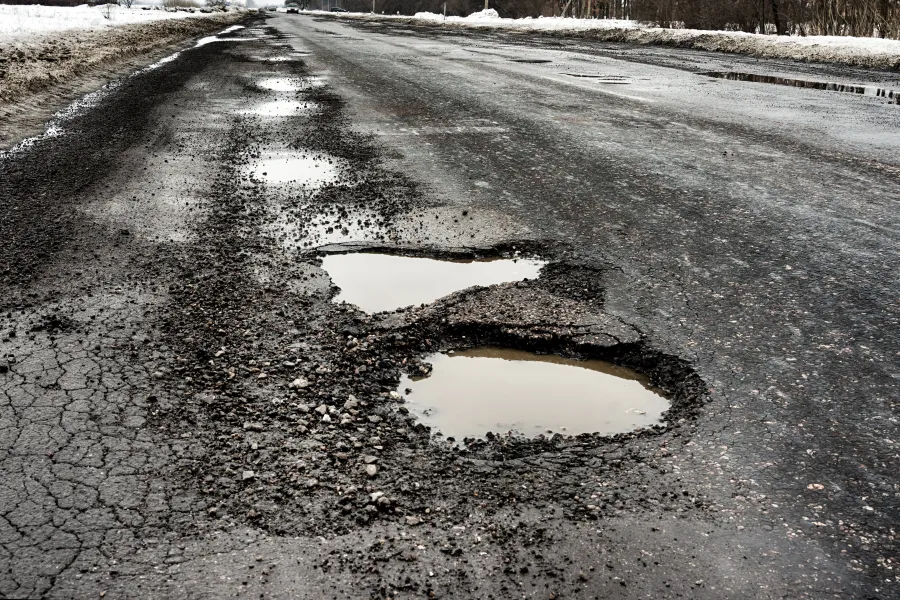

Potholes on the Rise: Ohio’s Winter Weather Takes a Toll on Roads
COLUMBUS, Ohio – As the chill of winter begins to wane and warmer temperatures sweep through the Buckeye State, Ohioans are feeling the uplifting effects of spring. However, alongside the welcome relief from harsh cold lies a more troublesome consequence: an increase in pothole formation.
The Ohio Department of Transportation (ODOT) is bracing for a challenging spring as the annual freeze-thaw cycle wreaks havoc on the state’s roadways. This cyclical weather pattern, where cold temperatures cause water to freeze in cracks in the pavement, followed by warmer days that thaw the ice, leads to significant wear and tear on roads.
“Potholes are primarily formed when water seeps into existing cracks in the asphalt,” explained ODOT Press Secretary Matt Bruning. “When temperatures drop, that water freezes and expands, exacerbating the cracks. As the weather warms, the ice melts, leaving behind weakened areas that can no longer support the roadway, resulting in potholes.”
The damage occurs swiftly and can be exacerbated by rainfall. As the spring season brings precipitation, drivers across Ohio are increasingly encountering road conditions that pose not only a nuisance but also a hazard. Potholes can cause serious vehicle damage, ranging from blown tires to misalignment issues, leading to increased repair costs for drivers.
Potholes are not merely an inconvenience; they are projected to impact local economies as well. Officials estimate that an influx of pothole repairs will require significant funding, diverting resources from other critical infrastructure projects. Bruning indicated that while the state has protocols and budgets in place for maintenance, the sheer volume of potholes created in a short time frame presents a daunting challenge.
In addressing this year’s issues, ODOT has mobilized resources to manage maintenance and repair work. Additional crews have been dispatched to areas known for major road deterioration, and public advisories are being issued to raise awareness among drivers. Despite these efforts, Bruning cautioned that the volume of potholes may exceed resources in many municipalities, necessitating a coordinated approach from state and local governments.
Local residents are already expressing frustration with pothole conditions. “Every spring, it’s the same story,” said Julie Ramirez, a Columbus resident. “You just have to dodge the potholes like it’s a game, and it’s rough on my car. It feels like the city should do better with managing them.”
Beyond vehicle damage, potholes contribute to larger community concerns. Increased repair costs can lead to a financial burden for families, affecting everything from commuting to essential local services. Moreover, poorly maintained roads can deter potential visitors and businesses from supporting Ohio’s local economies, particularly in the wake of a pandemic-driven recovery phase.
Transportation experts advocate for preventive measures and long-term solutions to tackle this recurring issue. Experts suggest that a robust investment in infrastructure, which includes both repair and preventive maintenance, could alleviate future problems. New materials and technologies, such as asphalt blends designed to withstand winter conditions, are being explored as possible solutions to mitigate the pothole crisis.
Community engagement is also critical. As Ohioans continue to voice their concerns and report pothole locations, local officials are encouraged to respond proactively. In some regions, citizen engagement platforms are allowing residents to report issues directly to municipal services, creating a more responsive repair system.
Looking ahead, the impact of potholes extends beyond immediate repairs. As Ohio grapples with the seasonal challenges, the approach taken by state and local transportation agencies could set the tone for infrastructure resilience in the future. Aligning funding strategies with effective maintenance protocols will be crucial in ensuring the safety and efficiency of roads, not just this spring but for years to come.
As temperatures rise and thaw, Ohioans must remain vigilant on the roads, while pushing for a renewed commitment from state and local authorities to invest in their infrastructure. The hope is for smoother driving conditions to return sooner rather than later, highlighting the importance of proactive measures in road maintenance as Ohio transitions into warmer months.
