


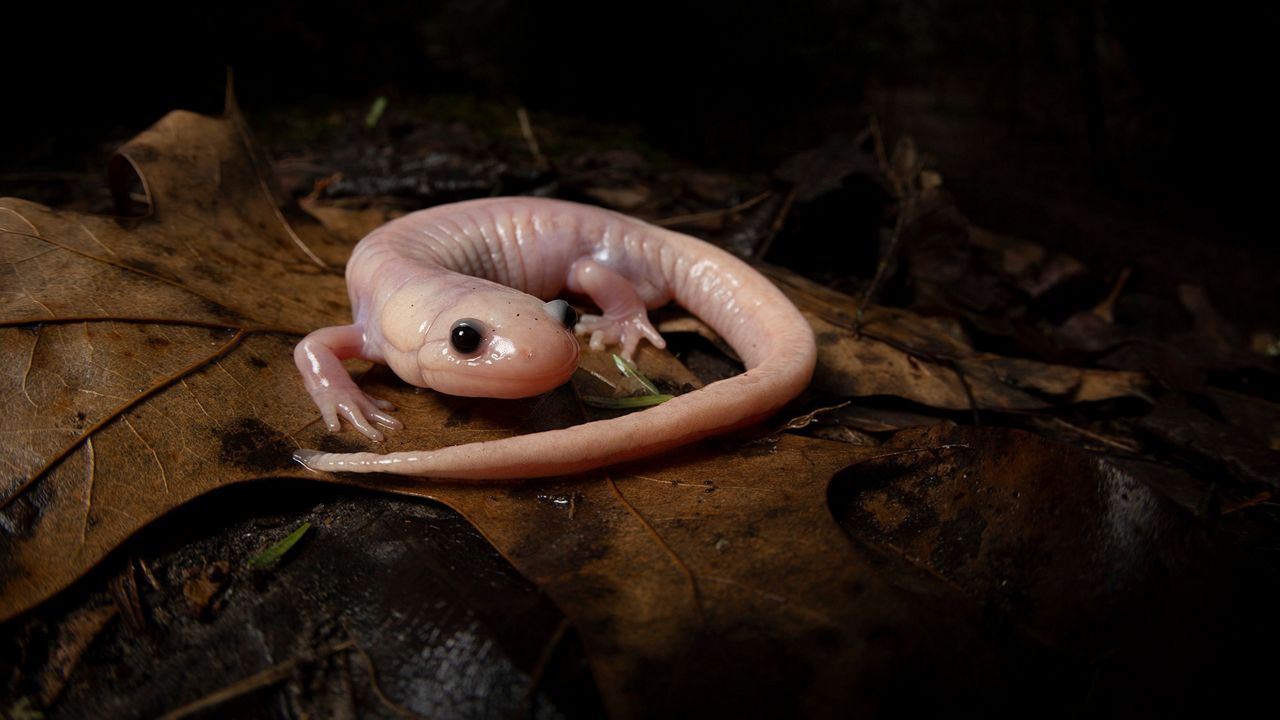

Rare White Spotted Salamander Discovered in Ohio During Annual Migration
Ohio wildlife experts are urging the public to protect vulnerable amphibians after a strikingly pale salamander was spotted in the state’s forests.
A one-of-a-kind spotted salamander with an unusually pale appearance has been documented in Ohio, captivating biologists and nature enthusiasts alike. The rare creature, discovered by herpetologists in March, exhibits leucism—a genetic condition that dilutes skin pigmentation, giving it a ghostly, “washed-out” look.
Unlike albinism, which results in pink or red eyes due to a complete lack of pigment, leucistic animals retain dark eyes, making this salamander a striking exception to its typically dark, yellow-spotted counterparts.
A Vulnerable Migration
The sighting coincides with the annual migration of salamanders, which emerge from winter hideaways in late February and early March to breed in temporary vernal pools. These small, nocturnal amphibians often go unnoticed—but they face significant threats from human activity.
Summit Metro Parks, a conservation agency in Ohio, warns that road salt, foot traffic, and artificial lights can disrupt or even kill migrating salamanders. “We frequently find them crushed by shoes, strollers, or car tires,” the agency stated. “Even flashlight beams can disorient them during their critical journey.”
To minimize harm, officials recommend:
- Staying on marked trails and walking carefully
- Keeping children close to avoid stepping on amphibians
- Avoiding strollers or bikes in migration areas
- Using red-filtered lights instead of bright LEDs
- Never handling or removing wildlife
A Call for Conservation
The discovery of the leucistic salamander has drawn attention to the broader challenges facing Ohio’s amphibians. Spotted salamanders (Ambystoma maculatum) are the state’s official amphibian, yet their populations are sensitive to habitat loss and pollution.
“With public cooperation, we can safeguard these species and their ecosystems,” Summit Metro Parks emphasized. The agency also reminded visitors not to disturb research equipment, such as conservation traps, placed in natural areas.
The Ohio Division of Wildlife shared photos of the rare salamander on social media, sparking excitement among wildlife enthusiasts. While leucism is uncommon, it serves as a reminder of nature’s diversity—and the importance of protecting it.
— Reported by Nexio News
