


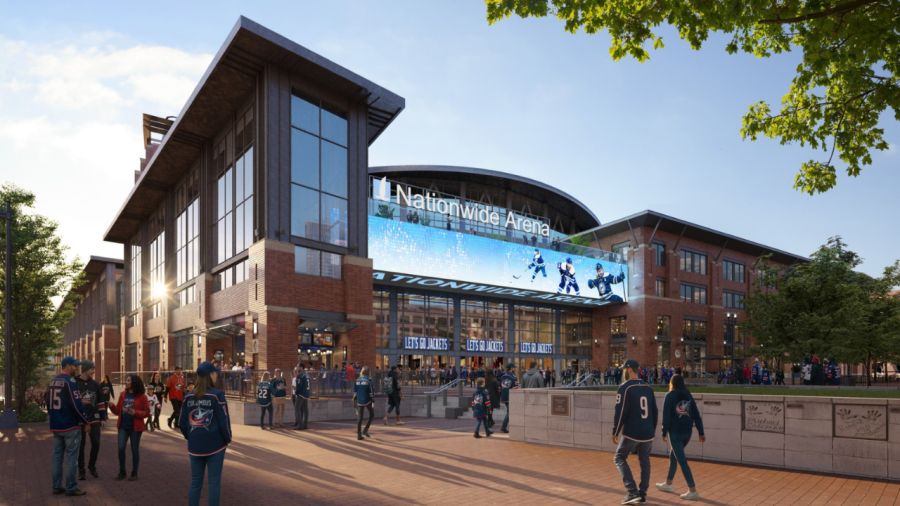

Franklin County Seeks $100 Million for Nationwide Arena Renovation Amid Legal Hurdles
COLUMBUS, Ohio – In a bold move to enhance the local sports and entertainment landscape, the Franklin County Convention Facilities Authority has submitted a request for $100 million in state funding to kickstart a significant $400 million renovation of Nationwide Arena. This ambitious proposal taps into a grant program financed by unclaimed state dollars, but it faces the looming specter of ongoing legal challenges.
The request was formally submitted on January 30 through the Ohio Sports Facility Performance Grant, a funding avenue specifically designed for the enhancement and upkeep of various sports facilities across the state. Nationwide Arena, home to the NHL’s Columbus Blue Jackets, has been a cornerstone of the local entertainment scene since its opening in 2000. This renovation is seen as essential not only to improve the fan experience but also to keep the facility competitive in attracting major events.
State officials have highlighted the potential economic benefits of the renovation, estimating that an upgraded arena could generate millions in additional revenue, create jobs, and draw more visitors to Columbus. The renovation project aims to modernize various aspects of the arena, including upgrading its technology, improving seating arrangements, and enhancing overall aesthetics.
“Nationwide Arena is not just a home for our beloved Blue Jackets; it is a venue that hosts concerts, community events, and more. This renovation will ensure it remains a vital part of our community,” said Amy DeLong, chair of the Franklin County Convention Facilities Authority. The authority has emphasized that maintaining high-quality facilities is crucial for Columbus’s long-term growth as a sports and entertainment hub.
However, the path to securing the requested funding is fraught with uncertainty due to a legal challenge surrounding the grant program itself. The fund, which is intended to provide financial backing for renovations and operations at sports facilities, has faced scrutiny in court, with opponents claiming that the use of unclaimed funds lacks transparency and accountability. This legal challenge could delay or potentially derail the intended use of these state funds.
Despite these obstacles, county officials remain optimistic. They assert that the renovation project aligns with the state’s broader economic goals, particularly in attracting tourism and fostering local business growth. “Investing in our sports facilities is investing in the future of Columbus. We have a vision for what this arena can be, and we are committed to making it happen,” added DeLong.
The renovation plan has garnered support from various local stakeholders, including business leaders and community organizations, who underscore the importance of Nationwide Arena as an economic driver for the region. Rob Smith, president of the Columbus Chamber of Commerce, expressed his backing for the proposal. “A modernized Nationwide Arena will bring new life to downtown Columbus, creating opportunities for small businesses and supporting our local economy. We owe it to our community to pursue this investment vigorously.”
As the state evaluates the funding request, it remains to be seen how the legal challenges will influence the timeline and viability of the project. Meanwhile, the Convention Facilities Authority is preparing for what could be a drawn-out process, potentially involving appeals and further court hearings.
Should the funding be approved, the renovation could begin as early as 2024, with expectations of completion by 2026. The projected timeline reflects the urgency to modernize and maintain the arena, ensuring it meets the needs of a growing fanbase and remains competitive within a busy landscape of sports and entertainment venues.
Looking ahead, the implications of this renovation extend beyond just the physical upgrades to Nationwide Arena. An improved facility could serve as a catalyst for further investments in Columbus, setting a precedent for modern infrastructure and project funding throughout Ohio. Enhanced facilities may also pave the way for Columbus to host larger events, including concerts, conventions, and possibly even sporting events of national significance.
As the legal proceedings unfold, the collaboration between state officials, local organizations, and the community will be critical, shaping the future of the arena and, by extension, the economic landscape of Columbus. The outcome will not only have immediate impacts but could also establish a framework for how similar projects are financed and executed in the future. The stakes are high, and as the city rallies behind this effort, all eyes remain on the decisions that will ultimately shape the future of Nationwide Arena.
