


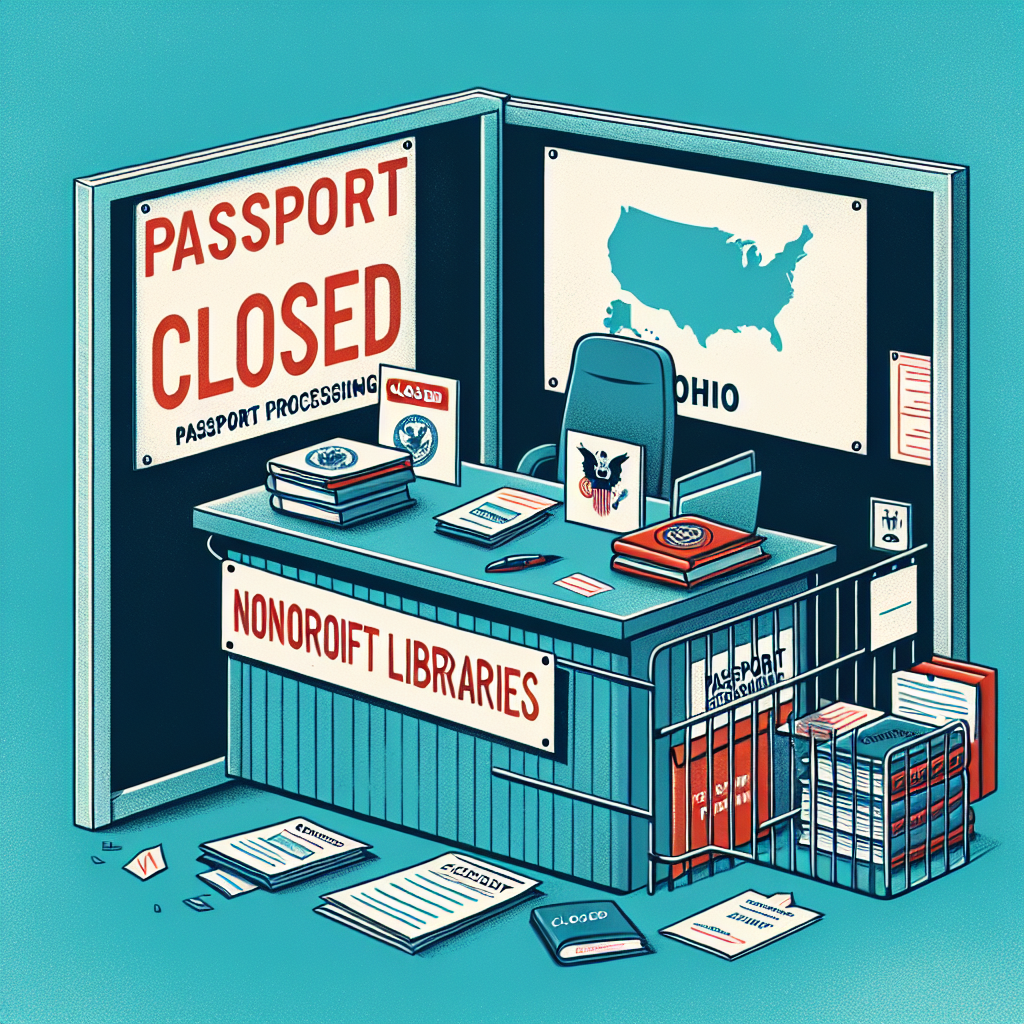

Nonprofit Libraries Forced to Halt Passport Services Amid U.S. State Department Directive
CLEVELAND — A significant shift in passport service availability has emerged as nonprofit libraries in Ohio prepare to cease their passport processing operations. This decision follows newly reinforced guidance from the U.S. State Department, anchored in the Passport Act of 1920, which deems non-governmental entities ineligible to serve as passport acceptance facilities.
Ginette Laraway, branch manager of the Elyria Public Library’s West River branch, expressed her dismay as staff began dismantling passport service signage. “We’ve already begun taking down the signage because we have to have everything down by the 27th,” she noted, gesturing toward the once-busy passport office that has served the community for years.
The Passport Act of 1920, which has now been brought back into focus, strictly regulates which entities can process passport applications. The State Department’s interpretation categorizes nonprofit libraries — despite their governmental functions — as ineligible to provide these essential services.
Robert Harrison, communications director for the Elyria Public Library, emphasized the library’s long-standing commitment to public service. “We are a government entity in every sense of the word,” he said proudly, highlighting the library’s historical significance as one of the oldest in Ohio, and the oldest in Lorain County.
Elyria was established as a library long before the Ohio Revised Code defined libraries as governmental agencies. Despite holding a 501(c)(3) nonprofit designation, this status has now flagged them with the State Department, forcing the library to close its passport acceptance services.
The ramifications of this decision ripple across Ohio. The Institute of Museum and Library Services estimates that around 15% of all public libraries are non-governmental and will be directly impacted by the State Department’s guidance. For many libraries, like Elyria, processing passport applications has become an integral facet of their community services.
In just the last two years, Elyria Public Library staff processed over 300 passport applications in 2025 and around 400 in 2024. These statistics underline the palpable demand for passport services that will now go unmet. Harrison expressed concern about the potential void left in service as a result of the new rules. “There’s definitely a need here,” he said. “And, with us not being able to offer passport processing, there’s going to be a real gap in service.”
This situation has prompted the American Library Association (ALA) to take action. The organization has swiftly endorsed bipartisan legislation aiming to amend the existing barriers that prevent nonprofit public libraries from continuing to provide passport acceptance services. By advocating for this legislative change, the ALA seeks to ensure that libraries can continue serving their communities effectively, enabling easier access to passport services.
The broader implications of this shift cannot be overlooked. Access to passport processing is crucial, particularly for residents in underserved or rural areas who often rely on local public libraries for essential services. Closing this avenue could lead to delays in passport applications, particularly during peak travel seasons and could ultimately hinder individuals from fulfilling personal or professional needs linked to international travel.
Furthermore, the closure of passport services in nonprofit libraries may have a cascading effect on regional economies and cross-border engagement, particularly in states like Ohio where many families and individuals depend on timely passport issuance for opportunities such as work, education, and family reunification abroad.
As discussions around the necessity of nonprofit libraries continuing to provide these essential services continue, it is imperative that local representatives and community members engage in dialogue around preserving access to passport services. The outcome of the proposed bipartisan legislation will be crucial in determining whether these libraries can retain their roles as facilitators of community needs or if they will be compelled to withdraw from a vital service.
The future of passport accessibility in Ohio hangs in the balance. With bipartisan legislative support, nonprofit libraries like the Elyria Public Library might yet reclaim their important role in passport services, ensuring that communities continue to thrive and that barriers to engagement with the world are reduced rather than reinforced.
