


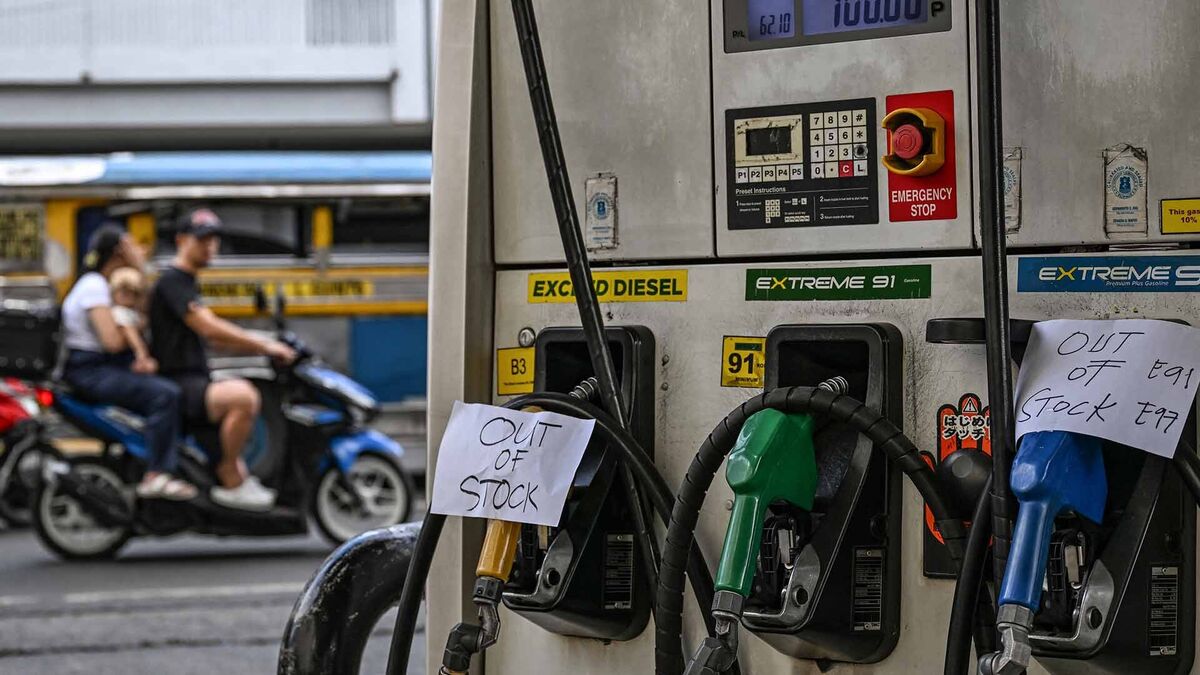

Asian Economies Grapple with Escalating Oil Crisis as Strait of Hormuz Closure Disrupts Global Trade
The Strait of Hormuz, the world’s most critical oil chokepoint, has become the epicenter of a deepening crisis that threatens to destabilize global energy markets and strain economies across Asia. The strategic waterway, which carries nearly one-fifth of the world’s oil supply, remains effectively closed amid escalating geopolitical tensions, leaving Asian nations—the largest importers of Middle Eastern crude—vulnerable to supply disruptions and soaring prices. As U.S. President Donald Trump weighs potential diplomatic interventions, the economic fallout from the crisis is already reverberating across industries and households alike.
The closure of the Strait of Hormuz, a narrow passage between Oman and Iran, has sent shockwaves through global markets. The strait serves as a lifeline for oil exports from major producers such as Saudi Arabia, Iraq, the United Arab Emirates, and Kuwait. For Asian economies, which rely heavily on Middle Eastern crude to fuel their energy-intensive industries and rapidly growing populations, the disruption poses an existential threat. Countries like China, India, Japan, and South Korea, which collectively account for over 70% of the region’s oil imports from the Middle East, are now scrambling to secure alternative sources.
Geopolitical Tensions Fuel the Crisis
The immediate cause of the closure remains murky, but tensions between Iran and the United States are widely believed to be at the heart of the standoff. Relations between the two nations have deteriorated sharply since the U.S. withdrew from the Iran nuclear deal in 2018 and reimposed crippling sanctions on Tehran. In recent months, the Strait of Hormuz has become a flashpoint, with Iran repeatedly threatening to block the waterway in retaliation for U.S. economic pressure. The latest escalation follows a series of confrontations, including attacks on oil tankers and the downing of a U.S. drone, which have heightened fears of a broader conflict.
Experts warn that the closure could have catastrophic consequences for global trade. “The Strait of Hormuz is not just a regional issue; it’s a global one,” said Dr. Fatima Al-Mazroui, a geopolitical analyst at the Middle East Institute. “Any prolonged disruption would send oil prices skyrocketing, destabilize economies, and inflame tensions across the region.”
Asia Bears the Brunt
Asian economies, already grappling with slower growth and rising inflation, are particularly vulnerable to the crisis. The region’s reliance on imported oil has long been a double-edged sword, providing cheap energy to fuel industrialization while exposing it to volatile global markets. The closure of the Strait of Hormuz has pushed Brent crude prices above $90 per barrel, a level not seen since 2014, and analysts predict that prices could surge further if the situation worsens.
China, the world’s largest oil importer, has been hit hard. The country sources over 40% of its crude from the Middle East, and any disruption to its supply chain could derail its ambitious economic agenda. “We’re already seeing ripple effects across industries,” said Zhang Wei, an economist at Tsinghua University. “Higher oil prices are driving up transportation costs, squeezing profit margins, and threatening to slow growth.”
India, another major importer, is facing similar challenges. The country’s economy, which is heavily dependent on oil for its massive manufacturing sector and growing middle class, is particularly sensitive to price fluctuations. “This crisis couldn’t have come at a worse time,” said Ravi Sharma, an energy analyst in New Delhi. “India is already struggling with inflation and a weakening currency. Rising oil prices will only exacerbate these problems.”
Navigating the Crisis
In response to the crisis, Asian governments are exploring a range of strategies to mitigate the impact. Some countries, including Japan and South Korea, are tapping into their strategic petroleum reserves to stabilize supplies. Others are seeking alternative sources of energy, such as liquefied natural gas (LNG) and renewables, to reduce their dependence on oil.
Diplomatic efforts are also underway to resolve the standoff in the Strait of Hormuz. U.S. President Donald Trump has hinted at potential negotiations with Iran, though details remain unclear. “We’re looking at all options,” Trump told reporters last week. “Nobody wants a war, but we need to protect our interests.”
However, skepticism abounds. “The situation is highly volatile, and trust between the U.S. and Iran is at an all-time low,” said Dr. Al-Mazroui. “Even if talks do take place, it’s unclear whether they can produce a lasting solution.”
Broader Implications
The crisis in the Strait of Hormuz underscores the fragility of global energy markets and the interconnectedness of the world economy. For decades, the strait has served as a vital artery for international trade, facilitating the flow of oil not just to Asia but to Europe and the Americas as well. Its closure highlights the risks of over-reliance on a single chokepoint and the need for greater diversification in energy supply chains.
The broader geopolitical implications are equally concerning. The standoff has drawn in other global powers, including Russia and China, which have vested interests in the region. Some analysts warn that the crisis could deepen existing rivalries and lead to a new era of great-power competition.
As the situation unfolds, one thing is clear: the closure of the Strait of Hormuz is more than a regional dispute—it is a global challenge with far-reaching consequences. For Asian economies, already navigating a complex landscape of slowing growth and rising inflation, the crisis is a stark reminder of the precarious balance between prosperity and vulnerability.
Conclusion
The Strait of Hormuz crisis is a sobering wake-up call for policymakers and industry leaders alike. While short-term measures may help mitigate the impact, the long-term solution lies in reducing dependence on oil, investing in alternative energy sources, and fostering greater international cooperation. As the world watches anxiously, the stakes could not be higher—for Asia, and for the global economy as a whole.
