


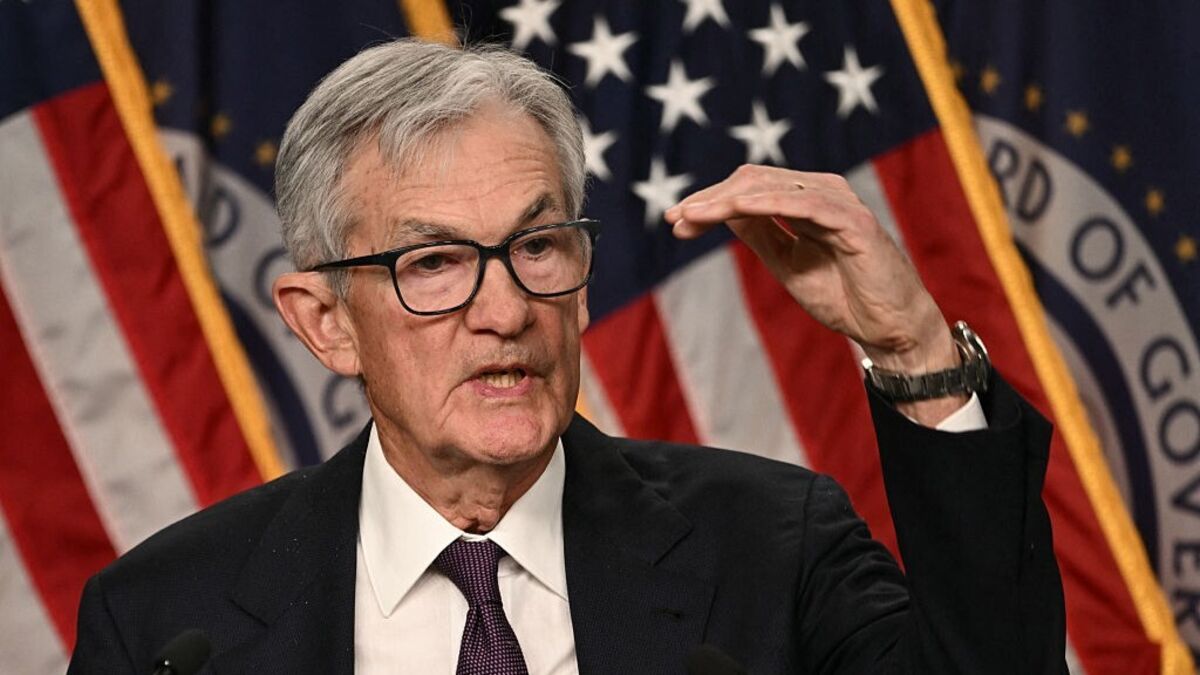

Federal Reserve Holds Firm on Interest Rates Amid Inflation Uncertainty, Powell Signals Caution on Oil Price Surge
In a decisive move that underscores the Federal Reserve’s commitment to taming persistent inflation, Chair Jerome Powell announced Wednesday that the US central bank will maintain its current interest rate levels until there is clearer evidence of cooling price pressures. Speaking at a highly anticipated press conference, Powell acknowledged the “uncertainties” posed by a recent surge in oil prices but emphasized that it remains too early to assess their full impact on the broader economy. The remarks come amid growing global economic unease, as policymakers grapple with the dual challenges of stubborn inflation and volatile energy markets.
The Federal Reserve’s decision to keep interest rates steady reflects a cautious approach as it navigates an increasingly complex economic landscape. With inflation still hovering above the central bank’s 2% target, Powell made it clear that the Fed is prioritizing price stability over immediate rate cuts, even as some analysts warn of potential risks to economic growth.
A Delicate Balance: Inflation and Interest Rates
The Federal Reserve has been waging a prolonged battle against inflation since 2022, when rising prices prompted an aggressive series of rate hikes. Over the past 18 months, the central bank has raised its benchmark interest rate to a range of 5.25% to 5.50%, the highest level in more than two decades. While these measures have helped moderate inflation from its peak of 9.1% in June 2022, progress has stalled in recent months, with the annual inflation rate holding at 3.7% as of August 2023.
Powell’s latest comments signal that the Fed is not yet ready to pivot toward easing monetary policy. “The process of getting inflation back down to 2% has a long way to go,” Powell stated. “We are committed to achieving price stability and will remain patient as we assess incoming data.”
This stance aligns with the Fed’s dual mandate of maintaining maximum employment and stable prices. While the labor market has shown remarkable resilience, with unemployment at historically low levels, policymakers are wary of declaring victory over inflation prematurely. Powell’s remarks suggest that the central bank is prepared to keep rates elevated for as long as necessary, even if it means prolonging the economic pain for businesses and households.
Oil Prices: A New Wildcard
Adding to the Fed’s calculus is the recent spike in oil prices, which have climbed sharply due to production cuts by major exporters like Saudi Arabia and Russia. Brent crude, the global benchmark, has surged above $90 per barrel, up nearly 30% since June. This development has reignited fears of secondary inflationary pressures, as higher energy costs ripple through the economy.
Powell acknowledged the potential risks posed by rising oil prices but cautioned against jumping to conclusions. “It’s still too soon to gauge the full impact of these developments on the US economy,” he said. “We will be closely monitoring the situation as it evolves.”
Economists note that while energy prices can be a significant driver of inflation, their effects are often transient. However, in an environment where inflation expectations are already elevated, even temporary shocks can complicate the Fed’s efforts to restore price stability.
Global Implications and Market Reactions
The Federal Reserve’s cautious tone reverberated across global financial markets, with investors recalibrating their expectations for future rate cuts. Bond yields climbed, reflecting diminished hopes for an imminent easing of monetary policy, while the US dollar strengthened against major currencies. Stock markets, meanwhile, experienced mixed reactions, as traders weighed the implications of higher-for-longer interest rates against the backdrop of a resilient economy.
The Fed’s stance also has significant implications for the global economy. As the world’s largest economy and issuer of the primary reserve currency, US monetary policy exerts a disproportionate influence on financial conditions worldwide. Emerging markets, in particular, are vulnerable to the spillover effects of a strong dollar and tighter credit conditions.
“The Federal Reserve’s decision to hold rates steady underscores the challenges facing central banks around the world,” said Mark Cranfield, a senior analyst at Bloomberg. “Inflation remains a persistent threat, but the risks of over-tightening are equally real.”
A Cautious Path Forward
Looking ahead, the Federal Reserve faces a delicate balancing act. While inflationary pressures have moderated, they remain well above target, and the resurgence in oil prices adds a new layer of uncertainty. At the same time, policymakers must remain vigilant to avoid tipping the economy into recession.
Powell’s comments suggest that the Fed will continue to rely on a data-driven approach, with decisions guided by evolving economic conditions rather than preordained timelines. “We are proceeding carefully,” Powell said. “Our focus is on achieving a sustained return to price stability while minimizing the impact on employment and economic growth.”
As the global economy enters a critical phase, the Federal Reserve’s actions will be closely watched by policymakers, businesses, and investors alike. For now, Powell’s message is clear: The fight against inflation is far from over, and patience will be key to navigating the road ahead.
In a world grappling with economic uncertainty, the Federal Reserve’s measured approach offers both reassurance and caution, reminding us that the path to stability is rarely straightforward.
