



Global Markets Rattled as Trump’s Threats Against Iran Send Japanese Stocks Tumbling
Tokyo, Japan – A sudden escalation in geopolitical tensions has sent shockwaves through global financial markets, with Japanese equities bearing the brunt of investor anxiety. On Thursday, former U.S. President Donald Trump’s inflammatory remarks threatening attacks on Iranian power plants near the Strait of Hormuz triggered a sharp sell-off in Tokyo, exacerbating fears of surging oil prices and broader economic instability.
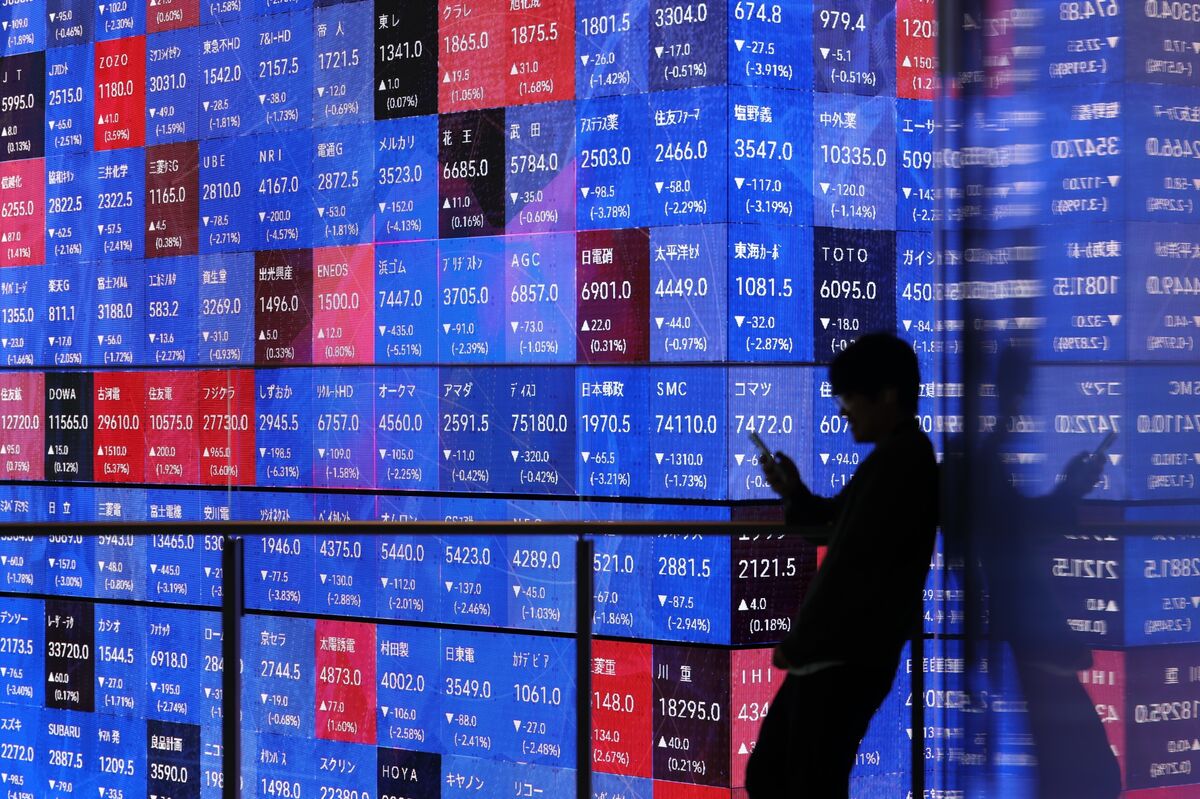
The benchmark Nikkei 225 Index plunged by 1.8% in early trading, its steepest single-day decline in weeks, as traders scrambled to offload risk-sensitive assets. The broader Topix Index followed suit, shedding 1.5%, while the yen—a traditional safe-haven currency—strengthened against the dollar. Analysts attributed the downturn to heightened uncertainty over energy security, with Brent crude futures briefly spiking above $90 a barrel before settling slightly lower.
Trump’s Provocation Reignites Middle East Fears
The market turmoil was sparked by Trump’s latest intervention in U.S. foreign policy discourse. During a campaign rally in Florida, the Republican presidential candidate warned that, if re-elected, he would authorize strikes against Iranian energy infrastructure in retaliation for any perceived aggression. His explicit mention of targeting facilities along the Strait of Hormuz—a critical chokepoint through which 20% of the world’s oil supply flows—immediately rattled investors already grappling with inflation and supply chain disruptions.
“Markets hate unpredictability, and Trump’s comments introduce a dangerous wildcard,” said Naomi Tanaka, chief strategist at Mizuho Securities. “Any disruption in the Strait could send oil prices skyrocketing, which would derail central banks’ efforts to tame inflation.”
The remarks come at a delicate moment for global energy markets. Despite OPEC+ production cuts and sustained demand, crude prices had shown signs of stabilization—until geopolitical risks resurfaced. Iran, which has long been at odds with the U.S. and its allies, responded defiantly, with a senior Revolutionary Guards commander vowing to “defend our sovereignty at any cost.”
Japan’s Vulnerability to Oil Shocks
As the world’s third-largest economy, Japan is particularly exposed to fluctuations in energy costs. The resource-poor nation imports nearly 90% of its crude oil, much of it from the Middle East. A sustained price surge could worsen its trade deficit, which has already ballooned due to a weak yen and post-pandemic import demands.
“Higher oil prices act like a tax on Japanese businesses and consumers,” explained Kenji Watanabe, an economist at Nomura Research Institute. “This undermines corporate profitability and could delay the Bank of Japan’s plans to normalize monetary policy.”
The ripple effects were felt across sectors. Automakers like Toyota and Honda saw shares slide over 2%, while shipping giants Mitsui O.S.K. Lines and Nippon Yusen dropped sharply on fears of disrupted trade routes. Even tech stocks, typically resilient to geopolitical shocks, succumbed to the sell-off, with SoftBank Group losing 1.3%.
Broader Market Implications
The tremors extended beyond Japan. European futures pointed to a lower open, and Wall Street’s S&P 500 futures dipped in pre-market trading. Gold prices edged higher as investors sought safety, while U.S. Treasury yields fell—a sign of risk aversion.
Some analysts, however, cautioned against overreacting. “Trump’s statements are campaign rhetoric for now,” noted David Kim, a geopolitical risk analyst at Eurasia Group. “But they underscore how volatile U.S.-Iran relations could become in 2024, especially if the election race tightens.”
Historical Context: A Repeat of 2019?
Market veterans drew parallels to 2019, when Trump’s administration sanctioned Iranian oil exports and tensions spiked after the U.S. assassinated top general Qasem Soleimani. Back then, Brent crude briefly surged to $70 a barrel, and global equities wobbled.
Yet today’s landscape is more fragile. Central banks, still battling inflation, have less room to cushion economic shocks. Meanwhile, China’s sluggish recovery and Europe’s energy woes add layers of complexity.
What’s Next for Investors?
In the short term, traders will monitor:
- Iran’s response: Any military posturing could escalate tensions.
- U.S. policy signals: Whether Biden officials downplay or echo Trump’s threats.
- OPEC+ moves: Additional production cuts might stabilize prices—or deepen uncertainty.
Longer-term, the episode highlights how geopolitics remains a dominant market driver. “Investors must brace for volatility,” warned Tanaka. “The Middle East is a tinderbox, and election-year politics in the U.S. won’t help.”
A Balancing Act Ahead
For now, markets are caught between conflicting forces: resilient corporate earnings versus geopolitical flare-ups, cooling inflation versus energy supply risks. As one Tokyo trader put it, “We’re back to watching headlines more than fundamentals.”
Whether this sell-off is a blip or the start of a deeper correction hinges on whether cooler heads prevail—or if the world stumbles into another crisis.
