



Global Investors Flee Thai Bonds Amid Rising Geopolitical Tensions, Sparking Largest Selloff in Four Years
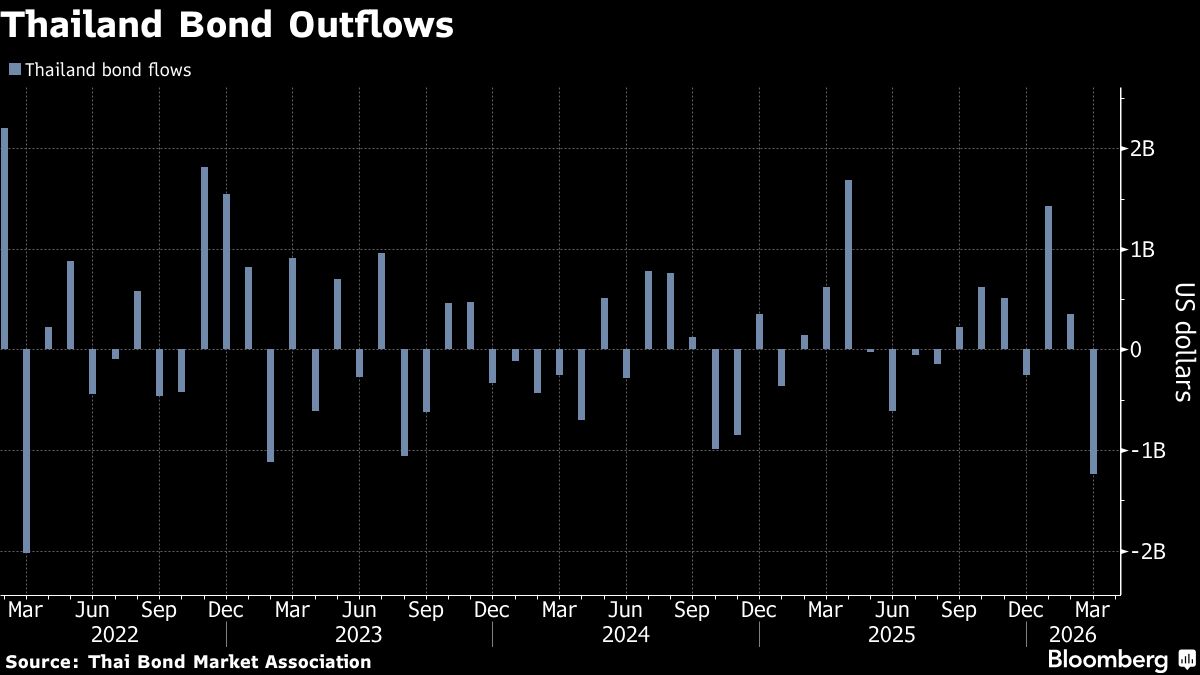
Bangkok, October 2023 – Global investors have pulled more than $1 billion from Thai bonds this month alone, triggering the Southeast Asian nation’s most significant foreign selloff since 2019. The exodus comes as escalating tensions in the Middle East, coupled with a broader retreat from emerging markets, have left investors scrambling for safer havens. This dramatic shift underscores the fragility of developing economies in the face of geopolitical uncertainty and highlights Thailand’s vulnerability to external shocks.
The selloff marks a sharp reversal for Thailand’s bond market, which had enjoyed steady foreign inflows earlier this year. Analysts attribute the sudden withdrawal to a combination of factors, including rising oil prices, a stronger U.S. dollar, and fears of prolonged conflict in the Middle East. The ongoing war between Israel and Hamas, which erupted earlier this month, has sent shockwaves through global financial markets, prompting investors to reassess their exposure to riskier assets.
A Market Under Pressure
Thailand’s bond market, a cornerstone of its financial system, has long been a favorite among international investors seeking yield in a low-interest-rate environment. However, the current geopolitical climate has exposed the country’s susceptibility to external pressures. According to data from Thailand’s central bank, foreign investors sold off Thai bonds worth $1.1 billion in October, far surpassing outflows recorded earlier this year. This selloff is the largest since 2019, when global trade tensions and a slowing global economy drove capital out of emerging markets.
The sharp decline in foreign holdings has put pressure on the Thai baht, which has weakened significantly against the U.S. dollar in recent weeks. A weaker currency exacerbates inflationary pressures, as imports become more expensive, raising concerns about the country’s economic stability.
Geopolitical Turmoil Fuels Investor Caution
The Middle East crisis has been the primary driver of the recent market turbulence. The war between Israel and Hamas has reignited fears of a broader regional conflict, potentially drawing in major powers and disrupting global energy supplies. Oil prices, which had already been elevated due to production cuts by OPEC+, surged further in the wake of the conflict, raising concerns about inflationary pressures and slower global growth.
For emerging markets like Thailand, higher oil prices are particularly challenging. Thailand imports nearly all of its crude oil, making it highly sensitive to fluctuations in global energy markets. Rising energy costs not only strain the country’s trade balance but also threaten to derail its economic recovery from the COVID-19 pandemic.
Adding to the pressure is the strength of the U.S. dollar, which has been buoyed by expectations of prolonged high interest rates in the United States. A stronger dollar makes it more expensive for emerging markets to service their dollar-denominated debt and reduces the appeal of their local currency assets.
Emerging Markets Face Broader Challenges
Thailand’s bond market selloff is part of a broader trend affecting emerging markets worldwide. Investors have been pulling capital out of developing economies at an accelerated pace, seeking refuge in safer assets such as U.S. Treasuries and gold. According to the Institute of International Finance (IIF), emerging markets experienced cumulative outflows of $6 billion in September, marking the fifth consecutive month of withdrawals.
This flight of capital has been driven by a combination of geopolitical risks, higher U.S. interest rates, and concerns about slowing global growth. China’s uneven economic recovery, a key driver of global demand, has further dampened investor sentiment.
Thailand’s situation is particularly precarious because of its reliance on foreign capital to finance its current account deficit. Prolonged outflows could strain the country’s external finances, forcing policymakers to take defensive measures such as raising interest rates or tightening capital controls.
Policy Responses and Future Outlook
In response to the market turbulence, Thailand’s central bank has taken steps to stabilize the financial system. The bank recently signaled its willingness to intervene in the currency market to support the baht and prevent excessive volatility. However, analysts caution that such measures may have limited impact in the face of global headwinds.
The central bank has also reiterated its commitment to maintaining monetary policy stability, indicating that it will prioritize controlling inflation over supporting growth. Thailand’s benchmark interest rate currently stands at 2.5%, its highest level in a decade, after a series of rate hikes aimed at curbing inflationary pressures.
Looking ahead, the outlook for Thailand’s bond market remains uncertain. Much will depend on the trajectory of the Middle East conflict, the direction of U.S. monetary policy, and the pace of global economic growth. While some analysts believe the selloff may ease if geopolitical tensions subside, others warn that the current environment of heightened uncertainty could continue to weigh on investor sentiment.
Broader Implications for Emerging Markets
Thailand’s experience highlights the challenges faced by emerging markets in an increasingly volatile global landscape. Developing economies, which rely heavily on foreign capital to fuel growth, are often the first to feel the brunt of global financial shocks. As geopolitical risks and monetary tightening in advanced economies persist, emerging markets may face prolonged periods of capital outflows and currency weakness.
For Thailand, the road ahead is fraught with challenges. Policymakers must navigate the delicate balance between stabilizing the economy and attracting foreign investment. The country’s ability to weather the current storm will depend on its resilience to external shocks and the effectiveness of its policy responses.
Conclusion
As global investors continue to retreat from emerging markets amid escalating geopolitical tensions, Thailand’s bond market serves as a stark reminder of the fragility of developing economies in an interconnected world. While the current selloff may be unsettling, it also underscores the importance of prudent economic management and proactive policy measures. The coming months will test Thailand’s ability to adapt to a rapidly changing global landscape, as the world watches to see whether the nation can emerge stronger from this period of uncertainty.
