



US Engages with Senior Iranian Official as Tensions Simmer Amid Nuclear Talks Revival
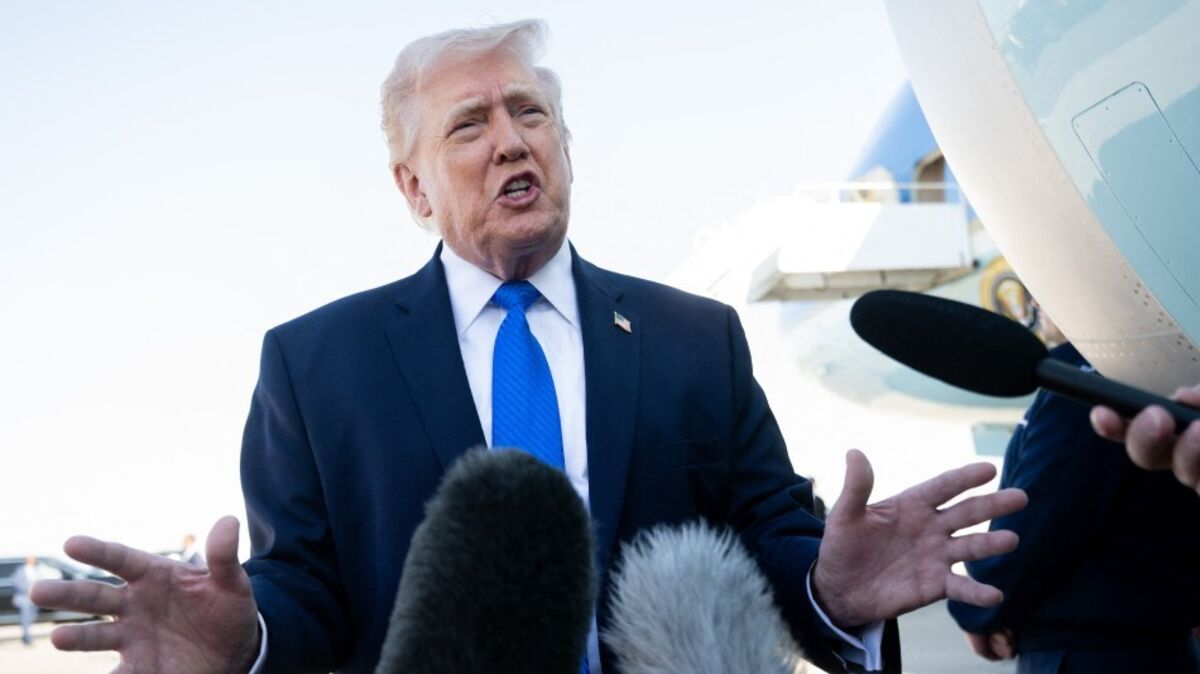
In a surprising revelation that could signal a potential thaw in one of the world’s most fraught diplomatic relationships, former US President Donald Trump announced that the United States has been in communication with a “top person” in Iran, though he clarified that this individual is not Supreme Leader Ayatollah Ali Khamenei. The statement, made during an interview with Bloomberg, comes as the international community watches closely for signs of progress in reviving the 2015 Iran nuclear deal, formally known as the Joint Comprehensive Plan of Action (JCPOA).
The announcement has sparked widespread speculation about the identity of the Iranian interlocutor and the nature of the discussions, particularly at a time when Iran-US relations remain strained over issues ranging from nuclear proliferation to regional security. While Trump did not elaborate on the specifics of the talks, his remarks have reignited debates about the future of diplomacy between Washington and Tehran and whether such engagement could pave the way for broader negotiations.
A History of Strained Relations
The relationship between the United States and Iran has been marked by decades of mistrust and hostility, punctuated by brief moments of diplomatic engagement. The 2015 nuclear deal, signed under the Obama administration, was hailed as a landmark achievement, offering Iran sanctions relief in exchange for limits on its nuclear program. However, Trump’s decision to unilaterally withdraw the US from the agreement in 2018 and reimpose crippling economic sanctions plunged the two nations back into a cycle of confrontation.
Since then, Iran has gradually scaled back its compliance with the JCPOA, enriching uranium to levels far beyond the deal’s limits and expanding its nuclear infrastructure. Meanwhile, the US has maintained a policy of “maximum pressure,” targeting Iran’s economy and isolating it on the global stage. Efforts to revive the nuclear deal under the Biden administration have faced repeated obstacles, with both sides accusing the other of intransigence.
Against this backdrop, Trump’s claim of direct contact with a senior Iranian official raises questions about the current state of diplomacy and whether backchannel communications could complement formal negotiations.
Who Is the “Top Person”?
While Trump did not disclose the identity of the Iranian official involved in the talks, analysts have speculated that it could be someone within Iran’s political or military elite who holds significant influence but operates outside the Supreme Leader’s immediate circle. Potential candidates include Foreign Minister Hossein Amir-Abdollahian, a key figure in Iran’s diplomatic efforts, or even a high-ranking member of the Islamic Revolutionary Guard Corps (IRGC), the powerful military organization that plays a central role in Iran’s foreign policy.
Alternatively, the interlocutor could be a senior advisor or negotiator who has been involved in previous rounds of talks with the US. Whoever the individual may be, their direct engagement with American officials suggests a willingness to explore avenues for dialogue, even if such discussions are not officially sanctioned by Khamenei.
The Implications of Backchannel Diplomacy
Backchannel communications have long been a tool of diplomacy, allowing nations to explore sensitive issues away from the public eye. In the context of US-Iran relations, such discussions could serve as a pressure valve, reducing the risk of miscalculation or escalation. However, they also carry risks, particularly if they are perceived as undermining existing diplomatic frameworks or conflicting with official government policies.
For Iran, any engagement with the US outside the framework of the JCPOA could be politically sensitive, given the domestic opposition to negotiations with Washington. Similarly, Trump’s involvement in these talks—despite no longer holding office—could complicate matters for the Biden administration, which has sought to present a unified front in its approach to Iran.
The Road Ahead
The revelation of these talks comes as Iran and the US prepare for a new round of indirect negotiations in Vienna, aimed at salvaging the nuclear deal. While both sides have expressed cautious optimism, significant hurdles remain, including disagreements over the scope of sanctions relief and the timeline for Iran’s return to full compliance.
Meanwhile, Iran’s domestic situation adds another layer of complexity. The country is grappling with economic challenges, social unrest, and the upcoming transition of power following the election of President Ebrahim Raisi, a hardliner who has taken a tough stance on negotiations with the West.
For the international community, the stakes are high. A failure to revive the JCPOA could lead to further instability in the Middle East, with potential ripple effects for global security and energy markets. On the other hand, a successful agreement could provide a much-needed boost to multilateral diplomacy and serve as a model for resolving other conflicts.
Balancing Hope and Skepticism
As the world watches these developments unfold, experts caution against overstating the significance of Trump’s remarks. While the acknowledgment of backchannel talks is noteworthy, it remains to be seen whether they will translate into tangible progress. History has shown that breakthroughs in US-Iran relations are rare and often fleeting, requiring sustained effort and political will from both sides.
For now, the focus remains on Vienna, where diplomats from the US, Iran, and other JCPOA signatories will resume their efforts to bridge the gap between their respective positions. Whether Trump’s revelation proves to be a catalyst for progress or merely a footnote in the long and contentious history of US-Iran relations will depend on the actions that follow.
In the words of one Tehran-based analyst, “Diplomacy is a marathon, not a sprint. Both sides must be prepared to take bold steps if they want to reach the finish line.”
