


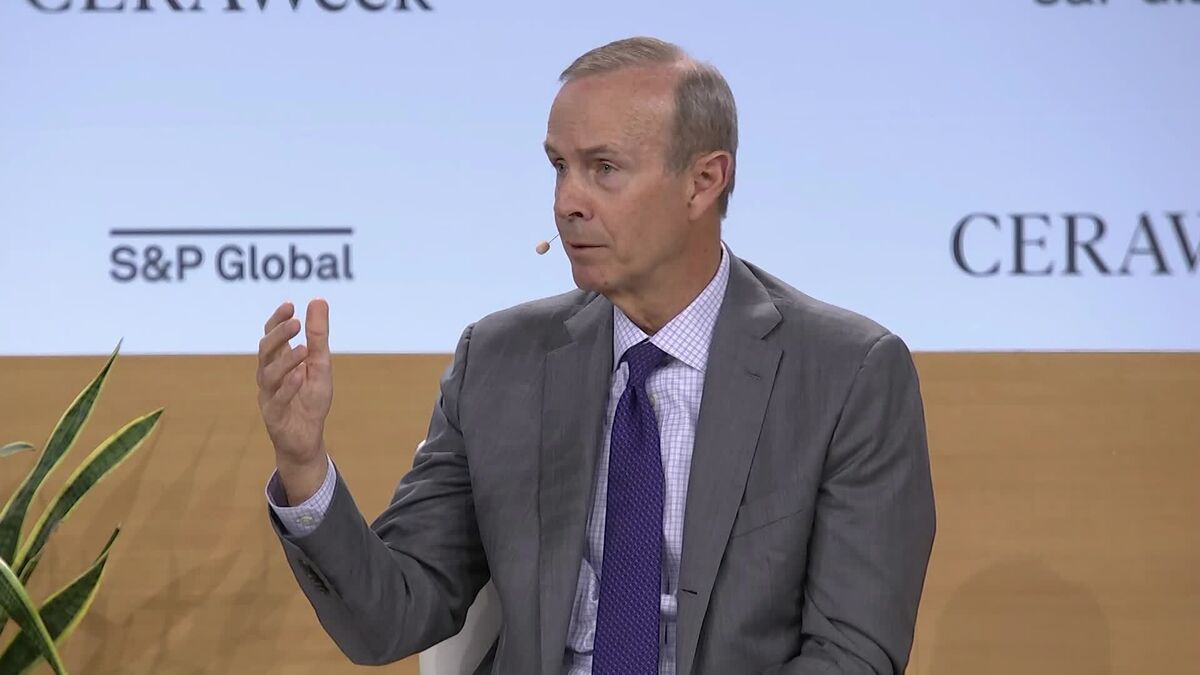

Volatile Oil Prices Amid Iran Conflict: Chevron CEO Warns of Unpredictable Market Dynamics
HOUSTON, TEXAS – The global energy sector is facing heightened uncertainty as geopolitical tensions in the Middle East continue to rattle oil markets. Chevron CEO Mike Wirth, speaking at the prestigious CERA Week energy conference in Houston, painted a stark picture of the challenges ahead, emphasizing the unpredictable and volatile nature of oil prices in the shadow of escalating conflict in Iran. His remarks, delivered to an audience of industry leaders, policymakers, and analysts, underscored the fragility of global energy markets in the face of geopolitical instability.
“Oil prices today are uncertain, unpredictable, and volatile,” Wirth stated during a panel discussion at the event, hosted by S&P Global. “The situation in Iran adds another layer of complexity to an already strained market.” His comments come amid rising concerns over the potential for broader regional conflict, which could disrupt oil supplies and send prices soaring.
Context: A Fragile Global Energy Market
The ongoing tensions in the Middle East, particularly involving Iran, have long been a critical factor in global oil markets. Iran, a major oil producer and key player in the Organization of the Petroleum Exporting Countries (OPEC), has been embroiled in a series of geopolitical standoffs with Western powers, including the United States. The recent escalation of hostilities, including drone strikes and military posturing, has raised fears of a potential supply disruption.
Oil prices have historically been sensitive to geopolitical events, with previous conflicts in the region triggering spikes in crude prices. For example, the 1979 Iranian Revolution and the 1990 Gulf War both led to significant disruptions in oil supplies, causing global economic ripples. Today, with global oil demand recovering from the pandemic-induced slump and inventories remaining tight, any major disruption could have far-reaching consequences.
The Role of Iran in Global Oil Supply
Iran holds some of the world’s largest proven oil reserves, ranking fourth globally after Venezuela, Saudi Arabia, and Canada. Despite this, its crude exports have been severely constrained by U.S. sanctions imposed in 2018, which targeted the country’s energy sector in an effort to curb its nuclear program. These sanctions have limited Iran’s ability to export oil freely, reducing its output from a peak of nearly 4 million barrels per day (bpd) in 2017 to approximately 2.5 million bpd in recent years.
However, Iran’s strategic location along key shipping routes, such as the Strait of Hormuz, makes it a critical chokepoint for global oil trade. Approximately one-fifth of the world’s oil supply passes through this narrow waterway, and any disruption could have immediate and severe implications for global markets.
Chevron’s Perspective on the Crisis
As one of the world’s largest integrated energy companies, Chevron has a vested interest in understanding and navigating the complexities of global oil markets. Wirth’s comments at CERA Week reflect the company’s cautious approach to the current geopolitical landscape. “We’re operating in an environment where external factors can quickly overtake fundamentals,” he noted. “This requires companies to be agile and prepared for a range of scenarios.”
Chevron, like its peers, has been navigating a challenging period marked by fluctuating demand, inflationary pressures, and the global push toward renewable energy. The company has sought to balance short-term profitability with long-term sustainability, investing in both traditional oil and gas projects and emerging technologies like hydrogen and carbon capture.
Wirth also highlighted the importance of diversification in mitigating risks. “No single event should have the power to destabilize the entire market,” he argued. “That’s why we’re focused on building a resilient portfolio that can withstand shocks.”
Broader Implications for the Global Economy
The uncertainty surrounding oil prices has broader implications for the global economy. Rising energy costs can drive inflation, increase transportation expenses, and squeeze household budgets, particularly in developing nations heavily reliant on imported fuel. Central banks, already grappling with inflationary pressures, would face additional challenges in stabilizing economies.
For oil-importing countries, the potential for higher prices is particularly concerning. Nations like India and China, which rely heavily on Middle Eastern crude, would be particularly vulnerable to supply disruptions. In contrast, oil-exporting nations, including members of OPEC, could benefit financially from higher prices, though they too would face risks if instability spirals out of control.
The Global Energy Transition and Geopolitics
The current crisis also underscores the challenges of the global energy transition. While many countries are accelerating efforts to reduce reliance on fossil fuels, oil remains a cornerstone of the global economy. The transition to renewable energy sources, though necessary, is unlikely to eliminate the world’s dependence on oil in the near term.
“The energy transition is a marathon, not a sprint,” Wirth remarked. “In the meantime, we need to ensure energy security while also advancing cleaner alternatives.” His comments highlight the delicate balance between addressing immediate energy needs and pursuing long-term sustainability goals.
Looking Ahead: Navigating Uncertainty
As the situation in Iran evolves, energy companies and policymakers face the daunting task of preparing for a range of outcomes. While diplomatic efforts to de-escalate tensions continue, the risk of further conflict remains a significant wildcard.
For Chevron and its peers, the focus will likely remain on maintaining operational flexibility, diversifying supply chains, and investing in technologies that enhance resilience. Meanwhile, governments and international organizations will need to monitor developments closely and coordinate responses to mitigate potential disruptions.
In closing, Wirth struck a tone of cautious optimism. “While we can’t predict the future, we can prepare for it,” he said. “By staying vigilant and adaptable, we can navigate these challenges and continue to meet the world’s energy needs.”
As the global community watches events in the Middle East unfold, the oil market’s volatility serves as a stark reminder of the interconnectedness of geopolitics and energy. The road ahead remains uncertain, but one thing is clear: the stakes could not be higher.
