


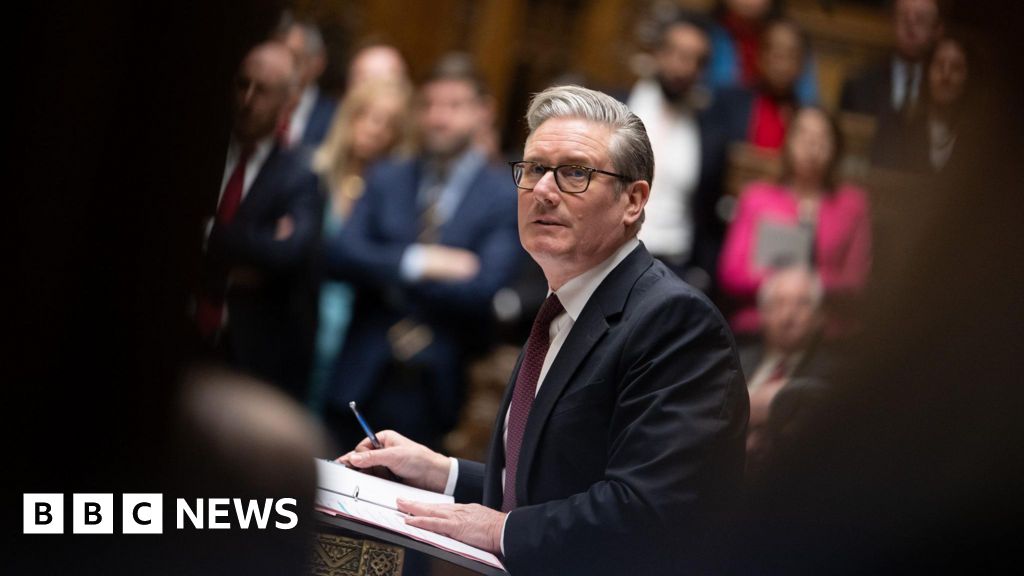

Public Fatigue Grows Over Keir Starmer’s PMQs Performance, Letters Reveal
London, United Kingdom — A growing number of voters are expressing frustration with Labour leader Sir Keir Starmer’s approach to Prime Minister’s Questions (PMQs), according to correspondence seen by this newsroom. The letters, submitted by constituents across the UK, suggest a widening disconnect between the opposition leader’s parliamentary tactics and public expectations.
PMQs, a weekly showdown in the House of Commons, is traditionally a chance for the Leader of the Opposition to hold the government to account. But critics argue Starmer’s performances have become predictable, lacking the sharpness needed to cut through against Prime Minister Rishi Sunak’s more measured responses. Many letter writers describe the exchanges as “repetitive,” “uninspiring,” and “failing to land a punch.”
Public Sentiment Shifts
The dissatisfaction appears to cut across traditional party lines. One letter from a lifelong Labour supporter in Manchester called Starmer’s approach “technically competent but emotionally flat,” while a swing voter in Bristol wrote that the sessions “feel like a missed opportunity to challenge the government on real issues.” Others lamented his reliance on pre-scripted attacks rather than spontaneous, incisive questioning.
Political analysts suggest the criticism reflects broader concerns about Starmer’s leadership style. While he has successfully stabilized Labour after its 2019 election defeat, his cautious, forensic approach—once seen as an asset—now risks alienating voters hungry for more passion and clarity.
A Contrast in Styles
Starmer’s reserved demeanor stands in stark contrast to his predecessor, Jeremy Corbyn, whose fiery rhetoric energized Labour’s base but also polarized the electorate. Meanwhile, Prime Minister Sunak, though not a natural orator, has honed a polished, data-driven rebuttal strategy that often leaves Starmer’s criticisms deflated.
The letters also highlight frustration with Starmer’s focus on narrow political point-scoring rather than broader narratives. “He picks apart Sunak’s answers but doesn’t tell us what he’d do differently,” wrote one disillusioned voter from Leeds.
Why It Matters
With a general election looming, PMQs is more than just political theater—it’s a key battleground for shaping public opinion. A weak performance can reinforce doubts about a leader’s readiness for office, while a strong one can galvanize support. For Starmer, the criticism strikes at a persistent vulnerability: his struggle to define a compelling vision for the country.
Labour insiders acknowledge the challenge but argue that Starmer’s methodical style is deliberate, avoiding Corbyn-era controversies while rebuilding trust with moderate voters. Yet the letters suggest that strategy may be reaching its limits, with even sympathetic voters craving more dynamism.
What Comes Next
The growing discontent could force Starmer to recalibrate his approach. Some allies have urged him to take bigger risks, injecting more spontaneity and emotion into his exchanges with Sunak. Others warn against overcorrecting, fearing a shift toward theatrics could undermine his credibility.
For now, the Labour leader faces a delicate balancing act. With the Conservatives still trailing in polls, the election remains his to lose—but if public fatigue over his PMQs performances deepens, it could erode the very foundation of his appeal: competence and steadiness.
The coming weeks will test whether Starmer can adapt or if the criticism signals a deeper disconnect with the electorate. Either way, the letters serve as a stark reminder that in politics, style often matters as much as substance.
