



Global Optimism Rises as Iran Agrees to Suspend Nuclear Program Indefinitely, Says Trump
In a significant development that could reshape the geopolitical landscape of the Middle East, U.S. President Donald Trump announced on Friday that Iran has agreed to indefinitely suspend its nuclear program. The announcement, delivered during a phone interview, has sparked cautious optimism among global observers, who view this as a potential breakthrough in the longstanding tensions between Tehran and Washington. The news coincides with Iran’s declaration that the Strait of Hormuz, a critical maritime passage for global oil trade, is now fully open—a move interpreted by many as a gesture of goodwill.
While the details of the agreement remain under wraps, Trump emphasized that the moratorium on Iran’s nuclear activities would be “unlimited” and expressed confidence that formal talks to cement a lasting deal could commence as early as this weekend. The announcement follows months of escalating rhetoric, economic sanctions, and sporadic military confrontations between the two nations, raising hopes that diplomatic efforts may finally yield tangible progress.
Context and Backdrop: A Troubled History
The relationship between Iran and the United States has been fraught with conflict for decades, with the nuclear issue serving as a focal point of contention. The 2015 Joint Comprehensive Plan of Action (JCPOA), commonly known as the Iran nuclear deal, was heralded as a landmark achievement during the Obama administration. It aimed to curb Iran’s nuclear ambitions in exchange for the lifting of economic sanctions. However, the Trump administration withdrew from the agreement in 2018, branding it “defective” and reimposing harsh sanctions on Tehran.
Since then, Iran has steadily escalated its nuclear activities, enriching uranium beyond the limits set by the JCPOA and reducing cooperation with international inspectors. These actions have fueled concerns about the country’s potential to develop nuclear weapons, a prospect that has alarmed both regional allies and global powers.
Against this backdrop, Trump’s latest announcement represents a potential turning point. While skeptics caution against premature celebration, the prospect of an indefinite suspension of Iran’s nuclear program marks a significant departure from the recent trajectory of hostility.
The Strait of Hormuz: A Symbolic Gesture
Iran’s decision to reopen the Strait of Hormuz adds another layer of significance to the unfolding developments. The strait, a narrow waterway linking the Persian Gulf to the Arabian Sea, is a vital artery for global oil trade, with approximately one-fifth of the world’s oil supply passing through it. In recent months, tensions in the region have led to disruptions, including the seizure of tankers and escalating military posturing.
By reopening the strait, Iran appears to be signaling a willingness to de-escalate tensions and restore stability to the region. Analysts suggest that this move, coupled with the suspension of nuclear activities, could serve as a trust-building measure ahead of formal negotiations.
Expert Perspectives: Cautious Optimism
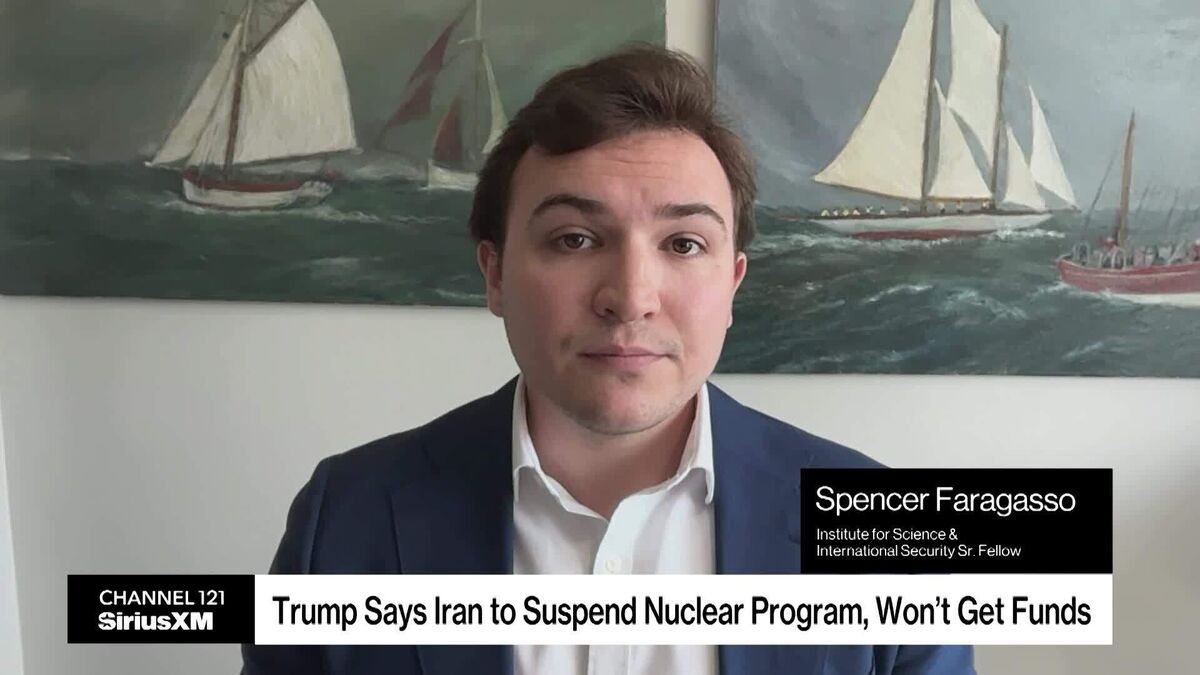
Spencer Faragasso, a Senior Fellow at the Institute for Science and International Security, offered a measured assessment of the situation during an interview with Bloomberg Businessweek Daily. While acknowledging the potential significance of Iran’s decision, Faragasso emphasized the need for clarity on the terms of the agreement. “The devil is in the details,” he noted, stressing that the international community will seek assurances that Iran’s nuclear activities remain verifiably suspended.
Faragasso also highlighted the broader implications of a potential deal, including its impact on regional security dynamics and the global energy market. “If Iran adheres to its commitments, this could pave the way for a more stable Middle East and alleviate concerns over oil supply disruptions,” he said.
Challenges Ahead: Navigating the Road to Peace
Despite the hopeful tone of Trump’s announcement, significant hurdles remain on the path to a lasting agreement. Key questions linger about the scope of Iran’s suspension, the role of international inspectors, and the timeline for lifting sanctions. Additionally, regional actors such as Israel and Saudi Arabia, long wary of Iran’s intentions, may seek reassurances that their security concerns are addressed.
Moreover, domestic politics in both the U.S. and Iran could complicate negotiations. In the U.S., critics of Trump’s Iran policy may scrutinize the deal for potential shortcomings, while hardliners in Iran may resist concessions perceived as capitulation to Western pressure.
Global Reaction: A Mixed Response
The international community has responded to the news with a mix of optimism and caution. European leaders, who have sought to salvage the JCPOA since the U.S. withdrawal, welcomed the development as a step toward renewed diplomacy. However, they emphasized the need for concrete actions to build trust.
Regional powers, meanwhile, expressed guarded optimism. Israel, which has consistently opposed any easing of pressure on Iran, reiterated its concerns about Tehran’s nuclear ambitions. Saudi Arabia, Iran’s regional rival, signaled a willingness to support diplomatic efforts but called for verifiable commitments.
A Path Forward: Diplomacy or Destabilization?
As the world watches closely, the coming days will be critical in determining whether this announcement marks the beginning of a meaningful diplomatic process or another chapter in a cycle of promises and setbacks. For Iran, the suspension of its nuclear program and the reopening of the Strait of Hormuz could signal a strategic shift toward easing tensions and rebuilding its economy. For the U.S., it presents an opportunity to demonstrate leadership in resolving one of the most complex and consequential challenges of our time.
The stakes are undeniably high. A successful agreement could reshape the Middle East, reduce the threat of nuclear proliferation, and stabilize global energy markets. Conversely, a breakdown in talks could reignite hostilities and deepen regional instability.
As President Trump prepares to engage in what could be historic negotiations, the world waits with bated breath. While the path to peace remains uncertain, the renewed focus on diplomacy offers a glimmer of hope—one that, if nurtured, could transform a longstanding conflict into a lasting resolution.
In the end, the success of this initiative will hinge not on words, but on actions—and the willingness of all parties to prioritize peace over power.
