



Blue Origin’s New Glenn Rocket Achieves Historic Booster Reflight, Faces Setback in Third Mission
CAPE CANAVERAL, FLORIDA — Blue Origin, the aerospace company founded by Amazon billionaire Jeff Bezos, achieved a major milestone in its ambitious space program Sunday with the successful reflight of its heavy-lift New Glenn rocket booster. However, the mission, which marked the third flight of the towering 321-foot (98-meter) launch vehicle, ended with a setback, casting a shadow over what was otherwise a landmark moment for the company and its role in NASA’s Artemis lunar exploration program.
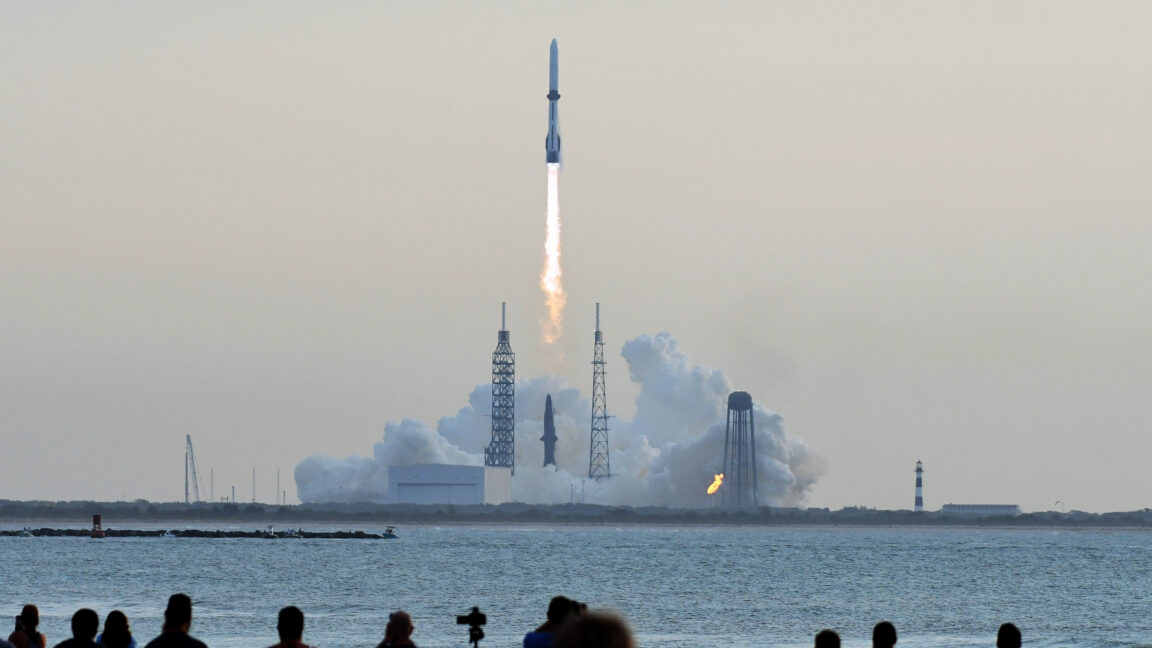
The New Glenn rocket ignited its seven methane-fueled BE-4 engines at 7:25 a.m. EDT (11:25 UTC) Sunday, lifting off from Cape Canaveral Space Force Station in Florida. The launch, initially smooth and textbook-perfect, showcased the rocket’s immense power as it surged past the speed of sound in just 90 seconds. The first stage, named Never Tell Me The Odds, separated as planned three minutes into the flight, allowing the upper stage, powered by two BE-3U engines, to continue its journey toward low-Earth orbit.
The first stage, however, stole the spotlight. It executed a meticulous descent, reigniting its engines twice for braking burns before settling onto Blue Origin’s landing platform in the Atlantic Ocean, approximately 400 miles southeast of Cape Canaveral. The successful landing marked the second reuse of this booster, which had previously flown and been recovered during Blue Origin’s November mission. This achievement underscores the company’s growing proficiency in reusable rocket technology, a critical capability in modern spaceflight.
A Leap Forward in Reusability
Blue Origin’s success with the New Glenn booster represents a significant step forward in its quest to compete with industry leaders like SpaceX. While the company has repeatedly demonstrated its ability to reuse its smaller New Shepard suborbital booster, the New Glenn program presents far greater technical challenges. Standing three times taller than New Shepard and capable of reaching higher altitudes and greater speeds, New Glenn is designed to carry heavier payloads to low-Earth orbit and beyond.
The successful reflight of Never Tell Me The Odds highlights Blue Origin’s progress in reusability, a cornerstone of its strategy to reduce launch costs and increase mission frequency. According to Dave Limp, Blue Origin’s CEO, the company plans to reuse engines from previous flights on future missions, a move that could further streamline operations and reduce expenses.
Setbacks Amid Progress
Despite the booster’s successful landing, the mission encountered an undisclosed issue after the upper stage separated, leaving the payload’s fate uncertain. Blue Origin has yet to provide detailed information about the nature of the problem, but the setback is a reminder of the complexities inherent in developing and operating advanced launch systems.
The New Glenn rocket is a critical component of NASA’s Artemis program, which aims to return humans to the Moon and establish a sustained presence there. Blue Origin’s ability to deliver payloads reliably and cost-effectively will be essential to achieving these goals. Sunday’s partial success underscores both the promise and the challenges of the New Glenn program as it moves closer to operational readiness.
Competing in a Crowded Market
Blue Origin’s progress comes amid fierce competition in the commercial space industry, where SpaceX has long dominated the reusable rocket market. SpaceX’s Falcon 9 booster, for example, has achieved reflight in as little as nine days, enabling rapid turnaround times and high launch rates. Blue Origin aims to replicate this capability with New Glenn, leveraging its reusable design to unlock faster mission turnaround and expand its market share.
However, Blue Origin faces an uphill battle in catching up with SpaceX’s established infrastructure and operational efficiency. With three active launch pads and a fleet of reusable boosters, SpaceX has set a high bar for the industry. Blue Origin’s ability to scale its operations and deliver on its promises will determine whether it can carve out a significant role in the increasingly competitive space sector.
Looking Ahead
Sunday’s mission, despite its lingering uncertainties, represents a critical milestone for Blue Origin. The successful reflight of the New Glenn booster demonstrates the company’s growing technical prowess and its commitment to reusable rocket technology. As Blue Origin continues to refine its systems and address the challenges revealed by this mission, it moves closer to fulfilling its vision of enabling a future where millions of people live and work in space.
The aerospace industry is watching closely as Blue Origin navigates the complexities of developing a heavy-lift launch vehicle capable of competing with the best in the business. Sunday’s flight, with its mix of triumph and adversity, underscores the immense challenges and opportunities that lie ahead for Jeff Bezos’ space venture. As the company prepares for future missions, the lessons learned from this launch will be instrumental in shaping its path forward.
For now, Blue Origin’s New Glenn program remains a work in progress—a testament to the relentless pursuit of innovation in the quest to conquer the final frontier. Whether it will achieve its lofty ambitions remains to be seen, but one thing is certain: the journey promises to be as thrilling as it is unpredictable.
