


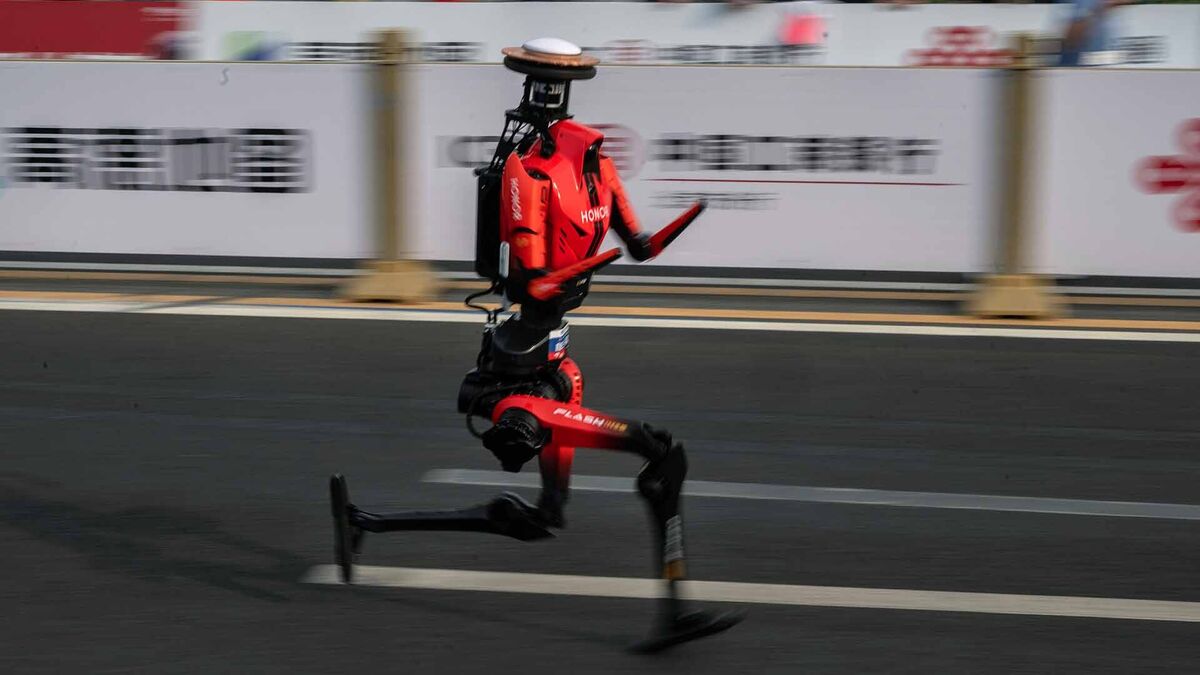

Beijing Half Marathon Showcases China’s Robotics Leap as Autonomous Robots Outpace Human Record
Beijing, China – In a striking demonstration of technological prowess, Beijing’s latest half marathon event became a stage not only for human endurance but also for the remarkable capabilities of autonomous robots. On a crisp autumn morning, crowds gathered to witness a groundbreaking race where cutting-edge robotics and artificial intelligence (AI) took center stage. The event, which featured robotic participants completing the 21-kilometer course alongside human runners, underscored China’s accelerating advancements in robotics and its ambitious vision for integrating AI into everyday life.
The highlight of the event came when an autonomous robot, powered by state-of-the-art AI algorithms and precision-engineered hardware, completed the race in record time, outpacing its human counterparts. This achievement not only shattered previous records for robotic performance in endurance events but also ignited discussions about the future of robotics in competitive sports and beyond.
A New Era in Robotics
The Beijing half marathon marked a significant milestone in the evolution of autonomous robotics. The robots, developed by a consortium of Chinese tech companies and research institutions, were equipped with advanced sensors, machine learning capabilities, and self-navigation systems that allowed them to traverse the course independently. Unlike traditional robots, which often rely on preprogrammed instructions or remote control, these autonomous machines adapt to changing conditions in real-time, making decisions based on their surroundings.
“This event wasn’t just about breaking records; it was about showcasing what’s possible when you combine robotics, AI, and innovative engineering,” said Dr. Li Wei, a robotics expert from Tsinghua University who served as a technical advisor for the race. “These robots represent a leap forward in terms of autonomy, resilience, and adaptability.”
The winning robot, dubbed “Speedster-X,” completed the course in just under one hour and twenty minutes, surpassing the previous human record for the Beijing half marathon by several minutes. Its performance was a testament to the rapid advancements in China’s robotics sector, which has seen significant investment from both the government and private sector in recent years.
China’s Robotics Ambitions
China’s focus on robotics and AI is part of a broader strategy to position itself as a global leader in technology and innovation. The country has made substantial investments in research and development, aiming to dominate industries ranging from manufacturing and healthcare to transportation and entertainment. According to the International Federation of Robotics, China is already the world’s largest market for industrial robots, accounting for more than 40% of global installations.
The Beijing half marathon served as a high-profile platform to highlight these achievements. By integrating robotics into a widely watched sporting event, organizers sought to demonstrate the practical applications of AI and robotics in dynamic, real-world environments.
“This race is a metaphor for China’s broader ambitions,” said Minmin Low, a technology analyst at Bloomberg who covered the event. “Just as these robots navigated a complex course, China is navigating the challenges of technological innovation, aiming to lead the world in AI and robotics.”
Implications for the Future
The success of autonomous robots in the Beijing half marathon raises intriguing questions about the future of robotics in sports and other fields. While the technology is still in its early stages, experts believe that events like this could pave the way for new applications, from robotic athletes in competitive sports to AI-powered assistants in everyday life.
“We’re seeing the beginnings of a new paradigm where robots aren’t just tools—they’re active participants in human activities,” said Dr. Wei. “The potential is enormous, whether it’s in sports, healthcare, logistics, or even entertainment.”
However, the event also sparked debates about the ethical and societal implications of advanced robotics. Critics argue that the increasing role of AI and automation could lead to job displacement and exacerbate inequality, particularly in industries reliant on manual labor. Others raise concerns about the safety and reliability of autonomous systems, particularly in unpredictable environments.
“While these advancements are impressive, we need to approach them with caution,” said Dr. Elena Martinez, a robotics ethicist at MIT. “It’s crucial to ensure that these technologies are developed responsibly and that their benefits are shared equitably.”
A Global Perspective
China’s strides in robotics and AI are being closely watched by the international community. As the country continues to push the boundaries of innovation, it is increasingly seen as a rival to traditional tech powerhouses like the United States, Japan, and Germany.
The Beijing half marathon event highlighted China’s ability to integrate cutting-edge technology into high-profile platforms, showcasing its technological capabilities to a global audience. “This wasn’t just a race; it was a statement,” said Low. “It showed that China is not just catching up in robotics and AI—it’s leading the way.”
As the dust settles on this groundbreaking event, the question remains: what’s next for robotics and AI? While the answer is still unfolding, one thing is clear—the world is witnessing a transformative moment in technology, and China is at the forefront.
Conclusion
The Beijing half marathon will be remembered not just for its athletic achievements but for its role in showcasing the future of robotics and AI. As autonomous robots continue to evolve and integrate into various aspects of life, the event serves as a powerful reminder of the potential—and challenges—of this rapidly advancing field. While the technology is still in its infancy, its implications are profound, heralding a new era of innovation and collaboration between humans and machines. The road ahead is uncertain, but one thing is certain: the race has only just begun.
