


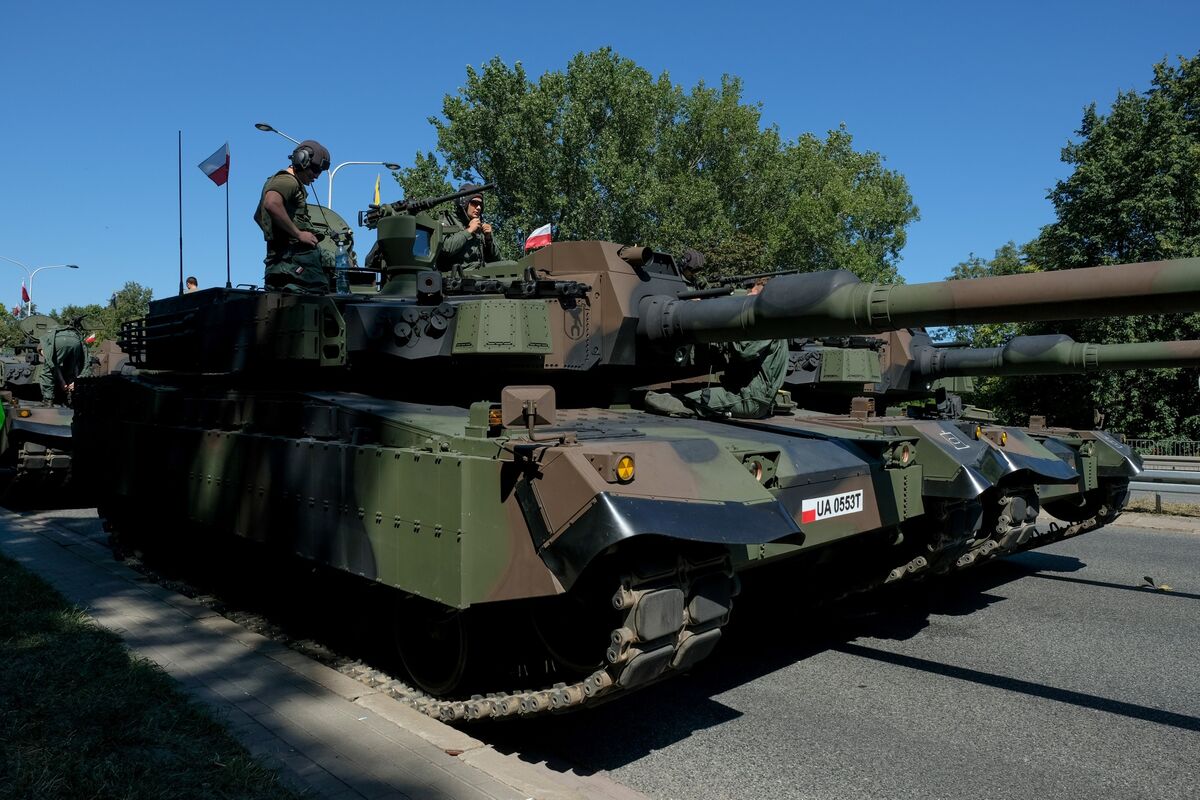

Poland’s Defense Industry Booms Amid Rising Tensions and EU Funding Surge
In a year marked by escalating geopolitical tensions and heightened defense spending across Europe, Poland’s largest defense conglomerate, PGZ (Polska Grupa Zbrojeniowa), is poised for another record-breaking performance. The state-owned arms manufacturer is capitalizing on Poland’s aggressive military modernization drive, fueled by the dual imperatives of countering Russian aggression and accessing new European Union funding streams. This surge in activity underscores Warsaw’s transformation into one of NATO’s most assertive defense spenders and highlights the growing demand for advanced military hardware in a region increasingly wary of Moscow’s ambitions.
A Strategic Shift Amid Rising Threats
Poland, which shares a 210-mile border with Russia’s Kaliningrad exclave and a 232-mile frontier with Belarus, a close Kremlin ally, has long viewed itself as a frontline state against potential Russian aggression. The invasion of Ukraine in February 2022 accelerated Warsaw’s strategic recalibration, prompting a dramatic increase in defense spending. Poland’s military budget now stands at approximately 4% of its GDP, one of the highest percentages among NATO members and well above the alliance’s 2% target.
PGZ, the linchpin of Poland’s defense industry, has been at the forefront of this transformation. The conglomerate, which comprises over 60 companies specializing in land, air, and naval systems, has seen its order books swell as Warsaw invests billions in upgrading its armed forces. From advanced artillery systems to cutting-edge drones and next-generation tanks, PGZ is spearheading Poland’s push to become a self-reliant defense power.
“The geopolitical situation in our region has fundamentally changed,” said PGZ CEO Sebastian Chwałek in a recent statement. “Our priority is to ensure that Poland’s armed forces are equipped with the most modern and effective systems, both to deter aggression and to contribute to NATO’s collective defense.”
EU Funding and Self-Reliance
Poland’s defense expansion is also being bolstered by new funding mechanisms introduced by the European Union. In response to Russia’s invasion of Ukraine, the EU launched the European Defence Fund (EDF) and the European Peace Facility, initiatives designed to enhance the bloc’s military capabilities and reduce reliance on external suppliers. Poland has been a major beneficiary of these programs, securing millions in grants for joint defense projects and infrastructure upgrades.
PGZ has actively leveraged this funding to forge partnerships with European defense firms. Notably, the company has collaborated with Sweden’s Saab on advanced radar systems and Germany’s Rheinmetall on armored vehicle production. These partnerships not only enhance PGZ’s technical expertise but also align with the EU’s broader goal of fostering a more integrated European defense industry.
At the same time, Poland is striving to reduce its dependence on foreign suppliers, particularly in the wake of delays in arms deliveries from Western allies. PGZ’s expanded production capacity and emphasis on domestic innovation are central to this strategy. The company has ramped up manufacturing of its flagship Krab self-propelled howitzer and is developing next-generation infantry fighting vehicles and unmanned aerial systems.
A Regional Arms Race
Poland’s defense buildup reflects a broader trend across Eastern Europe, where nations are rapidly modernizing their militaries in response to the perceived Russian threat. NATO membership has provided these countries with a security umbrella, but the alliance’s reliance on deterrence has also spurred investments in national defense capabilities.
Estonia, Lithuania, and Latvia, for instance, have significantly increased their defense budgets, while Romania and Bulgaria have embarked on ambitious procurement programs. However, Poland’s scale and pace of military modernization stand out. With a population of 38 million and the largest economy in Central and Eastern Europe, Poland has emerged as NATO’s flagship land power on the alliance’s eastern flank.
Challenges and Controversies
Despite its successes, PGZ faces several challenges. The rapid expansion of its production capacity has strained its supply chain, leading to delays in some projects. Additionally, the company must navigate the complexities of integrating cutting-edge technologies while maintaining cost efficiency.
Critics have also raised concerns about the environmental and social impact of Poland’s defense buildup. The increased production of military hardware has implications for carbon emissions and resource consumption, while the diversion of public funds to defense has sparked debates about priorities in healthcare, education, and infrastructure.
Moreover, Poland’s defense strategy has occasionally strained its relations with EU partners. Warsaw’s decision to procure tanks and fighter jets from South Korea and the United States, rather than European manufacturers, has drawn criticism from some quarters. However, Polish officials argue that urgency and cost-effectiveness are paramount in the current security environment.
A New Era for Poland’s Defense Industry
The transformation of Poland’s defense sector is emblematic of a broader shift in the country’s geopolitical posture. Once a relatively passive player on the European stage, Poland has emerged as a key actor in shaping the continent’s security architecture. PGZ’s ascent mirrors this change, positioning the company as a major player in the global defense market.
As PGZ prepares for another record year, the company’s success serves as a testament to Poland’s resolve in the face of mounting challenges. Yet it also raises questions about the sustainability of such rapid growth and the long-term implications for Europe’s security landscape.
In an era defined by uncertainty, Poland’s defense industry stands as both a shield against external threats and a symbol of the nation’s determination to chart its own course. While the road ahead is fraught with challenges, one thing is clear: Poland’s commitment to its defense is reshaping the balance of power in Europe.
As the world watches, the question remains whether this unprecedented buildup will deter conflict or inadvertently heighten tensions in an already volatile region. Only time will tell.
