



Far-Right Energy Plans Would “Disaster” for France, Warns Engie CEO in Election Rebuke
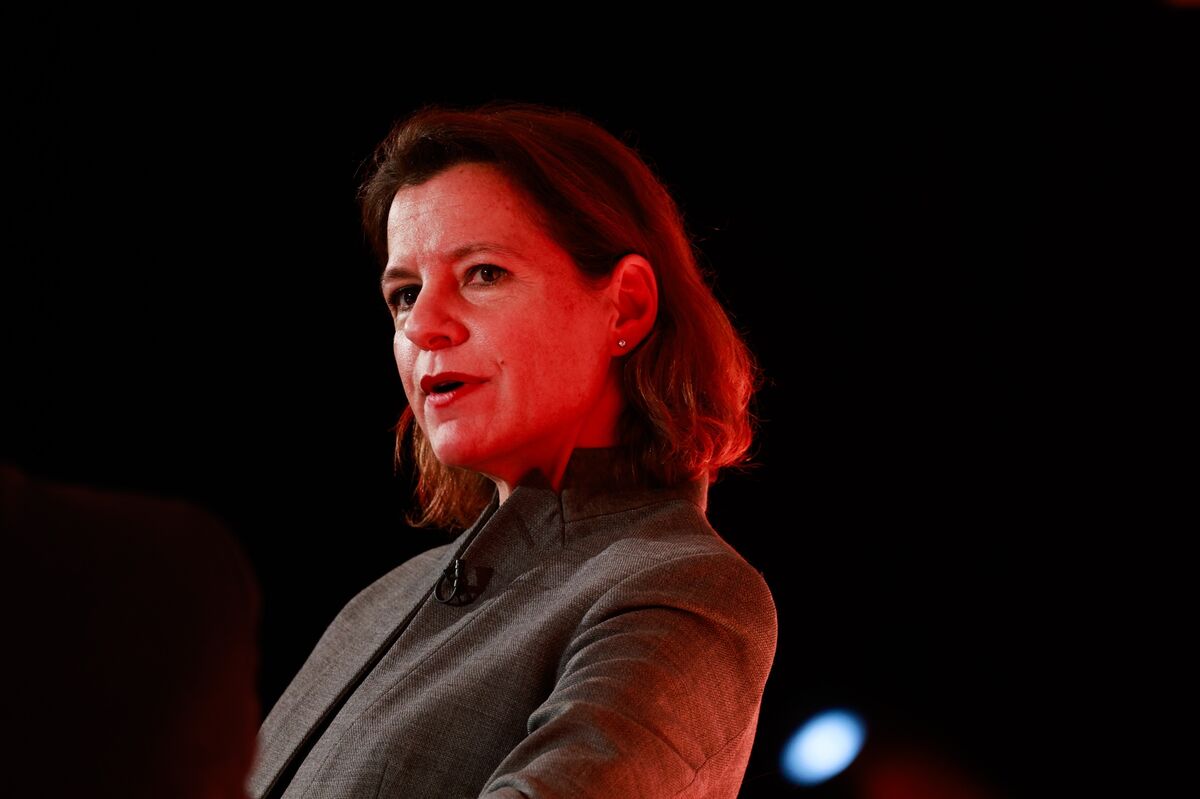
Paris, France – The CEO of Engie, one of Europe’s largest energy companies, has issued a stark warning against far-right proposals to dismantle France’s renewable energy sector, calling the plan a potential “disaster” for the country’s economy and climate commitments. Catherine MacGregor’s unusually blunt critique marks one of the most forceful corporate interventions yet in the lead-up to France’s contentious 2024 presidential election, where Marine Le Pen’s National Rally (RN) party is gaining momentum.
A High-Stakes Energy Clash
MacGregor’s remarks, delivered in an interview with Bloomberg, directly challenge RN’s pledge to scrap subsidies for wind and solar power while abolishing France’s energy regulator, the CRE (Commission de Régulation de l’Énergie). Such moves, she argued, would destabilize the nation’s transition to clean energy, jeopardize billions in investments, and undermine France’s legally binding climate targets.
“Abandoning renewables and deregulating the energy market isn’t just ideological—it’s economically reckless,” MacGregor said. “France has built a framework that balances sustainability, affordability, and security. Dismantling it would set us back a decade.”
The Engie chief’s intervention reflects growing unease among business leaders as RN—long a fringe force—polls at record highs. Le Pen, who lost to Emmanuel Macron in 2017 and 2022, has softened her party’s image but maintains hardline stances on energy, advocating for nuclear and fossil fuels over what she calls “unreliable” renewables.
The Far-Right’s Controversial Vision
RN’s energy platform centers on three radical proposals:
- Eliminating renewable subsidies, which currently account for €6 billion annually, to redirect funds to nuclear power.
- Dismantling the CRE, France’s independent energy watchdog, claiming overregulation stifles competition.
- Reviving coal and gas plants as backups, despite France’s pledge to phase out fossil fuels.
Critics argue the plan ignores market realities. France derives 70% of its electricity from nuclear—a higher share than any nation—but aging reactors and delays in new projects have forced reliance on renewables to fill gaps. Wind and solar now provide 13% of power, up from 5% in 2010.
“Renewables aren’t a luxury; they’re a necessity,” said energy analyst Thierry Bros. “France’s nuclear fleet can’t meet demand alone. Cutting alternatives risks blackouts and price spikes.”
Investor Jitters and Global Implications
MacGregor’s warning underscores fears that RN’s policies could spook investors. France is Europe’s second-largest renewable energy market, with €40 billion committed to wind, solar, and hydrogen projects through 2030. Engie alone plans to invest €22 billion in renewables this decade.
“Investors need stability,” MacGregor emphasized. “Sudden policy reversals would trigger capital flight, hurting jobs and innovation.”
The backlash extends beyond France. The EU has mandated that renewables supply 42.5% of energy by 2030—a target France risks missing under RN’s agenda. Neighboring Germany and Spain, meanwhile, are doubling down on wind and solar.
Political Firestorm Ahead
Le Pen’s camp dismissed MacGregor’s critique as “elitist fearmongering.” RN energy spokesperson Philippe Olivier accused “globalist corporations” of prioritizing profits over French workers, vowing to “reindustrialize” rural areas with nuclear jobs.
Yet economists warn RN’s nostalgia for 20th-century energy models clashes with 21st-century realities. France’s nuclear sector, while a source of pride, faces soaring costs and delays. The flagship Flamanville reactor, 12 years behind schedule, exemplifies the challenges.
“France can’t nuclear-power its way out of the climate crisis alone,” said Climate Action Network’s Anne Bringault. “Diversification is key—renewables, grids, storage. RN’s plan is a gamble with no safety net.”
A Litmus Test for Europe
The debate mirrors wider tensions across Europe, where far-right parties in Germany, Italy, and Spain have also attacked green policies. But France’s central role in EU climate diplomacy—Macron has positioned himself as a leader on carbon neutrality—makes the stakes uniquely high.
“If France backslides, the whole European project falters,” said Brussels-based analyst Simone Tagliapietra. “This isn’t just about energy—it’s about credibility.”
With Macron term-limited and the left fragmented, RN could win enough parliamentary seats to enact its agenda. Polls show 30% support, though runoff dynamics may still favor centrists.
Conclusion: A Nation at a Crossroads
As France braces for a pivotal election, MacGregor’s admonition highlights a defining choice: whether to accelerate the energy transition or retreat into ideological isolation. The outcome will resonate far beyond French borders.
“Energy policy shouldn’t be a political football,” the Engie CEO concluded. “The cost of getting this wrong will be paid by every citizen—and the planet.”
For now, the battle lines are drawn, with France’s climate future hanging in the balance.
